
Reviewed · CALI TOURS
Shared Tour Cali’s Historical Downtown
Cali’s story is much bigger than salsa, and this walk makes that clear. In about two and a half to three hours, you follow the city from its colonial beginnings through Afro-Colombian cultural influence, cartel-era pressure, social protest, and the rise of La Feria de Cali.
I like the strong local focus, especially the links between food, Pacific music, slang, dance, and the three ethnic traditions that shaped Valle del Cauca. I also like the route itself: La Merced, the river boulevard, Cayzedo Square, theaters, churches, and Jairo Varela give you a useful first map of central Cali.
The tradeoff is distance. You may walk around 7 kilometers, often in warm or wet weather, and the subject matter includes discrimination, drug trafficking, and political unrest. This is not a quick photo stroll, so bring water, good shoes, and an open mind.
Key points to know before you go
- Afro-Colombian culture gets serious attention, with food, music, dance, and Pacific traditions at the center of the story.
- The route covers major central sights, including La Merced, the Calima Gold Museum area, the River Boulevard, Cayzedo Square, the Ermita, and Jairo Varela.
- Salsa is placed in its social setting, including the growth of the movement and the importance of La Feria de Cali.
- Guides bring different strengths, with Cristian, Fernando, Juliana, Lem, and Adriana among the guides praised for energy, local insight, and clear English.
- The $13 price is strong value if you want a city orientation, cultural context, and restaurant and shopping suggestions in one outing.
- This is a walking workout, with roughly 7 kilometers on foot and no transport between stops.
Why this Cali walk is about more than salsa
Cali is often sold as Colombia’s salsa capital, and that label is deserved. But if you only chase dance clubs and evening shows, you miss the forces that made the city what it is.
This tour begins with the wider Valle del Cauca region, known locally as El Valle. That setting matters because Cali developed as more than an isolated city. Its food, trade, population, and customs grew from the surrounding region, the Pacific coast, and the movement of different communities through the valley.
The tour also gives Afro-Colombian culture its proper place. You learn how African descendants shaped Cali through gastronomy, music, dance, language, and everyday customs. That can include a taste of chontaduro when available, a useful small detail because food often explains culture faster than a list of dates.
I like this approach. It treats culture as something people cook, say, sing, and dance, not just something displayed behind glass. You should come ready to connect local dishes and rhythms with the city’s past.
A few more trips around Cali worth a look
- Historical Shared Tour Salsa, Graffiti & Resistance in Cali
★ 5.0 · 107 reviews - The Cali Street Food Walking Tour
★ 5.0 · 81 reviews - San Cipriano Rainforest – River, Waterfalls and Adventure Day
★ 5.0 · 73 reviews
Starting at La Merced and the Calima Gold Museum
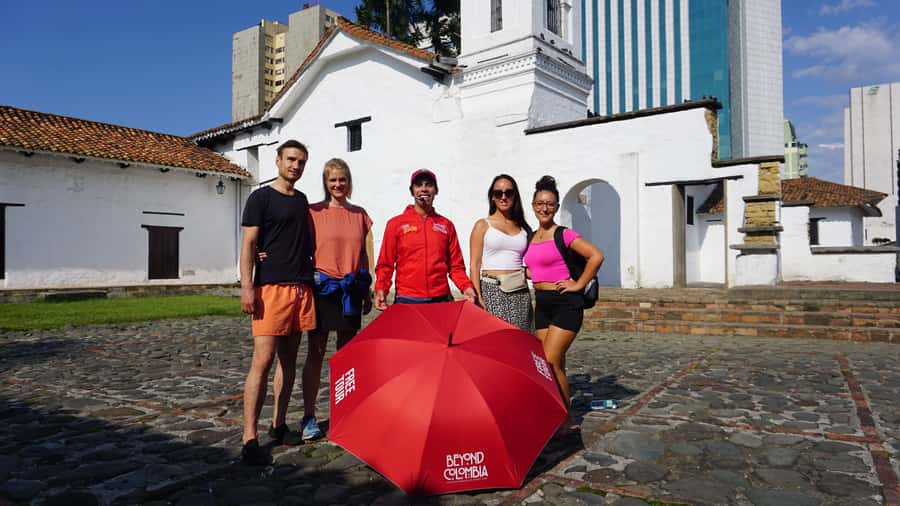
The meeting point is in front of the Museo Arqueológico La Merced, marked by Beyond Colombia’s red umbrellas. La Merced is a practical starting place because the area connects Cali’s religious and colonial beginnings with its later urban growth.
From here, the guide introduces the historical starting point of Santiago de Cali and explains how the city’s economic life developed from the 17th century onward. You are not simply looking at old buildings. You are being given a framework for understanding why central Cali looks and functions as it does today.
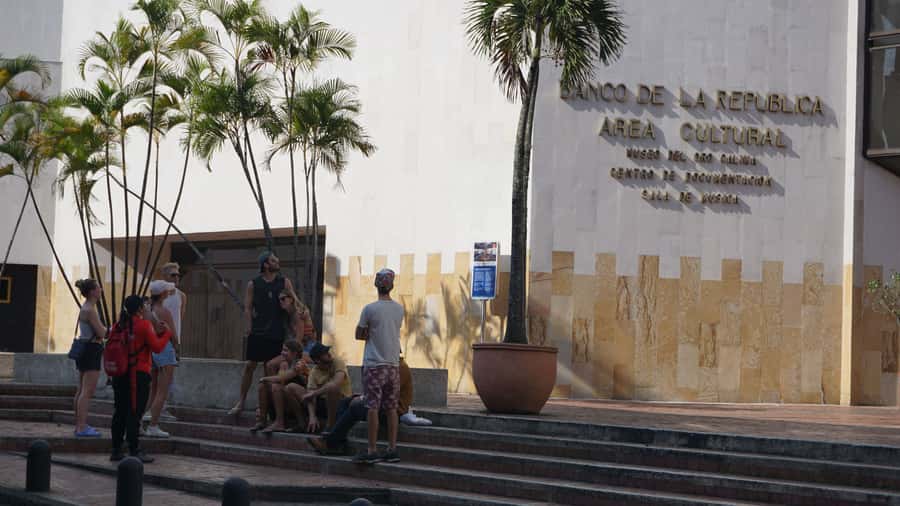
The route passes the Calima Gold Museum area, which helps place the city within the longer story of the region’s Indigenous cultures. The tour then moves forward through colonial development, civil conflict, discrimination, and modern social change.
The key benefit here is orientation. Cali’s central streets can seem like a collection of unrelated churches, plazas, theaters, and shops. A guide helps you connect those places into a story.
The River Boulevard and Cali’s public spaces
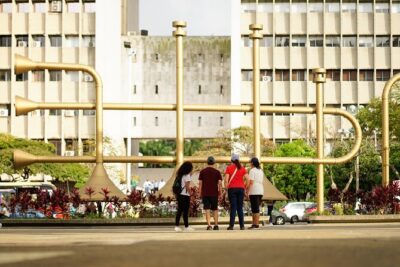
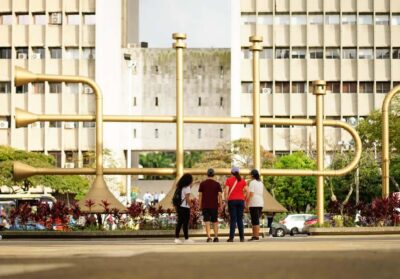
The River Boulevard is one of the route’s important modern stops. It gives you a look at how public space has been reshaped in the city center and provides a change from the older religious and civic buildings.
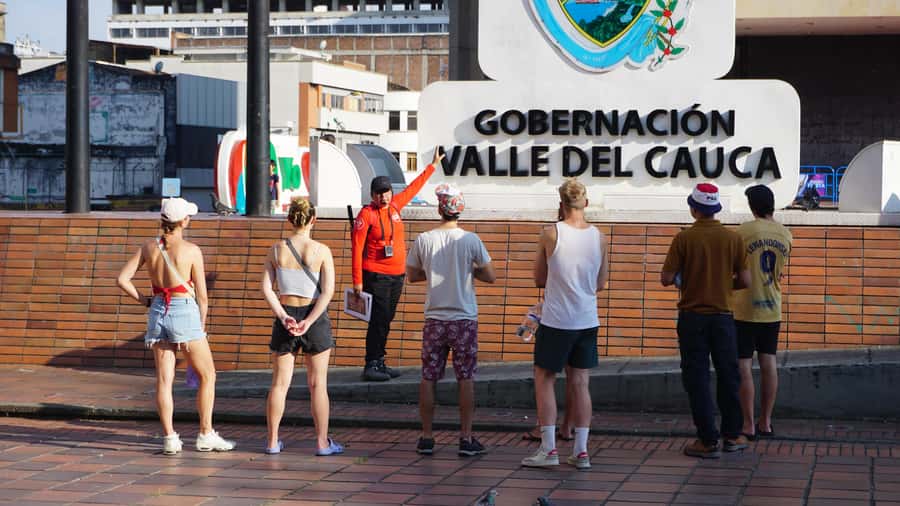
You also visit San Francisco Square and Cayzedo Square. These spaces help explain the role of public gatherings, government, religion, commerce, and protest in Cali’s urban life. The tour’s treatment of social revolts, including events during and after the pandemic, adds a current layer to the walk.
That part may be especially useful if you want more than a polished city-center story. Cali’s social tensions are part of its identity, and the tour does not avoid hard subjects. You hear about discrimination, resistance, political unrest, and the way ordinary people responded to pressure.
I would not choose this outing if you want only cheerful entertainment. The guide aims for an objective account and promises not to take sides, but the history itself includes painful periods. That honesty is a strength, though some visitors may prefer to process the information at a slower pace.
Churches, theaters, and the city’s creative voice
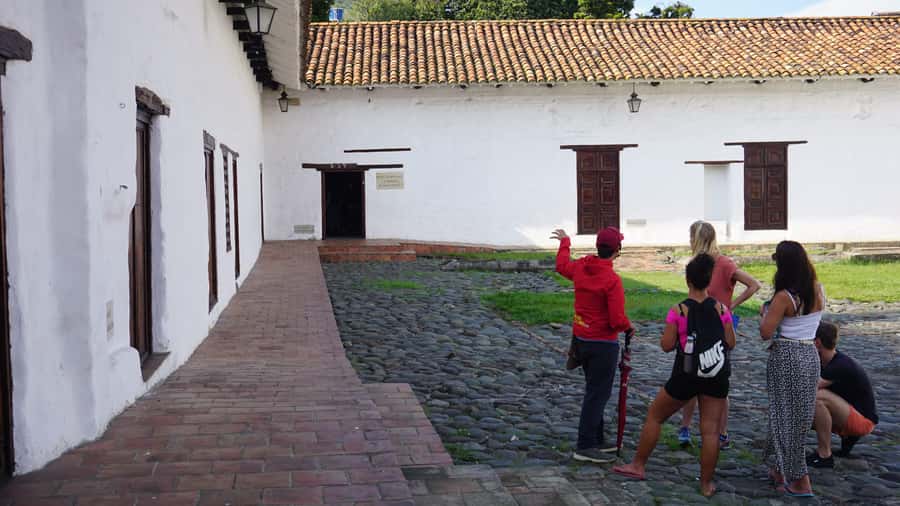
The route includes several architectural landmarks:
- La Merced
- The Ermita
- San Pedro Cathedral
- The Municipal Theater
- Jorge Isaacs Theater
- Puente Ortiz
- The River Boulevard
- Jairo Varela Square
You may not enter every building. Tickets and entrances are not included, and the walk is designed around seeing the important sites from the route rather than adding sudden admission costs.
The churches show the city’s religious and architectural foundations. The theaters point in another direction, toward Cali’s literary, cinematic, musical, and stage traditions. The tour explains how arts helped the city describe itself, challenge old ideas, and preserve local voices.
Jorge Isaacs Theater is especially fitting in a tour that discusses literature and Cali’s cultural identity. The Municipal Theater adds another connection to performance. These stops keep the experience from becoming a simple church-and-plaza circuit.
Puente Ortiz and the riverfront help tie the old center to public life today. At each stop, you get more from the guide than from the building alone. Look closely at the surrounding streets, since the point is to understand how architecture, movement, commerce, and public gatherings overlap.
Same city, a different sort of day:
- Cali: Street Food Tour
★ 4.8 · 71 reviews - Cali: Walking tour of the historic center
★ 5.0 · 69 reviews - Afro Walking Tour. The colors of Cali.
★ 5.0 · 61 reviews - Cali: City Tour
★ 4.9 · 57 reviews
Salsa, soccer, and La Feria de Cali
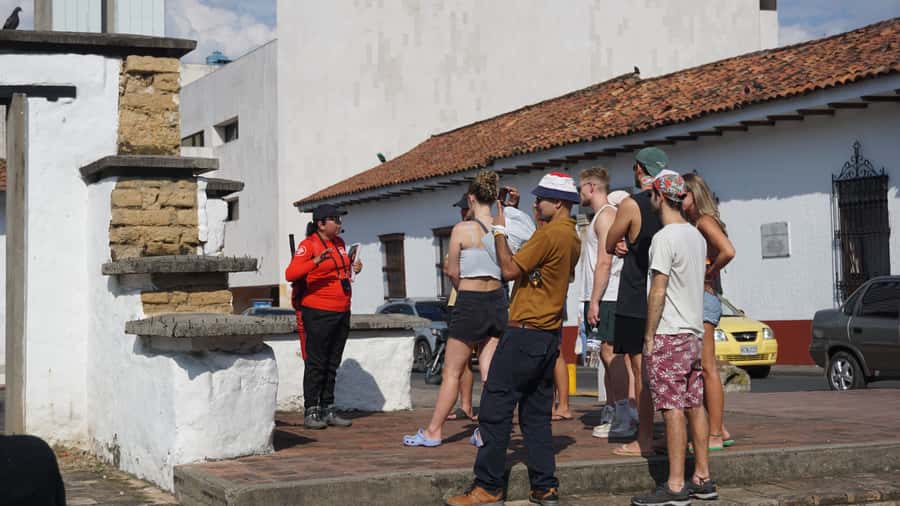
The salsa section is likely to be a highlight, especially if you already plan to spend an evening dancing. The tour explains how salsa grew in Cali and how La Feria de Cali helped turn the city into an international center for the music.
This is not presented as a story of dance in isolation. Salsa connects to migration, neighborhood life, local pride, and the city’s social identity. The guide also discusses soccer, another major force in Cali society. Taken together, these subjects show how people express belonging and competition outside formal politics.
The tour may not include a full dance lesson or a performance. Instead, you get context and recommendations for continuing the experience after the walk. Guides such as Lem have been praised for bringing strong salsa enthusiasm, while Cristian, Fernando, and Juliana have been noted for keeping their groups engaged and explaining the city with energy.
That personal style matters on a shared tour. A guide who can move between architecture, music, politics, and food without losing the group makes the long route easier to follow.
The difficult chapter of drug trafficking
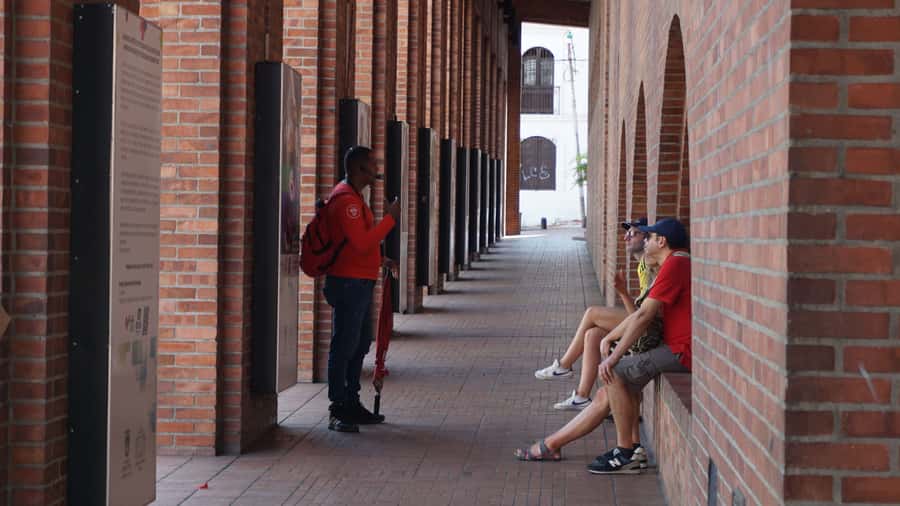
Cali’s modern identity cannot be explained without discussing drug trafficking and the Cali cartel era. The tour presents both sides of the city: the pride surrounding salsa and sport, and the damage caused by criminal power.
This section adds needed balance. A visitor could leave with a romantic picture of music, friendly food stops, and colorful streets. The darker story explains why the city developed certain fears, inequalities, and public attitudes.
The guide also connects the cartel period with the growth of salsa culture and La Feria de Cali. That does not mean the two are treated as the same thing. Rather, you learn how cultural life continued, changed, and sometimes became entangled with the pressures of the period.
I value this part because it avoids turning Cali into a postcard. You are given room to appreciate its creativity while also understanding the harm that shaped daily life. The tour promises an objective approach, but you should still expect serious discussion rather than a light historical overview.
Food, slang, and Pacific influence
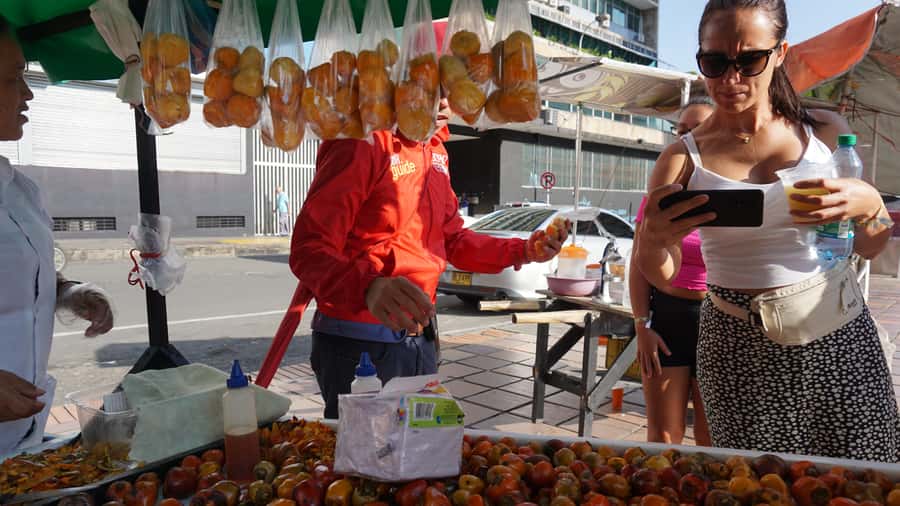
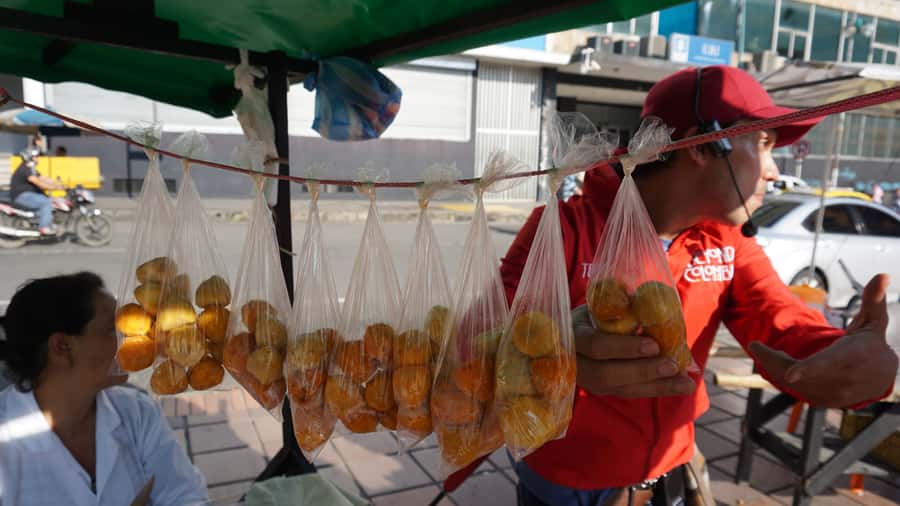
The tour includes a chontaduro tasting when available. Chontaduro is a local fruit and a small sample can make the food discussion more concrete, though availability is not guaranteed.
You also receive suggestions for local places to eat, buy coffee, and shop for souvenirs. These recommendations may be one of the most useful parts of the experience because they help you continue exploring after the group separates.
The food discussion is linked to African heritage and the Pacific coast. You learn about the cultural meaning behind gastronomy, local slang, and Pacific songs. That combination gives you more useful tools for the rest of your stay. You can listen differently, notice regional expressions, and make better sense of menus and conversations.
Food and drinks beyond the included tasting are your responsibility. Some guides may stop for local food or drinks during the walk, but the official inclusions cover only the guide, sightseeing, recommendations, and chontaduro when available.
What the walk feels like in practical terms
The advertised duration is 150 minutes, while the description allows approximately three hours. Plan for the longer end, particularly if the group pauses often or the guide spends extra time answering questions.
The route covers about 7 kilometers, with resting stops. That is a fair amount of walking for a city-center tour, especially in warm weather. Wear shoes you can walk in for several hours, and carry water or another drink.
Cali’s weather can change, so bring an umbrella or rainproof coat. Comfortable clothing matters more than dressing up. The tour specifically advises you to keep personal belongings secure in crowded areas, so use ordinary city precautions and avoid displaying valuables.
No transport is used during the outing. You need to reach La Merced on your own and arrange your own way back afterward. The meeting point is central, but check your route before the start so you do not arrive rushed.
This is a shared tour, not a private guide service. That keeps the cost low and gives you a chance to meet other people, but the pace and amount of individual attention depend on the group. Party groups are not accepted, and audio recording is not allowed.
The guides make a real difference
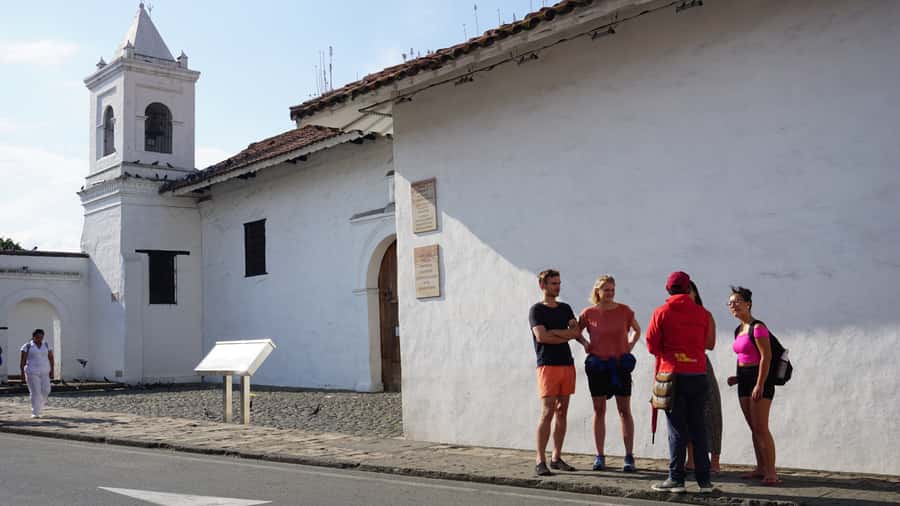
The strongest praise goes to the guides’ energy, clarity, and personal connection to Cali. Cristian, also written as Christian in some feedback, is repeatedly singled out for enthusiasm, strong explanations, and an engaging manner.
Fernando is another frequent favorite. He is described as friendly, interactive, and good at learning about the people in his group. One useful detail is that he adapted a route when city preparations made some streets harder to use, showing the practical value of having a local guide rather than following a fixed audio route.
Juliana is praised for her English, local knowledge, and ability to explain Cali as someone born and raised there. Lem brings a particular love of salsa, while Adriana Alvarez has also led well-received departures.
You cannot choose a specific guide from the information provided, so treat these names as examples of the team rather than a guarantee. Still, the pattern is encouraging: this tour depends heavily on the person leading it, and the guides appear to be its main strength.
Is $13 good value?
At $13 per person, this is a good buy if you want a broad introduction to Cali without paying for a private guide. You get roughly 150 minutes or more, a central route, live English commentary, a possible chontaduro taste, and local recommendations for food, coffee, shopping, and souvenirs.
The value is strongest on your first day in the city. The tour can help you understand where you are, decide which areas deserve a second visit, and choose an evening salsa plan with more context.
It is less suitable if you want a slow architectural tour with interior visits. Entrances are not included, and the group keeps moving between many sites. You also should not book it expecting a private conversation with the guide or a dedicated dance class.
Cancellation is flexible up to 24 hours before the start for a full refund, and you can reserve without paying immediately. That is helpful if your Colombia plans are still shifting.
Who should book this walking tour?
I would recommend it to first-time visitors who want Cali explained through culture, politics, food, music, and public life. It is also a good fit if you are curious about Afro-Colombian influence and want to see how salsa developed within the city’s wider story.
The tour suits active walkers who can handle 7 kilometers and do not mind sun, rain, or frequent stops. It is particularly useful for visitors staying only a short time because the route gathers many major central sights in one outing.
I would think twice if you have limited mobility or are over 70, since the experience is specifically listed as unsuitable for people over 70. I would also skip it if you want a quiet, private, highly specialized tour or if difficult subjects such as drug trafficking and social unrest are not what you want on your first day.
Final verdict: a strong first look at Cali
Book this tour if you want Cali presented as a living city rather than only as the world capital of salsa. The best parts are the links between Afro-Colombian culture, local food, Pacific music, social resistance, theaters, public squares, and the salsa movement.
Bring water, rain protection, secure bags, and shoes made for a long walk. If you can give the tour close to three hours and stay open to complicated history, $13 buys a useful introduction and a good set of ideas for the rest of your time in Cali.
FAQ
How long does the Cali historical downtown tour last?
The activity is listed as 150 minutes, with the description also saying it lasts approximately three hours. Allow extra time so you are not rushed.
What language is the tour offered in?
The live tour guide is listed as English-speaking.
Where is the meeting point?
Meet in front of Museo Arqueológico La Merced. Look for the Beyond Colombia guides with red umbrellas.
How much does the tour cost?
The listed price is $13 per person.
What places will the tour visit?
The route includes La Merced, the Calima Gold Museum area, the River Boulevard, San Francisco Square, Cayzedo Square, Jairo Varela, the Ermita, the Municipal Theater, San Pedro Cathedral, Jorge Isaacs Theater, and Puente Ortiz, among other central sites.
Is food included?
A chontaduro tasting is included when available. Other food, drinks, and souvenirs are not included.
Do I need to pay entrance fees during the walk?
Tickets and entrances are not included. The tour does not take you to places where sudden extra charges apply.
How much walking is involved?
You will walk about 7 kilometers, with resting stops to listen to the guide.
Can I cancel the booking?
You can cancel up to 24 hours in advance for a full refund. The activity also allows you to reserve now and pay later.
Just added in Cali
- Cali: TRES CRUCES – Cali’s most popular hike and monument★ 4.9 · 19 reviews
- Cali: Walking tour of the historic center★ 4.9 · 18 reviews
- Cali: Two hours walking Cali City discovery tour★ 5.0 · 3 reviews
- From Cali: Whale Watching Day Trip in Buenaventura★ 4.6 · 3 reviews
- Cali: Tour of Waterfall in Pance River – Chorrera del Indio★ 4.9 · 34 reviews
- Cali: Pico de Loro Trekking Adventure – Farallones de Cali★ 5.0 · 4 reviews
- Cali: Three hours walking Cali City discovery tour★ 4.7 · 3 reviews
- Cali: Fruit Market Walking Tour with Tastings★ 4.6 · 7 reviews
Cali Tours, compared.
Historical Shared Tour Salsa, Graffiti & Resistance in Cali
Read our review →

San Cipriano Rainforest – River, Waterfalls and Adventure Day
Read our review →
Browse the lists this tour appears in