
Reviewed · COMUNA 13 & GRAFFITI TOURS
Shared Tour Cali’s Salsa, Graffiti & Resistance Experience
Cali’s salsa is more than a soundtrack for late nights. This 150-minute walking tour connects the music to African emancipation, popular culture, protest, and the city’s long habit of turning struggle into art. You’ll see salsa figures painted on walls, activist messages, and places where Cali’s public life comes together.
I like the clear link between salsa and social movements, and I like that the route includes both polished city sights and street art tied to resistance. Guides such as Cristian, also known as Chris, bring plenty of energy and may point you toward a good place to eat or dance afterward. The main drawback is the distance: you’ll walk about 8 km, often in busy areas, so this is not a gentle stroll or a tour for wheelchair users.
Key points
- Salsa with a social story: Learn how music grew from African, Caribbean, and New York influences before taking root in Cali.
- A long urban walk: The route covers about 8 km in roughly two and a half hours, with stops to rest and listen.
- Murals with a message: See portraits of salsa figures beside graffiti linked to popular struggles and victims of violence.
- Strong local guides: Cristian and other Beyond Colombia guides explain Cali with enthusiasm and plenty of personal energy.
- Useful nightlife advice: You’ll receive recommendations for salsa bars and may get partner discounts with the tour map.
- Good value at $13: No transport or entry fees are included, but the price covers a substantial guided look at Cali’s culture.
Salsa begins with people, not just dance steps
If you come to Cali expecting only dance lessons and nightclub advice, this tour gives you a wider frame. Salsa arrived through a long chain of cultural exchange, from the Caribbean Antilles to New York, then into Cali’s neighborhoods and social life during the 1960s through the 1980s.
The guide explains how African musical traditions and the experience of emancipation shaped the culture that salsa grew from. That background matters because it keeps the music from being treated as a simple tourist product. Here, salsa carries stories about romance, work, political events, community ties, and resistance.
You’ll also hear about cultura popular, or popular culture, as something created and carried by ordinary people. Salsa connected neighborhoods, musicians, dancers, workers, and social groups. Its lyrics could celebrate love one moment and comment on injustice the next.
I like this angle because it helps you understand why Cali takes salsa so personally. The city is not merely a place where people happen to dance well. Salsa is part of how many people express identity, memory, joy, and defiance.
More Comuna 13 and graffiti walks in Cali
- Historical Shared Tour Salsa, Graffiti & Resistance in Cali
★ 5.0 · 107 reviews - Cali: Comuna 20 Siloé Street Art Tour
★ 5.0 · 4 reviews - Medellin: Comuna 13 Graffiti Tour, Cable Car & Street Food
★ 4.8 · 9,046 reviews
Meeting at Plazoleta Jairo Varela
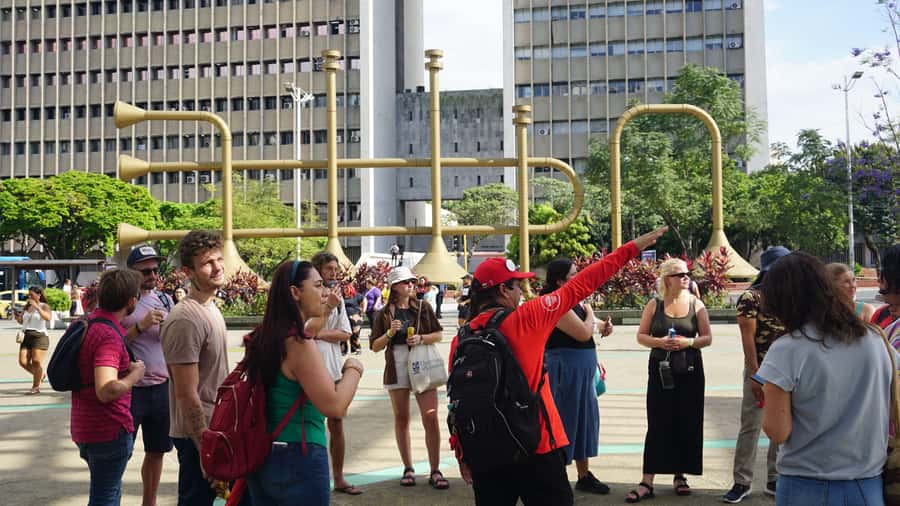
The tour begins at Plazoleta Jairo Varela, where you’ll find the guides under red umbrellas. This is a practical meeting point in central Cali and a fitting place to begin a tour about the city’s signature music.
The plaza honors Jairo Varela, founder and director of Grupo Niche, one of the best-known names connected with Colombian salsa. Your guide uses the setting to introduce the city’s musical identity before the walk moves into streets, murals, and public spaces.
Do not expect a formal museum visit or a seated lecture. The information comes while you walk, pause, look closely, and ask questions. Guides such as Cristian are animated and interactive, so you’ll get more from the stop if you stay engaged rather than treating it as a quick photo break.
Bring water from the start. The route is long, and you’ll be outside for most of the 150 minutes.
Plazoleta de la Caleñidad and the idea of local pride
One of the important stops is Plazoleta de la Caleñidad, a public space tied to the city’s sense of itself. The name points toward caleñidad, the character and identity of people from Cali.
This is where the tour’s broader theme becomes easier to grasp. Salsa is not presented as an isolated genre. It is part of a larger local culture shaped by movement, music, public gathering, and strong community feeling.
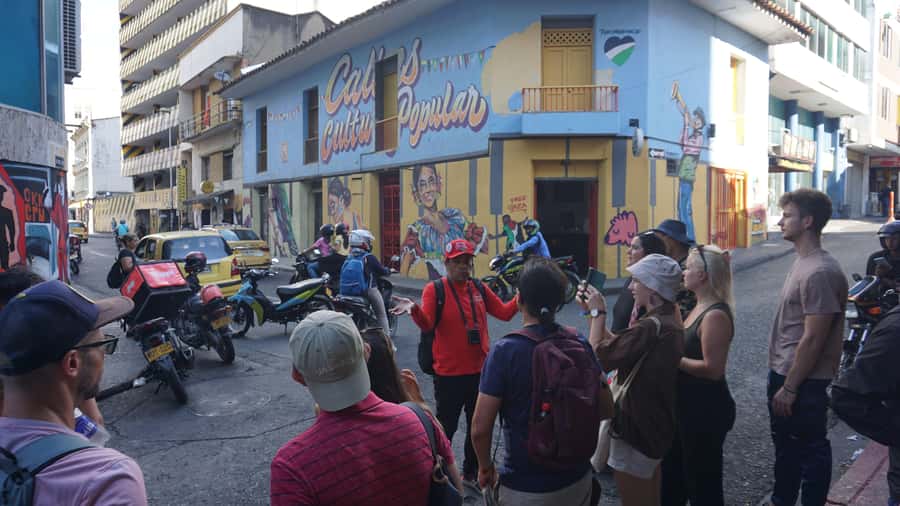
Your guide may connect the city’s energy to its social struggles, including protests and periods of public unrest. The point is not to turn the tour into a political rally. It is to show how music and street art can help people make sense of difficult events and keep collective memory alive.
I find this one of the strongest parts of the route because it gives context to the cheerful side of Cali. The dancing, music, and nightlife are real, but so are the tensions beneath them.
Calle del Pecado and the street flavor of Cali
The route continues to Calle del Pecado, also called the street of flavor. Even the nickname tells you that this is a place associated with Cali’s outgoing, playful side.
Here, the guide can help you read the street as more than a backdrop for photographs. Salsa culture is social. It lives in the way people gather, listen, move, flirt, celebrate, and claim public space.
The stop also helps balance the more serious parts of the tour. You’ll move between lively cultural expression and the political messages found in nearby art. That contrast is central to the experience. Cali’s salsa can be romantic and joyful, but it can also carry anger, memory, and social criticism.
You may not dance during every stop, but the tour’s mood is musical. One guide, Cristian, is especially energetic and may encourage you to loosen up. If you prefer a quiet sightseeing walk, this approach could feel a little much. If you want an introduction to Cali’s personality, it works well.
A few more trips around Cali worth a look
- Shared Tour Cali’s Historical Downtown
★ 4.8 · 143 reviews - The Cali Street Food Walking Tour
★ 5.0 · 81 reviews - San Cipriano Rainforest – River, Waterfalls and Adventure Day
★ 5.0 · 73 reviews - Cali: Street Food Tour
★ 4.8 · 71 reviews
The River Boulevard and the curve
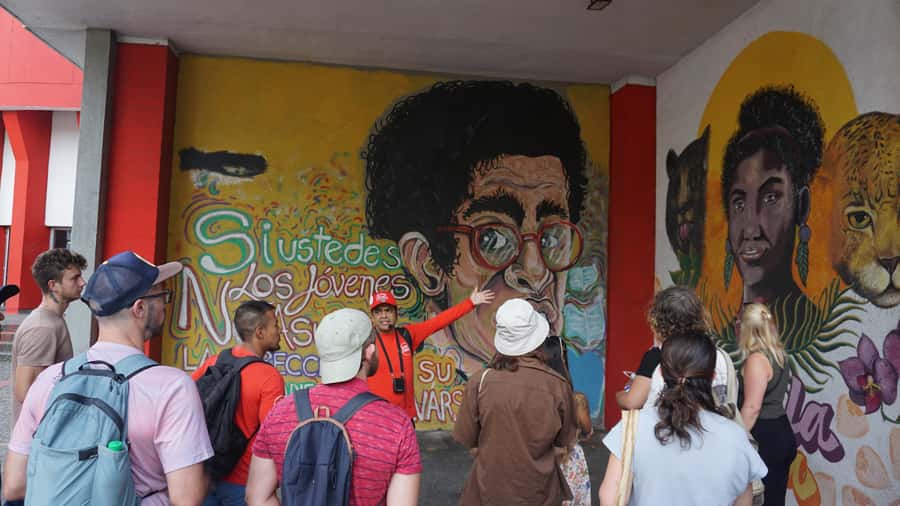
At the curve of the River Boulevard, the route shifts from music history to the way public spaces hold different layers of city life. You’ll hear more about how people use streets and plazas to gather, express themselves, and respond to change.
This area also gives the tour a useful physical rhythm. The route is not a straight march from one point to another. You stop, listen, look around, and continue. Those pauses matter because eight kilometers is a serious distance for a tour advertised as roughly two hours.
The stated duration is about 150 minutes, though the exact pace depends on the group. One direct bit of advice: wear shoes you would happily use for a full day of walking. Comfortable clothes will serve you better than dressing for a night out.
World Cup Tunnel and Fifth Avenue
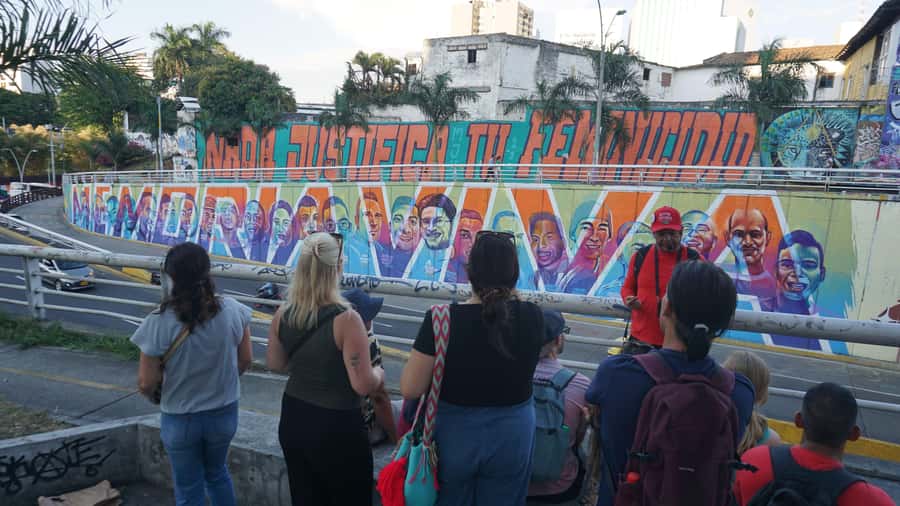
The World Cup Tunnel and Fifth Avenue add another layer to the route. These locations help show how major public infrastructure and everyday streets can become part of Cali’s visual and cultural story.
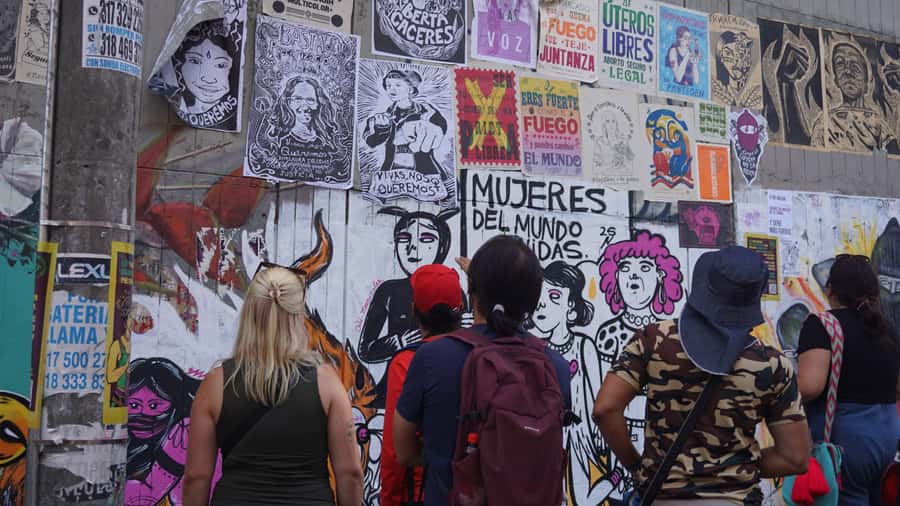
Your guide points out the relationship between public art, music, and collective memory. Salsa figures appear in murals as cultural heroes, while other works address social pain and political action. The route is not simply a search for pretty walls. It asks you to consider who gets remembered, who gets represented, and what messages people choose to place in public.
This is where a camera earns its place in your bag. The murals change the feel of the walk and provide some of the most striking images of the afternoon. Still, keep your phone and wallet close. The route includes crowded areas, and the tour’s own advice is sensible: keep your belongings closer than your friends.
The graffiti monument to victims, N21
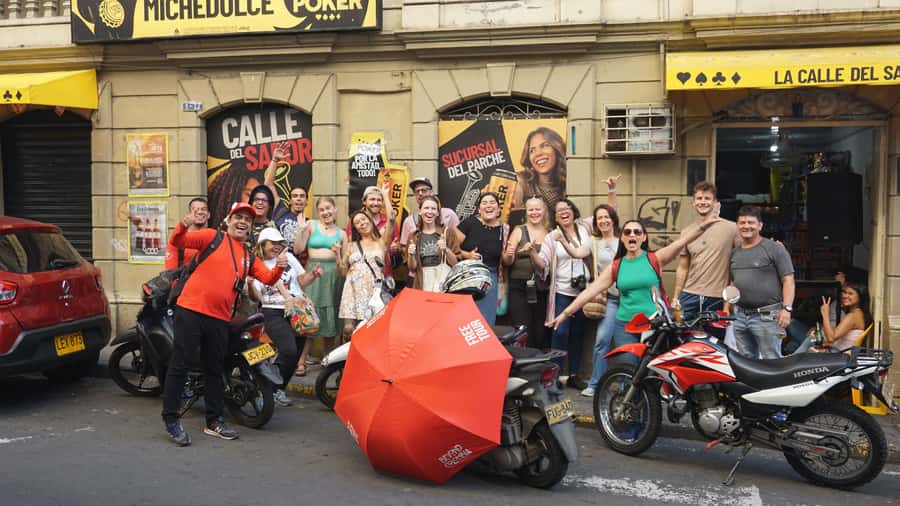
The graffiti monument to victims marked N21 is one of the most serious stops. It connects street art with the people affected by social conflict and public protest.
The tour does not treat resistance as a fashionable theme. It places activism beside salsa and asks you to see both as forms of popular expression. Music, painting, and public gatherings can all help communities tell their own stories when official accounts feel incomplete.
This stop may be challenging for some people because the subject is not light entertainment. That is also why it adds value. You leave with a more honest sense of Cali, a city known for pleasure and nightlife but also shaped by inequality, anger, solidarity, and demands for change.
Come with an open mind. The tour is more rewarding if you are willing to listen to difficult material without expecting every stop to be cheerful.
Cult salsa bars and what to do afterward
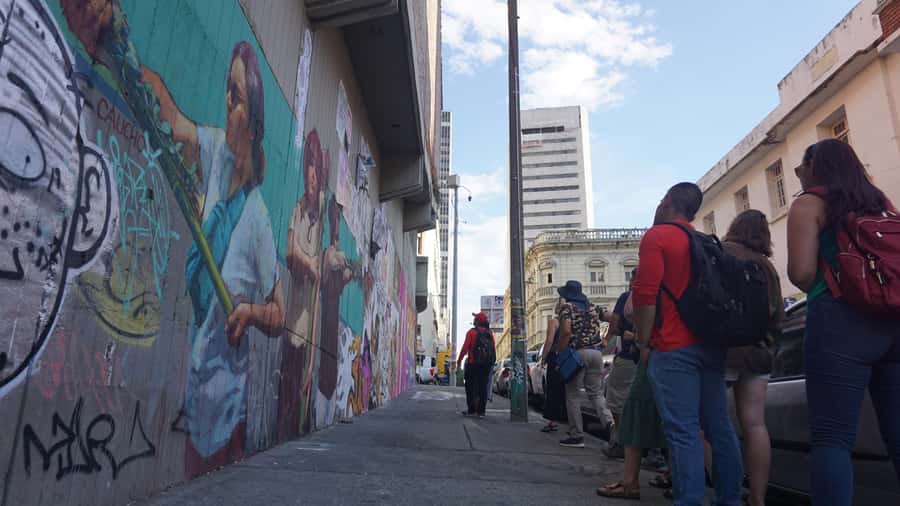
The final part of the experience points you toward Cali’s salsa nightlife. The guides recommend cult salsa bars and can help you decide where to go dancing later.
This practical advice makes the tour more useful than a simple history walk. You learn why salsa matters, then receive a path toward hearing it in the setting where the music continues to function as a social activity.
The tour does not include drinks, food, or a night out. You pay for those separately. That is worth remembering when you compare the $13 tour price with a full evening package.
One guide also recommended a restaurant to a participant who later found the food excellent. That does not guarantee a particular meal, but it suggests that the guides are willing to help you build the rest of your Cali plans. Partner discounts may also be available if you show the Beyond Colombia Free Walking Tour Map through its Linktree.
What the $13 price really gives you
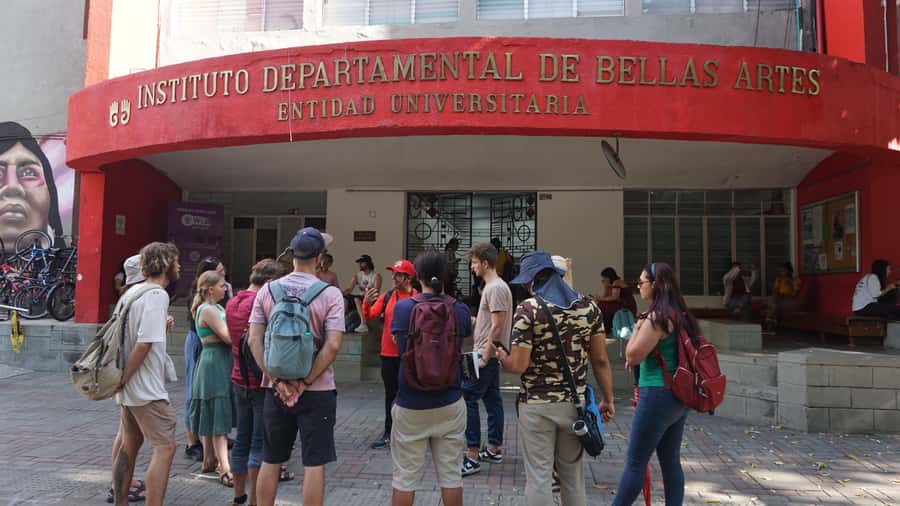
At $13 per person, this is a strong deal if you want context rather than a short photo walk. You get a professional Beyond Colombia guide, a structured route through central Cali, explanations of salsa’s origins and social role, access to street art locations, and nightlife recommendations.
You do not get transport, food, drinks, souvenirs, or a private guide. The group format means you’ll share the experience with other people, which keeps the cost low and can make the walk more social.
The value is highest for a first visit to Cali. A salsa fan may already know some of the music, but the connection to protest and popular culture can add a new angle. Someone who knows little about salsa gets both cultural background and practical advice about the city’s music scene.
You should also price in your own stamina. A cheap tour that leaves you exhausted is not a bargain for everyone. The walk covers about 8 km, and the heat or thirst may matter more than the ticket price. Water is essential.
Guides, languages, and the shared format
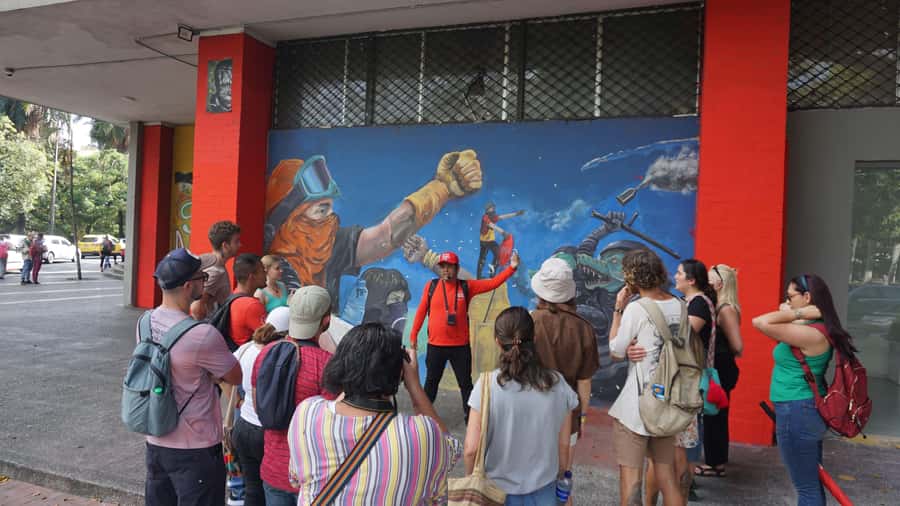
The tour is offered in English and Spanish. An optional audio guide is available in Spanish. The live guide is the main reason to choose this experience, since the route depends on explanation and conversation rather than signs alone.
Cristian, sometimes referred to as Chris, is one of the guides associated with this route. He is described as animated, enthusiastic, and especially strong on salsa and Cali’s story. Other Beyond Colombia guides may lead the tour, so your exact style will depend on who is working that day.
The shared format is worth understanding. You will not have an exclusive guide setting the pace only for you. On the plus side, shared walks can feel friendly and give you people to meet. On the downside, the group may move at different speeds, and you have less control over how long each stop lasts.
Beyond Colombia has operated in Colombia since 2013 and offers tours in several major cities. That experience shows in the route’s clear theme: salsa, graffiti, and resistance are treated as connected subjects instead of three unrelated attractions.
Who should book this Cali walk
I would choose this tour if you want to understand why salsa is central to Cali rather than simply take a dance class. It suits first-time visitors, music fans, people interested in street art, and anyone who wants local history presented through public spaces.
It is also a good fit if you plan to go dancing later. The route gives you enough background to recognize salsa as a social tradition, and the bar recommendations can help you make better choices at night.
I would think twice if you dislike long walks, crowded streets, or discussions of protest and social conflict. The tour is not suitable for wheelchair users, and it is not designed as a relaxed sightseeing ride. There is no transportation during the route, so you walk between all the listed areas.
Book it early in your Cali stay if possible. That gives you time to use the bar, restaurant, and neighborhood suggestions afterward. Free cancellation is available up to 24 hours before the start, and you can reserve now and pay later, which helps if your schedule is still shifting.
Should you book the Salsa, Graffiti and Resistance Experience?
Book this tour if you want a fuller picture of Cali than nightlife alone can provide. The best parts are the link between African and Caribbean roots, the role of salsa in popular culture, the murals honoring musical figures, and the harder messages about victims and resistance.
At $13, the experience offers a lot of guided time and useful local direction. Just prepare for the 8 km walk, bring water, wear good shoes, and keep your belongings secure.
If you want a short, quiet introduction to the city, choose something less demanding. If you want to understand why Cali dances with such force and why its walls speak so plainly, this is a smart first step.
FAQ
Where does the tour meet?
Meet at Plazoleta Jairo Varela, under the red umbrellas.
How long does the tour last?
The tour lasts approximately 150 minutes, or about two and a half hours.
How far will I walk?
You’ll walk about 8 km, with stops to rest and listen to the guide.
What languages are available?
Live guides offer the tour in English and Spanish. An optional audio guide is available in Spanish.
What is included in the price?
The price includes a professional Beyond Colombia guide, salsa history and cultural explanations, visits to representative salsa-related areas, street art content, and recommendations for salsa bars.
Are food and drinks included?
No. Food, drinks, and souvenirs are not included.
Is transportation provided during the tour?
No. You walk between the stops, and transportation to and from your hotel is not included.
Is this a private tour?
No. It is a shared tour, so you will join other participants rather than have an exclusive guide.
What should I bring?
Bring comfortable shoes, water or another preferred drink, and a camera. Comfortable clothing is also recommended.
Is the tour suitable for wheelchair users?
No. The tour is not suitable for wheelchair users.
Can I cancel my booking?
Yes. You can cancel up to 24 hours in advance for a full refund. You can also reserve now and pay later.
Just added in Cali
- Cali: TRES CRUCES – Cali’s most popular hike and monument★ 4.9 · 19 reviews
- Cali: Walking tour of the historic center★ 4.9 · 18 reviews
- Cali: Two hours walking Cali City discovery tour★ 5.0 · 3 reviews
- From Cali: Whale Watching Day Trip in Buenaventura★ 4.6 · 3 reviews
- Cali: Tour of Waterfall in Pance River – Chorrera del Indio★ 4.9 · 34 reviews
- Cali: Pico de Loro Trekking Adventure – Farallones de Cali★ 5.0 · 4 reviews
- Cali: Three hours walking Cali City discovery tour★ 4.7 · 3 reviews
- Cali: Fruit Market Walking Tour with Tastings★ 4.6 · 7 reviews
Comuna 13 & Graffiti Tours, compared.
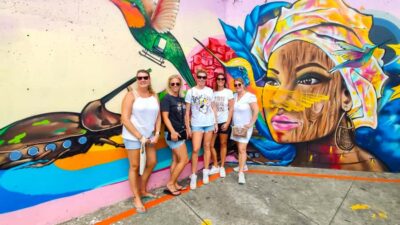
Comuna 13 Graffiti Tour, Cable Car & Street Food
Read our review →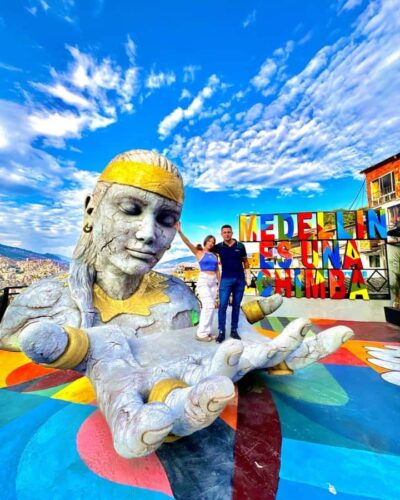
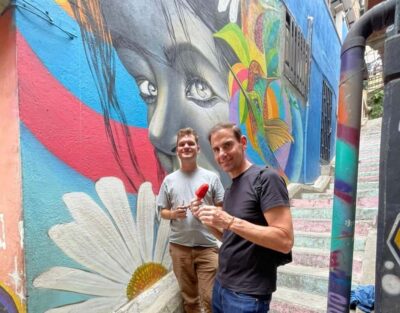
Private City Tour with Metrocable and Comuna 13
Read our review →
Comuna 13 Tour with Snacks And Your Own Graffiti
Read our review →
Comuna 13 and Graffiti Guided Tour with a Local
Read our review →
Browse the lists this tour appears in