
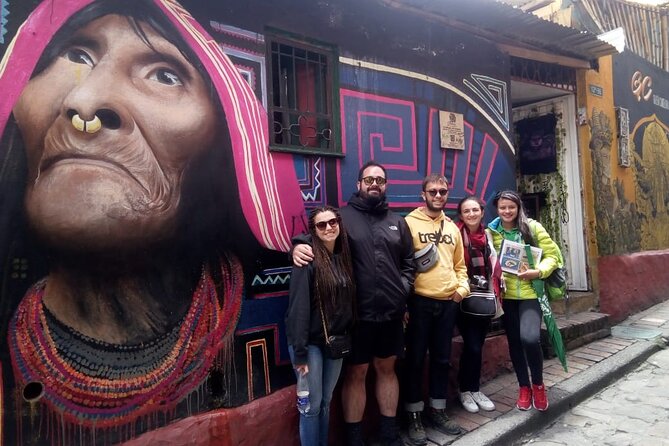
Reviewed · BOGOTÁ TOURS
Historical tour Bogota
Bogotá’s past is written into the streets of La Candelaria, and this walking tour connects the big chapters: Indigenous Bogotá, the legend of El Dorado, Spanish rule, independence, the Bogotazo, and the violence that followed. You also get the human details, from chicha and emeralds to Botero, Gabriel García Márquez, and daily life in the capital.
I like the route’s wide historical sweep and its stops in places you can actually see and feel, rather than a lecture delivered from a bus. I also like the practical ending, with restaurant, museum, coffee, and money-exchange suggestions. The main drawback is that three hours on Bogotá’s uneven streets requires a moderate fitness level, and the tour runs in bad weather, so pack an umbrella.
Key points to know
- Three-hour walk through La Candelaria: The route covers eight stops in Bogotá’s historic center.
- History with local culture: Expect El Dorado, independence, the Bogotazo, chicha, emeralds, Botero, and García Márquez.
- Guides vary by departure: Paula, Ricardo, Jennifer, Diane, Rodrigo, and Carlos have led recent departures.
- A useful first-day orientation: The final advice can help you choose museums, restaurants, coffee shops, and routes to Monserrate.
- Small enough to stay personal: Groups can reach 30 people, so the experience may feel lively rather than private.
- Weather matters: The tour is not canceled for rain. Comfortable shoes and an umbrella are sensible.
Why this is a useful first look at Bogotá
I would use this tour early in a Bogotá stay, especially if La Candelaria is still a blank space on your map. In roughly three hours, you move from the formal heart of the nation to older streets, a market, a cultural district, and a square linked to one of Colombia’s most painful political turning points.
The route is not built around paid museum entries. That keeps the pace moving and lets the guide explain the city in the streets themselves. You will see important buildings from outside, hear the stories that give them meaning, and get enough orientation to decide which places deserve a separate visit.
The price is listed at $19.77 per person, which makes it a reasonable buy if you want a guided introduction without committing to a private tour. It is described as a free tour, yet a price is shown and one participant chose to give the guide 50,000 COP at the end. Treat the displayed price as your booking cost, and ask at the start if the guide explains any additional payment custom.
A few more trips around Bogotá worth a look
- Bogota: Bicycle City Tour
★ 4.9 · 2,156 reviews - Zipaquirá: Salt Cathedral Group Tour with Pickup
★ 4.8 · 1,606 reviews - Bogotá: Guided La Candelaria Walking Tour
★ 4.8 · 1,229 reviews
Beginning at Bolívar Square
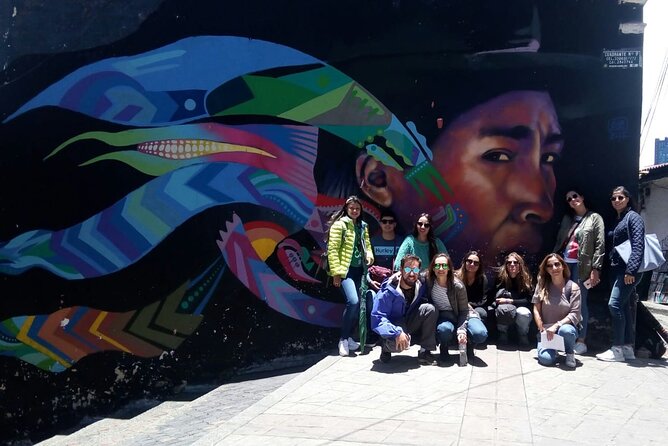
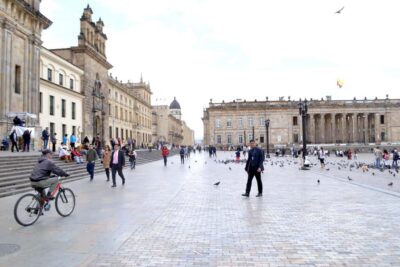
The walk starts at Cra. 7 #11-10 in La Candelaria and opens at Plaza de Bolívar, Bogotá’s main civic square. Allow about 30 minutes here. This is the place to begin understanding how the capital developed and why the surrounding buildings matter to Colombia as a whole.
The guide’s job at this stop is not just to point out façades. You will hear about the city’s beginnings, the Indigenous people who lived in the area, and the way Bogotá grew into the national capital. The square also gives you a useful sense of Colombia’s political and religious center.
Because this is an outdoor stop, the quality of the explanation matters more than entry tickets. Look around while the guide talks, and pay attention to how the square gathers several kinds of power in one place. The tour does not include interior admission, so you should not expect a museum visit here.
Teatro Colón and the Bolívar connection
The next stop is Teatro Colón, with about 15 minutes to take in the building and its story. The theater is presented as one of Colombia’s notable architectural treasures, and this is also where you learn about the place associated with Simón Bolívar.
This short stop works well as a change of pace after the civic history of Bolívar Square. You get architecture, national figures, and a more personal link to independence. Since the visit is an exterior viewing, the time is enough for photographs and explanation without turning the tour into a long architectural study.
If you want to see inside Bogotá’s cultural buildings, use the guide’s suggestions at the end and plan a separate visit. The route gives you context, not a full performance venue tour.
Botero and the cultural block of La Candelaria
At the museums of the Banco de la República, the group pauses outside for around 15 minutes. The guide explains the cultural importance of this part of La Candelaria and introduces the life and work of Fernando Botero.
This is one of the route’s useful combinations. You hear about Bogotá’s art scene while standing in the district where several cultural institutions sit close together. Even without entering, you learn which area to return to if you want more art after the walk.
Botero is treated as part of Colombia’s wider cultural story, not as an isolated famous name. That helps place the artist alongside literature, politics, food, and public life. If art is a major reason for your visit, note the museum advice carefully, since the tour itself does not include admission.
Same city, a different sort of day:
- Bogotá: Private City Tour, Monserrate, Emerald and Botero
★ 4.9 · 798 reviews - Bogotá´s Barrios: El Paraíso Favela Tour with Cable Car
★ 4.8 · 731 reviews - Bogota: Guatavita and Salt Cathedral Daily Group Tour
★ 4.7 · 615 reviews - Bogotá City Tour with Monserrate, Gold and Botero Museums
★ 4.9 · 584 reviews
Chorro de Quevedo and the story of chicha
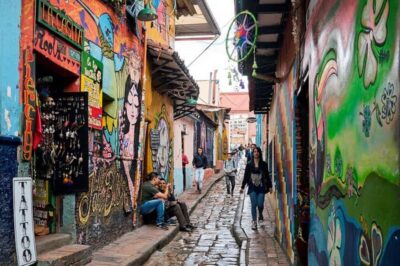
Plaza del Chorro de Quevedo receives about 20 minutes and brings the tour to a more intimate part of the old city. This is identified as Bogotá’s foundation square, so the guide returns to the question of how the capital began and why this small plaza carries such weight.
The stop also explains chicha, the traditional fermented drink associated with Bogotá. You learn why it was prohibited, which opens a wider conversation about Indigenous customs, colonial control, and the way local traditions can survive political pressure.
This is the sort of detail that gives the walk character. You are not simply collecting dates and buildings. You are hearing how food and drink fit into Colombia’s social history. The square is also a good moment to pause, since the route is mostly on foot and the information comes in quick sections.
La Concordia Market for a taste of local life
The route then moves inside Plaza de Mercado La Concordia for about 20 minutes. Here you can buy a traditional chicha, choose a Colombian fruit juice, or pick up a souvenir. Those purchases are not included, so bring spending money if you want to sample something.
I like this stop because it shifts the tour from national events to ordinary commerce. A market gives you a better feel for the city than another grand building can. You can look at local products, watch the rhythm of the stalls, and decide if you want to return later for more time.
Keep your expectations practical. This is a brief visit, not a full market meal or food tour. Snacks, drinks, meals, and personal purchases are extra. If you are hungry, ask the guide for a restaurant recommendation at the end rather than assuming the market stop provides lunch.
Eje Ambiental and a view toward Monserrate
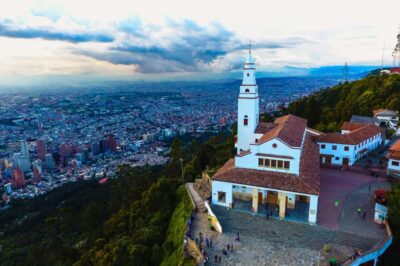
At Eje Ambiental, the group spends about 15 minutes. The route offers a view toward Monserrate and explains how to reach the hill. This is useful planning information because Monserrate is one of Bogotá’s major sights, yet the walking tour does not include transportation or a trip uphill.
The stop also touches on a square where Gabriel García Márquez used to meet people socially. That detail brings Colombia’s best-known writer into the city around you rather than treating him as a name in a textbook.
This is a good place to ask practical questions about fitting Monserrate into your schedule. The guide can point you in the right direction, but the tour itself remains focused on the historic center. You will need to make the separate visit on your own.
Gaitán, the Bogotazo, and Colombia’s difficult twentieth century
The monument to Jorge Eliécer Gaitán receives about 20 minutes and is one of the route’s most serious stops. You learn who Gaitán was, why he mattered, and how his death connects to the Bogotazo and the violence that shaped Colombia.
This part may be especially valuable if you know the names but not the sequence of events. The guide links a political figure, a city uprising, and a much longer period of conflict. That connection helps explain why Bogotá’s streets carry such strong memories beneath the everyday traffic and commerce.
Expect the tone to change here. The tour covers art, food, architecture, and literary life, but it does not avoid the country’s painful past. A guide who explains these events clearly can make the rest of the city easier to understand.
Several guides have been praised for making political history clear without making the walk tiring. Paula is noted for linking history and politics with literary detail, while Ricardo is described as attentive and clear. The guide changes by departure, so you should not book on the assumption that one particular person will lead your group.
Rosario Square and the emerald trade
The final stop is Plazoleta del Rosario, reached after about 20 minutes of discussion and walking. The square is known for its emerald market, and the guide explains how these stones are sold in a somewhat informal setting. You might see the local trade in action, though the tour does not promise a purchase or a formal gem demonstration.
This is a fitting ending because it leaves you with a modern, practical piece of Colombian life. The route has moved from founding stories to national politics, and now to a trade that many people associate with the country. Keep your buying decisions cautious and do not feel pressure to purchase anything.
The tour ends at Rosario Square, at Av. Jimenez de Quesada #6-71. The guide also offers suggestions for restaurants and other places to visit. That final advice can be one of the most useful parts of the experience if you are still deciding how to spend the rest of your time in Bogotá.
What the guides add to the experience
The guide names connected with this experience include Paula, Ricardo Jiménez, Jennifer, Diane, Rodrigo, and Carlos. The feedback attached to different departures gives a clear picture of the expected style: explanations supported by photographs, questions for the group, simple accounts of complicated history, and plenty of time for basic questions.
Paula receives particular praise for combining Colombian history and politics with literature, including Gabriel García Márquez. Ricardo is described as punctual, attentive, and strong at explaining the city. Jennifer has led Spanish-language walks, and Diane is praised for covering La Candelaria in a complete way. Carlos and Rodrigo are also associated with clear, engaging departures.
Because the guide is not fixed, the experience can vary in tone. Some guides may lean more toward politics, others toward architecture, culture, or practical tips. The group size can reach 30 people, so stand near the guide if you want to hear every detail and arrive on time to avoid joining the group mid-story.
Pace, comfort, and what to bring
The stated duration is about three hours, and the route includes regular stops of 15 to 30 minutes. You are walking through central Bogotá rather than riding between attractions, so comfortable shoes matter more than smart clothes. A moderate level of physical fitness is recommended.
Rain will not cancel the experience. Bring an umbrella and wear something suitable for changing weather. You may also want a small amount of Colombian cash for chicha, juice, souvenirs, or other purchases, though the tour price does not include food or drinks.
The meeting point is near public transportation, which makes it easier to reach La Candelaria. The tour permits service animals. The route is not described as fully accessible, so anyone with mobility concerns should ask the provider before booking.
Who should book this walk
I would recommend it to first-time visitors who want the basic story of Bogotá before choosing museums and longer day trips. It also suits anyone with only a few days in the capital, since the route covers several central districts and ends with practical suggestions.
History fans will appreciate the mix of Indigenous origins, Spanish colonization, independence, Gaitán, the Bogotazo, and later violence. Art and literature fans get Botero and García Márquez, while food-minded visitors receive a market stop and a chance to try chicha or Colombian juice.
I would think twice if you dislike walking in rain, prefer a private pace, or want to spend substantial time inside museums. The tour moves through many subjects quickly. Its strength is orientation and connection, not long visits at one attraction.
Should you book the Bogotá historical tour?
Book it if you want a reasonably priced, three-hour introduction to La Candelaria with a guide who can connect buildings, politics, art, food, and local customs. The 4.9 rating from 72 ratings and 99 percent recommendation figure point to a consistently strong experience, especially for clear explanations and friendly guides.
Bring an umbrella, wear good shoes, and keep your afternoon flexible so you can follow up on the guide’s advice about museums, Monserrate, coffee, restaurants, and money exchange. If you want Bogotá to make sense before you explore it on your own, this is a sensible first walk.
FAQ
How long does the Bogotá historical tour last?
The walk lasts approximately three hours.
Where does the tour start?
It starts at Cra. 7 #11-10 in La Candelaria, Bogotá, Colombia.
Where does the tour end?
The tour ends at Rosario Square, at Av. Jimenez de Quesada #6-71 in La Candelaria.
What places are included on the route?
The stops include Plaza de Bolívar, Teatro Colón, the Banco de la República museums area, Plaza del Chorro de Quevedo, Plaza de Mercado La Concordia, Eje Ambiental, the Jorge Eliécer Gaitán Monument, and Plazoleta del Rosario.
Is food or drink included?
No. Snacks, drinks, meals, and personal purchases are not included. At La Concordia Market, you can buy chicha, Colombian juice, or a souvenir.
Does the tour operate in bad weather?
Yes. The tour is not canceled because of bad weather, so you should bring an umbrella.
How large can the group be?
The maximum group size is 30 people.
Just added in Bogotá
- Candelaria Unveiled: Cool-tural Heritage Walking Tour★ 4.4 · 6 reviews
- Bogota: Zipaquira, Salt Cathedral & Lake Guatavitá Tour★ 4.9 · 32 reviews
- BOGOTA: Tour of Jaime Duque Park, Zoo, and Aerospace Museum★ 4.6 · 15 reviews
- BOGOTA: Visit to the Botanical Garden and Ugly Betty’s House★ 4.9 · 15 reviews
- Bogotá: Villa de Leyva Full-Day Tour with Meals★ 4.2 · 10 reviews
- BOGOTA: Tour of Villa de Leyva, Ráquira, Pozos Azules, and Puente de Boyacá★ 5.0 · 8 reviews
- Bogotá: Private Candelaria Walking Tour and Gold Museum★ 5.0 · 17 reviews
- Bogota: Tour to Salitre Mágico, An Extreme Fun Trip★ 4.3 · 7 reviews
Bogotá Tours, compared.
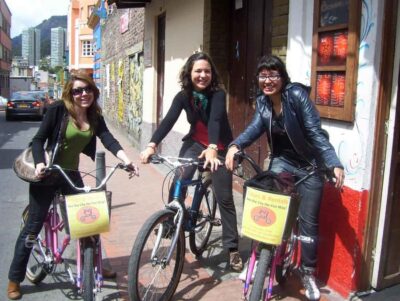
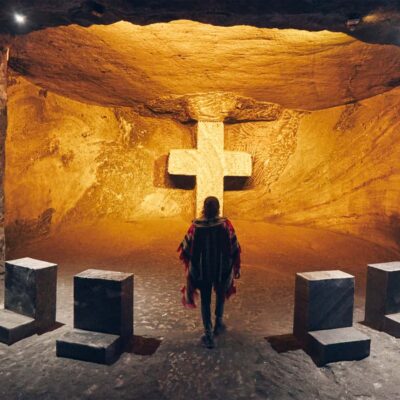
Private City Tour, Monserrate, Emerald and Botero
Read our review →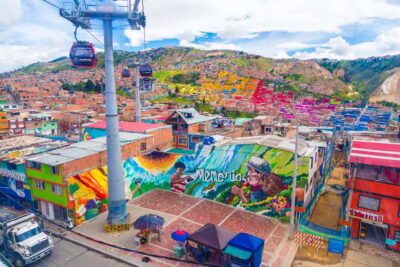
Bogotá´s Barrios: El Paraíso Favela Tour with Cable Car
Read our review →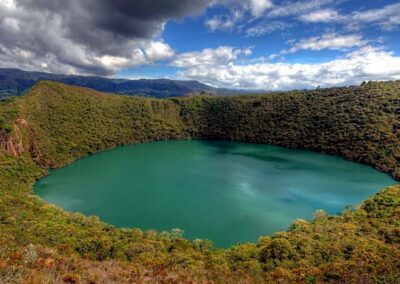
Bogotá City Tour with Monserrate, Gold and Botero Museums
Read our review →
Browse the lists this tour appears in