
Reviewed · CABLE CAR & CITY VIEWS
Cable car to el Paraiso, the city slum
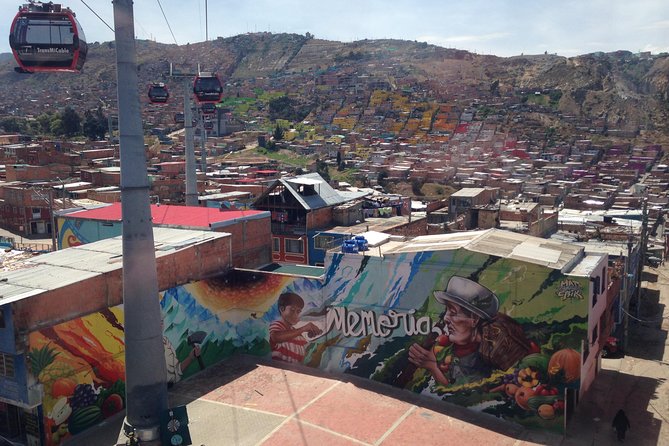
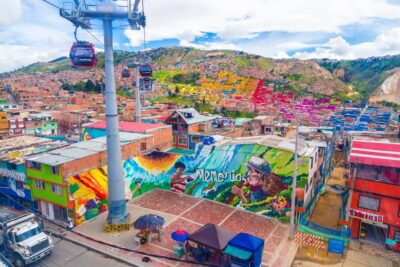
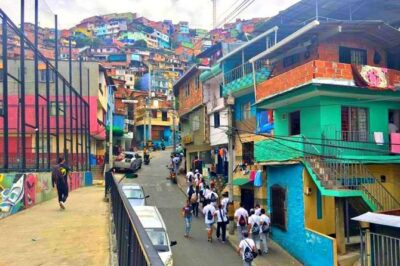
Bogotá’s TransMiCable carries you above the southern hills to El Paraiso, a neighborhood many first-time visitors would never reach on their own. At the top, you walk among colorful murals, meet a local host, and look across a huge stretch of the city from Ciudad Bolívar.
I like the ride itself, since you use the same cable car system residents use, and I like the chance to hear directly about neighborhood life from people such as Brian and Andrea. The main consideration is that this is not a polished sightseeing circuit. You are visiting a working community, and the four-hour outing includes public transport, walking, and time outside the usual tourist zone.
Key points before you book
- TransMiCable is part of the experience: You ride Bogotá’s public cable car system to the high point of El Paraiso rather than simply arriving by private vehicle.
- The views are a major reward: The hilltop lookout gives you a broad view over Bogotá and Ciudad Bolívar.
- Local hosts add context: Guides such as Brian and Andrea explain daily life, street art, and community projects from a personal point of view.
- Street art is central: Murals and painted streets turn the walk into an open-air introduction to local stories and neighborhood pride.
- You may sample local snacks: Past outings have included empanadas and traditional juices.
- The tour is well liked but not for everyone: It suits curious visitors who want social context, not only famous monuments and museum stops.
Why El Paraiso changes your view of Bogotá
Most short visits to Bogotá focus on La Candelaria, the Gold Museum, Monserrate, and the restaurants of Chapinero. Those places matter, but they show only one part of the capital. El Paraiso gives you a look at Ciudad Bolívar, a large southern district where more than one million people live.
That change in setting is the point. You are not simply checking off another lookout. You are learning how a hill community has used transport, public art, and local projects to improve its daily life and its image. The neighborhood is colorful and active, with shops, homes, children at play, and residents going about ordinary business.
I appreciate that the outing does not treat El Paraiso as a backdrop. A local person joins the walk and explains the area in human terms. The discussion can include the origins of the neighborhood, the role of graffiti and murals, and efforts designed to help residents. That makes the visit more useful than a quick photo stop.
You should also bring the right attitude. This is a living neighborhood, not an outdoor museum. Look, listen, ask respectful questions, and remember that people’s homes and routines are part of the setting.
More cable car rides above Bogotá
- Bogotá´s Barrios: El Paraíso Favela Tour with Cable Car
★ 4.8 · 731 reviews - Medellin: Comuna 13 Graffiti Tour, Cable Car & Street Food
★ 4.8 · 9,046 reviews - Medellín: Comuna 13 District Tour with Cable Car Ride
★ 4.8 · 1,467 reviews
From Teusaquillo to the southern hills
The meeting point is El Empanadazo de la 39D, at 40a #14-03 in Teusaquillo. The tour begins at 9:00 am and returns to that same location after roughly four hours.
The journey to the cable car is part of the lesson. Depending on the day’s arrangements, you may use a city bus for around 40 minutes. That can sound like simple transit, but it gives your guide time to explain Bogotá, point out parts of the city, and answer questions before you reach El Paraiso.
I like this setup because you are not dropped into the neighborhood without context. You hear about the city while moving through it, then arrive with a better sense of how far Ciudad Bolívar is from the familiar central districts. It also means the tour feels like an outing through Bogotá rather than a private vehicle trip from one attraction to another.
The tradeoff is comfort and speed. Public transit can be less predictable than a car, and part of the morning is spent getting there. If you want a tightly packed tour with one landmark after another, this may feel slow. If you enjoy seeing how a city functions, the ride adds value.
Riding TransMiCable to El Paraiso
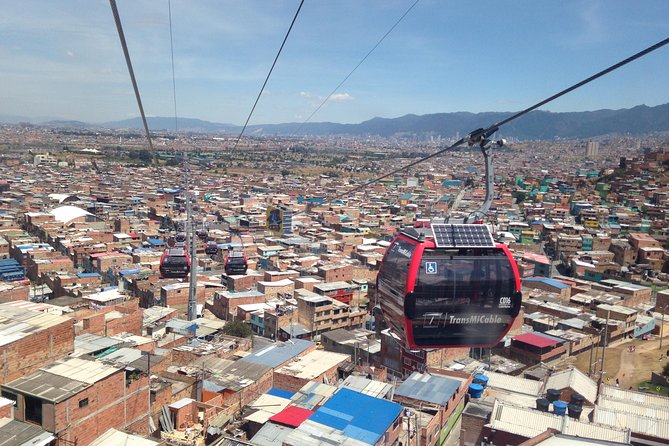
At the TransMiCable Tunal Station, you board the modern cable car for the ride toward the hilltop. The listed cable car portion takes about 15 minutes, and admission is included.
This is one of the tour’s strongest features. Bogotá’s cable car is not just a sightseeing ride added for visitors. It is part of the city’s public transport system, so you get a practical look at how residents connect the hills with the rest of Bogotá. The cabins also give you a moving view of the city as you rise.
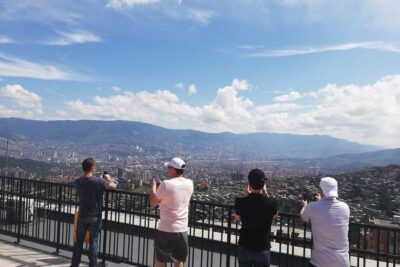
The height changes your sense of Bogotá. From above, you can see the spread of the capital and the steep setting of Ciudad Bolívar. At the top, the lookout is often described as better than the view from Monserrate. That is a bold comparison, but it makes sense for visitors who want to understand the city’s size and southern reach rather than only see the historic center from above.
The cable car is also a simple pleasure. You get a clear view, a memorable ride, and a practical example of urban planning in one short stretch. If you are uneasy with heights, keep that in mind before booking. The experience is built around the ride, not merely a visit to the station.
Walking through murals and neighborhood stories
Once you reach El Paraiso, the tour turns into a walk through the neighborhood. Street art is a major focus, with murals and painted walls offering a visual guide to local identity. The art is not treated as decoration alone. Your guide explains how graffiti culture and community projects connect with efforts to improve the area.
The painted streets also make the walk easy to remember. You may see bold colors, large-scale designs, and scenes that reflect local pride. The tour’s value comes from hearing the meaning behind the art rather than rushing past it for photographs.
A local host helps keep the visit grounded. Brian has led walks around his home neighborhood, while Andrea has explained the graffiti culture and the projects that support residents. Other outings have included guides named Juan, Yacky, Melissa, Gerald, Nick, and Juan Sebastian Marin. The exact team can vary, but the format remains personal: a general guide helps with the journey and context, then a local host shows you the area from inside the community.
I like this two-guide structure. It gives you someone who handles the broader Bogotá story and someone who can speak from direct experience of El Paraiso. It also leaves room for questions. You can ask about the art, neighborhood change, transport, or daily life instead of listening to a fixed speech from start to finish.
The walk is not described as difficult, and most people can participate. Still, you should expect time on your feet and streets that may not feel like the smooth paths around a major museum. Comfortable shoes are a sensible choice, though the supplied details do not specify a required dress code or fitness level.
A few more trips around Bogotá worth a look
- Bogota: Bicycle City Tour
★ 4.9 · 2,156 reviews - Zipaquirá: Salt Cathedral Group Tour with Pickup
★ 4.8 · 1,606 reviews - Bogotá: Guided La Candelaria Walking Tour
★ 4.8 · 1,229 reviews - Bogotá: Private City Tour, Monserrate, Emerald and Botero
★ 4.9 · 798 reviews
What the visit says about community change
The best part of the tour is the way it connects place with local action. You see a neighborhood that has worked to improve its public image and create better opportunities through art, transport, and community programs.
That message can be easy to miss if you visit only for a lookout. Listen for the stories about how residents work together and how local projects support people in the area. You may come away with a more balanced picture of Ciudad Bolívar, one that includes hardship but also organization, creativity, and pride.
This is also where a guide’s approach matters. Several guides have been praised for answering questions, explaining the area clearly, and making the walk welcoming. Melissa, in particular, has been described as friendly and generous with recommendations, while Juan has been noted for keeping the cultural and historical material interesting.
You should not expect a formal academic lecture. The strength is personal explanation and conversation. If you ask good questions, you are likely to get more from the visit than you would by simply following a guide from mural to mural.
Snacks, photos, and the pace of the morning
Food is a small but welcome part of the outing. The experience has included snacks, with empanadas and traditional juices mentioned as examples. These are not the main reason to book, but they add a local touch and break up the walking and transport.
You may also have time for photographs. The hilltop view provides the obvious wide shot, while the murals offer more colorful close-ups. Guides have helped visitors take memorable pictures, but you should still be respectful about photographing residents, homes, and children.
The pace appears friendly rather than rushed. Four hours gives you time to handle the trip south, ride the cable car, walk through El Paraiso, talk with the local host, and return to Teusaquillo. Since the group can be as large as 15 people, it is worth remembering that personal attention depends partly on the final group size.
The experience is described as private, which suggests a more personal format than a large public excursion. At the same time, the stated maximum is 15 people, so clarify the group arrangement if having a truly one-to-one tour is important to you.
Is $67 a fair price?
At $67 per person, this costs more than simply taking public transport to the cable car on your own. You are paying for the guide’s time, the route planning, the explanation of Bogotá and Ciudad Bolívar, the local host, and the added context that would be difficult to arrange independently.
For me, the price makes sense if you value access and understanding more than a cheap ride. Getting to El Paraiso is possible in theory, but the point of this experience is having someone explain where you are, introduce the community’s stories, and help you move through the area with purpose.
The value also depends on what you want from Bogotá. If your priority is art museums, colonial architecture, and famous city sights, you may prefer to spend $67 elsewhere. If you want to see how residents use public transport and how a southern hillside community presents itself, this is one of the more distinctive ways to spend half a day.
The included transport and snacks help, though they do not by themselves justify the price. The real value is the combination of cable car access, local interpretation, and a destination you would be unlikely to understand fully on a casual solo visit.
Safety, respect, and practical comfort
Safety is a reasonable concern when visiting an unfamiliar part of a major city. The tour is led by guides who know the route, and the experience keeps you with the group and local host. The available details describe the visit as safe, but no city outing is risk-free, so keep your normal awareness and follow guide instructions.
The strongest safety advice is also the simplest: stay with the group, avoid displaying unnecessary valuables, and ask before photographing people. Treat El Paraiso as someone’s home, not as a spectacle.
Service animals are allowed, and the tour is near public transportation. Most people can participate, but the provided information does not give detailed accessibility notes for every part of the route. If you need specific support with boarding, walking, or the cable car, ask before booking.
The experience requires good weather. If poor weather cancels the tour, you are offered another date or a full refund. Free cancellation is available up to 24 hours before the 9:00 am start time. Changes or cancellations inside that window are not accepted for a refund, and the tour can also be canceled if the minimum number of participants is not reached.
Who should book this experience?
I would choose this tour if you have already seen, or plan to see, Bogotá’s central sights and want a fuller picture of the city. It is especially suitable for solo visitors, couples, and friends who enjoy conversation, public transport, street art, and social history.
It also suits people who want a meaningful half-day rather than a long list of monuments. The local host format gives the outing a human scale, and the cable car offers a memorable way to reach the hills.
Families can enjoy it too, provided children are comfortable with public transport and walking. The outing may be less suitable if you need a fully private vehicle, dislike heights, want a luxury sightseeing experience, or prefer not to visit working residential neighborhoods.
The tour has a 4.9 rating from 44 reviews, with 98 percent of participants recommending it. Those numbers do not replace your own judgment, but they fit the experience’s strongest qualities: friendly guides, good views, clear explanations, local contact, and a sense that you have seen a side of Bogotá beyond the standard route.
Should you book the El Paraiso cable car tour?
Book it if you want to ride Bogotá’s cable car as residents do, see a different side of the capital, and hear directly about El Paraiso from people connected to the neighborhood. The views, murals, local stories, and included snacks make the four-hour route feel varied.
Skip it if your schedule is short and you have not yet seen Bogotá’s central highlights, or if you want a private car and a polished sightseeing circuit. For curious visitors who value context, community, and a memorable cable car ride, $67 is a reasonable price for an unusual and worthwhile morning.
FAQ
Where does the tour begin?
It begins at El Empanadazo de la 39D, 40a #14-03, in Teusaquillo, Bogotá.
What time does the tour start?
The scheduled start time is 9:00 am.
Where does the tour finish?
The activity ends back at the meeting point in Teusaquillo.
How long does the experience last?
It lasts approximately four hours.
How do I reach El Paraiso?
The route includes public transport to the TransMiCable Tunal Station, followed by a cable car ride to the highest point of the hill.
Is the cable car ticket included?
Yes. Admission for the cable car portion is included.
How many people can join the tour?
The maximum group size is 15 people.
Can I cancel for a full refund?
Yes. You can cancel at least 24 hours before the local start time for a full refund. Poor weather or failure to meet the minimum group size can also lead to another date or a full refund.
Just added in Bogotá
- Zipaquira: 5 hrs Salt Cathedral Tour★ 4.4 · 9 reviews
- Zipaquirá: Private tour to the Salt Cathedral, Colombia’s first wonder★ 4.9 · 33 reviews
- Wonders of Salt: Colombia’s Underground Cathedral★ 5.0 · 18 reviews
- Zipaquirá Salt Cathedral & Andrés Carne de Res (Chía)★ 4.6 · 30 reviews
- Private Zipaquira Salt Cathedral and Guatavita Lagoon Tour from Bogota★ 4.5 · 44 reviews
- MINA CATEDRAL DE SAL ZIPAQUIRA Tour Privado★ 4.5 · 38 reviews
- Hiking to the largest paramo on earth : Sumapaz★ 5.0 · 49 reviews
- Tejo and Beer Tour in Bogotá★ 5.0 · 35 reviews
Cable Car & City Views, compared.

Comuna 13 Graffiti Tour, Cable Car & Street Food
Read our review →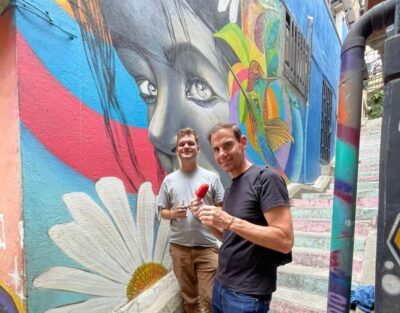
Bogotá´s Barrios: El Paraíso Favela Tour with Cable Car
Read our review →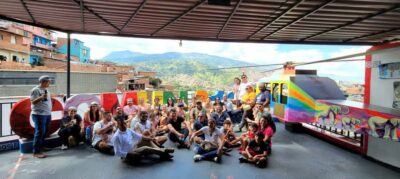
Private City Tour with Metrocable and Comuna 13
Read our review →
Medellín Coffee Farm Tour with Trolley and Cable Car Ride
Read our review →
Browse the lists this tour appears in