
Reviewed · BOGOTÁ TOURS
Breaking Borders: Bogota Gansters Story
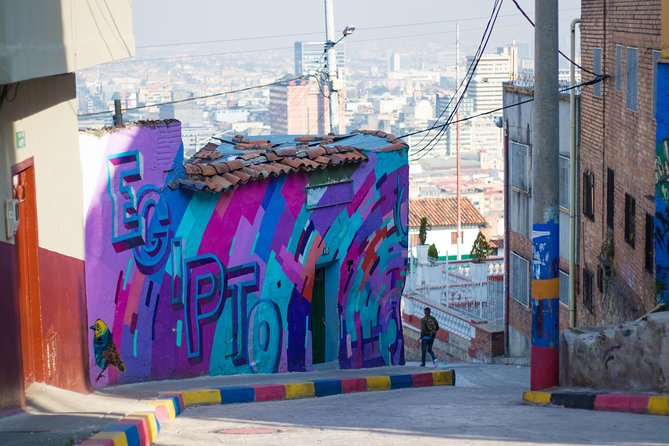
Bogotá’s Breaking Borders tour takes you from the cobbled lanes of La Candelaria into Barrio Egipto, a hillside community that has faced violence, poverty, and gang control. Former gang members explain that past in their own words, then show you the murals, church, football field, and streets that now carry a more hopeful message.
I like the direct access to local voices and the way tourism supports a project led by people from the neighborhood. I also like the small details, from traditional chicha to personal stories and freestyle rap. The main consideration is the uphill walking, and some visitors may find the emotional subject matter heavy.
Key things to know before you book
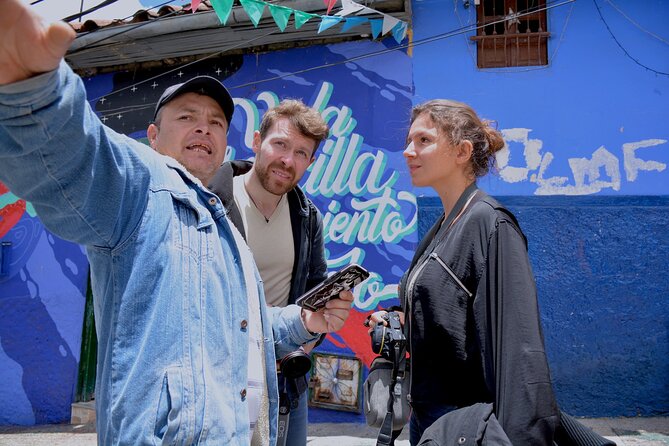
- Former gang members lead part of the experience, sharing personal stories about crime, violence, drugs, and leaving gang life behind.
- The walk begins at Chorro de Quevedo, then climbs toward Iglesia de Egipto and the neighborhood’s football field.
- Murals explain the community’s past and present, with local guides interpreting symbols and stories that you would miss on your own.
- The tour is private, so only your group takes part, though the guide team may include several people.
- A bilingual guide helps with translation, while local hosts such as Harold, Monkey, Mr. Pumpkin, and Gildardo share their experiences.
- Bring cash and comfortable shoes, especially if you want to buy local goods or offer an optional tip.
From Chorro de Quevedo to Barrio Egipto
The tour starts at Plazoleta Chorro de Quevedo, the small square traditionally linked with the founding of Bogotá. It is a lively starting point in La Candelaria, surrounded by old buildings, street art, cafés, and narrow lanes.
Here you meet the guide and hear about the Breaking Borders project before leaving the usual sightseeing route. The first hour sets the context. You are not simply walking from one attraction to another. You are learning why a neighborhood once known mainly for violence is trying to tell a different story.
The walk continues toward Nuestra Señora de Egipto, the church at the entrance to Barrio Egipto. The church is also tied to the neighborhood’s January 6 festivities, so it has a social role beyond being a place to pause for a photograph.
You then begin the climb into Egipto. The route is not described as a strenuous hike, but the hills matter. One visitor specifically felt that beginning closer to the church might have avoided the steep climb from the square. If you have trouble with inclines, ask about the route when booking and wear shoes with a firm grip.
A few more trips around Bogotá worth a look
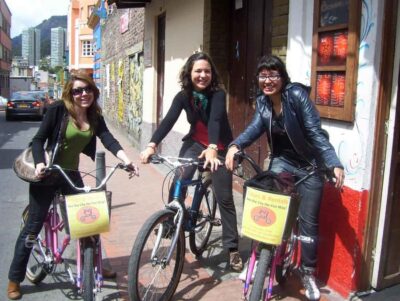
- Bogota: Bicycle City Tour
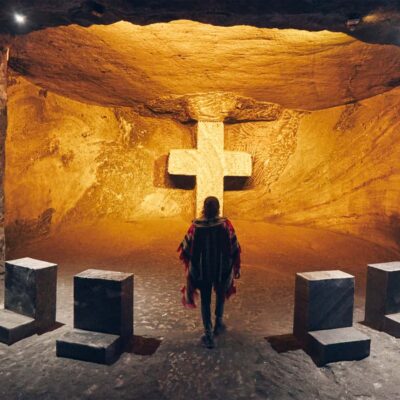
★ 4.9 · 2,156 reviews - Zipaquirá: Salt Cathedral Group Tour with Pickup
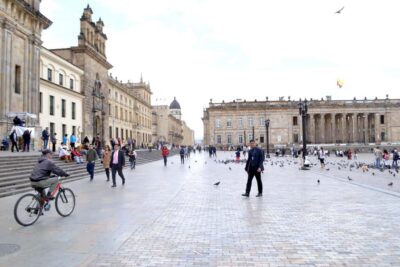
★ 4.8 · 1,606 reviews - Bogotá: Guided La Candelaria Walking Tour
★ 4.8 · 1,229 reviews
Reading Egipto through its murals
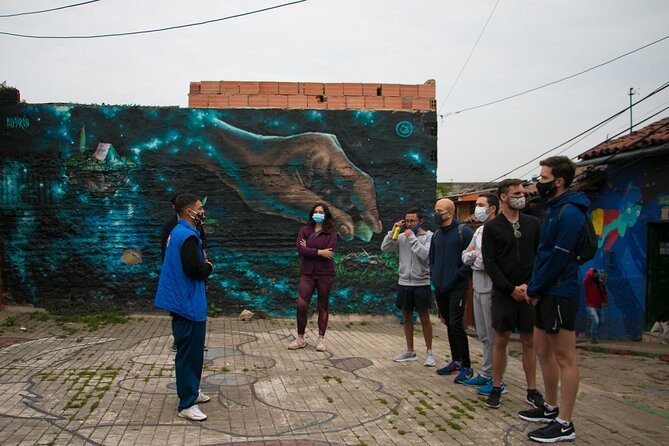
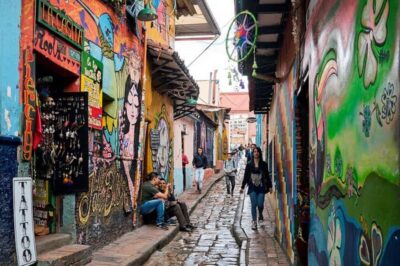
The graffiti is one of the strongest parts of the walk. The murals are not just decoration placed along a tourist route. Your local guide explains how they show the neighborhood’s people, past struggles, and attempts to change its public image.
That local explanation is important. Street art can be easy to admire and hard to understand. Here, the guide connects the images to community life and to the Breaking Borders project. You begin to see the walls as a record of pain, identity, and effort.
The tone is honest rather than polished. The neighborhood still faces challenges, and this is not presented as a finished success story. The point is to see how former gang members are trying to reshape their own lives while creating better choices for younger people.
Names associated with the guiding team include Harold, Monkey, Mr. Pumpkin, Gildardo Arango, and Gigio. The exact mix may depend on the day and language of your booking. A bilingual guide such as Gigio or Raul may provide English interpretation and add background throughout the walk.
Meeting the people behind Breaking Borders
The central part of the experience comes through conversation. Former gang members explain how young people can be pulled into gangs when education and other opportunities are limited. They also describe why they left that life and what it means to rebuild trust.
These are personal accounts, not a simple lecture about crime. You may hear about violence, drug use, weapons, loss, and the pressure of controlling territory. You may also hear about quieter changes, such as replacing dangerous Friday nights with family movie nights for local children.
That contrast gives the tour its force. It shows change in ordinary terms. A community football field, youth activities, and access to different goals can matter as much as a large public program.
You should approach these conversations with respect. The hosts are sharing parts of their lives with strangers, and the subject can be painful. Listen carefully, ask thoughtful questions, and avoid treating personal hardship as entertainment.
The guides are often described as warm, upbeat, and willing to answer direct questions. Some tours have included three former gang members, with an English-speaking guide helping to translate. The result is a small group conversation rather than a scripted performance.
The church, football field, and signs of change
After visiting the church area, the walk continues into the neighborhood and toward the newer community football field. This is one of the clearest physical examples of the project’s aims.
A football field gives young people a place to spend time, but its meaning is wider than sport. It represents a community investment in children, teamwork, and a future that does not depend on gang membership. Your guide explains how the field fits into the effort to change the area’s social fabric.
You should keep your expectations realistic. The field does not erase the neighborhood’s problems, and the tour does not claim that everything has been solved. Its value is in showing practical steps and the people working to keep them going.
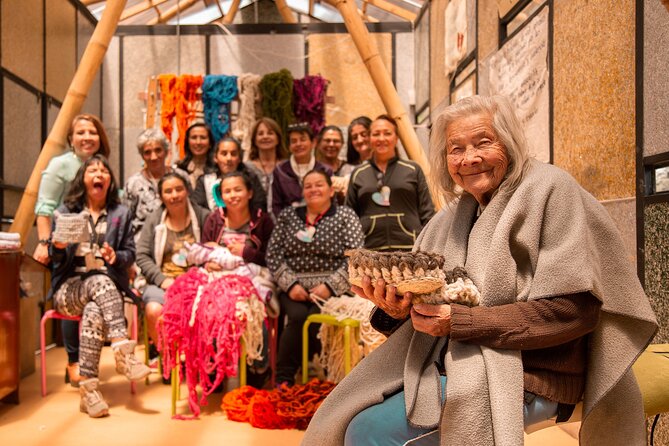
Some versions of the experience have also included a weaving workshop, where visitors could buy a hand-loomed rug directly from local women. This part was described as brief, so do not assume it will take place on every departure or allow a long shopping period. If it is included, buying something gives you a direct way to support local makers.
Same city, a different sort of day:
- Bogotá: Private City Tour, Monserrate, Emerald and Botero
★ 4.9 · 798 reviews - Bogotá´s Barrios: El Paraíso Favela Tour with Cable Car
★ 4.8 · 731 reviews - Bogota: Guatavita and Salt Cathedral Daily Group Tour
★ 4.7 · 615 reviews - Bogotá City Tour with Monserrate, Gold and Botero Museums
★ 4.9 · 584 reviews
Chicha, snacks, and the human scale of the tour
A local snack and traditional chicha drink are included. Chicha is a fermented corn drink with long roots in Colombian culture. The serving gives the tour a social pause and lets you share something local rather than moving from one photo stop to the next.
Alcoholic drinks are not included, although they may be available to purchase. Lunch is also not included, so plan to eat before or after the three-hour experience.
There may be other small human touches. One group received a freestyle rap performed for them at the end, connected to the neighborhood and its stories. You cannot count on a specific performance, but the possibility shows the kind of personal exchange this tour can create.
I would bring small bills or other cash. Tips are optional, but you may want to thank the guides or support local purchases. One solo visitor wished they had brought more money for tips after realizing how much the former gang members had shared.
Why the private format matters
The activity is private, meaning only your group participates. That format suits this subject well. You can ask questions at your own pace, and the conversation is less likely to feel like a large group moving through a sensitive neighborhood.
Private also means the price needs careful thought. At $91 per person, the tour costs more than a standard group walking tour. You are paying for a three-hour experience with a guide team, local hosts, translation, and the chance to support a community-led project. If hotel transport is selected, private transportation to and from your hotel is included.
For one person, the cost can feel high because private tours often have a minimum booking price or a less favorable per-person rate. One solo booking came to more than the advertised starting price in another currency. Check the final price for your group size and transport choice before paying.
For two or more people, the price is easier to justify if you value direct local contact and social-impact travel. This is not the right choice if you want a cheap overview of Bogotá’s sights. It is a better fit if you want to understand one community and contribute to an ongoing effort.
Safety, comfort, and practical planning
The experience takes place in an area with a difficult past and ongoing challenges. The tour operator arranges the visit with local hosts who know the neighborhood, and one visitor described feeling safe throughout the walk. Still, use normal city awareness and follow the guide’s instructions.
Wear comfortable shoes and clothing. The route includes hills and uneven urban streets, and the climb from Chorro de Quevedo can feel steep. Keep valuables out of sight and carry only the cash you need.
The meeting point is Plazoleta Chorro de Quevedo at Cl. 12b #2-98 in La Candelaria. The tour ends back at the same meeting point unless you select the hotel transportation option.
Children must be accompanied by an adult. Most people can participate, service animals are allowed, and the starting point is near public transportation. If you have mobility concerns, ask about the uphill route before booking rather than assuming the walk will be flat.
The tour is commonly booked about 20 days ahead, so I would reserve early if your Bogotá schedule is tight. You can cancel for a full refund up to 24 hours before the local start time. Changes or cancellations inside that window are not accepted.
Who will get the most from this Bogotá experience?
I would choose this tour if you want to hear directly from people who lived through the neighborhood’s difficult years. It suits adults, couples, families with older children, and solo visitors who prefer a focused conversation to a standard sightseeing loop.
It is also a good match if you are interested in community projects, urban inequality, street art, or the way former gang members are building new roles. You will gain more from it if you are willing to listen without expecting a tidy ending.
You might not enjoy it if you want light entertainment, a relaxed café crawl, or a broad introduction to every part of Bogotá. The subject includes poverty, violence, drugs, and personal loss. The walking is moderate but uphill, and the experience may leave you thinking long after the tour ends.
I would also leave extra time if a weaving workshop or longer conversation is important to you. Some visitors felt that the craft portion moved too quickly. The official activity lasts about three hours, but the exact rhythm can depend on the group and the local hosts.
Should you book Breaking Borders?
Book it if you want to see Bogotá beyond La Candelaria’s prettiest streets and support a project built around second chances. The strongest parts are the honest conversations with former gang members, the mural explanations, and the chance to see practical community work rather than a polished success story.
At $91 per person, it is not a bargain walking tour. Yet the private format, transport option, bilingual support, local snack, chicha, and community connection make the price reasonable for the right kind of visitor.
Bring sturdy shoes, cash, patience, and an open mind. If that sounds like a good use of three hours in Bogotá, Breaking Borders is a meaningful choice.
FAQ
Where does the Breaking Borders tour begin?
It begins at Plazoleta Chorro de Quevedo, Cl. 12b #2-98, in La Candelaria, Bogotá.
Where does the tour end?
The activity ends back at the meeting point at Chorro de Quevedo. Private hotel transportation is available if you select that option.
How long does the experience last?
The tour lasts approximately three hours. The walk from Chorro de Quevedo into Barrio Egipto takes about one hour, followed by about two hours in Egipto.
What is included in the price?
The experience includes a bilingual English and Spanish guide, a personal guide from Barrio Egipto, a local snack, and traditional chicha. Private transportation to and from your hotel is included only when that option is selected.
Is lunch included?
No. Lunch and food or drinks not specifically listed as included are not provided. Alcoholic drinks may be available to purchase.
Do I need to bring cash?
Cash is recommended for personal expenses, optional tips, and possible purchases such as local handicrafts.
Is the tour suitable for children?
Children can participate, but they must be accompanied by an adult.
Can I cancel for a refund?
Yes. You can cancel at least 24 hours before the experience starts for a full refund. Cancellations or changes made less than 24 hours before the start time are not accepted.
Just added in Bogotá
- Candelaria Unveiled: Cool-tural Heritage Walking Tour★ 4.4 · 6 reviews
- Bogota: Zipaquira, Salt Cathedral & Lake Guatavitá Tour★ 4.9 · 32 reviews
- BOGOTA: Tour of Jaime Duque Park, Zoo, and Aerospace Museum★ 4.6 · 15 reviews
- BOGOTA: Visit to the Botanical Garden and Ugly Betty’s House★ 4.9 · 15 reviews
- Bogotá: Villa de Leyva Full-Day Tour with Meals★ 4.2 · 10 reviews
- BOGOTA: Tour of Villa de Leyva, Ráquira, Pozos Azules, and Puente de Boyacá★ 5.0 · 8 reviews
- Bogotá: Private Candelaria Walking Tour and Gold Museum★ 5.0 · 17 reviews
- Bogota: Tour to Salitre Mágico, An Extreme Fun Trip★ 4.3 · 7 reviews
Bogotá Tours, compared.
Private City Tour, Monserrate, Emerald and Botero
Read our review →
Bogotá´s Barrios: El Paraíso Favela Tour with Cable Car
Read our review →
Bogotá City Tour with Monserrate, Gold and Botero Museums
Read our review →
Browse the lists this tour appears in