
Reviewed · COLOMBIAN STREET FOOD TOURS
The Cali Street Food Walking Tour
Cali’s best introduction may be edible. This two-hour walking tour links old streets, public art, bakeries, fried snacks, and a wildly inventive ice cream shop, giving you a quick taste of how the city eats and lives. The food is not treated as a side show. It is the main way into Cali’s daily culture.
I like the mix of local food and city history, especially the visit to La Linterna, where old lithography presses still operate. I also like the warm, personal guiding style associated with Juan and Andrés. They explain dishes, ask questions about murals, and adjust the pace when a group needs a breather.
The main drawback is simple: this is a short walk with several food stops, and the group can reach 30 people. You may spend less time at each cultural stop than you would on a dedicated history tour, and the amount of food may be too much if you have a small appetite.
Key points to know before booking
- Expect a full stomach: You may choose up to two items at several food stops, followed by two scoops of ice cream.
- The route mixes old and new Cali: See the Bulevar del Río, Calle de la Escopeta, street art, and the working presses at La Linterna.
- Guides add local context: Juan and Andrés have led departures with history, food explanations, mural discussions, and a small salsa element.
- The price is $32.90 per person: Snacks and bottled water are included, while tips are extra.
- It is a real walking experience: The tour lasts about two hours and ends in San Antonio, away from the starting point.
- Book ahead when possible: It is commonly reserved about six days before the tour date.
Why this Cali food walk works so well
A good food tour should do more than hand you a snack and name it. It should explain when people eat it, why a bakery matters, and how a familiar dish fits into local life. This tour has that wider aim.
You begin near San Pedro at the Subway location on Calle 8, then work through central Cali on foot. The stops are close enough to form a compact route, yet varied enough to keep the walk from feeling like a string of restaurant visits.
The food is also practical for a first visit. You are not asked to commit to one large, unfamiliar meal. Instead, you sample small portions and choose from several options. That makes it easier to test your comfort level with Colombian flavors, fried foods, sweet snacks, fruit drinks, and unusual desserts.
The tour costs $32.90 per person. I see that as fair value if you want food, orientation, and background in one booking. A few snacks alone would not justify the price, but the package includes several tastings, bottled water, a guide, and a look at parts of central Cali that you might otherwise pass quickly.
More food walks in Cali
- Cali: Street Food Tour
★ 4.8 · 71 reviews - Medellin: Comuna 13 Graffiti Tour, Cable Car & Street Food
★ 4.8 · 9,046 reviews - Medellín: Comuna 13 True Story and Street Food Tour
★ 4.9 · 1,779 reviews
Starting with the Bulevar del Río
The first stop is the Bulevar del Río, one of Cali’s most popular public spaces. You spend about 15 minutes here, enough to get your bearings and hear why the area matters to local life.
This is a smart opening. You are not dropped straight into a bakery with no context. The tour starts with a public place that helps you understand the shape and mood of central Cali before the food begins.
Keep your expectations in check. This is an orientation stop, not a long guided visit. If you want detailed architectural facts or an extended look at the boulevard, you will need to return on your own.
Walking above the Túnel Mundialista
Next comes the Túnel Mundialista. The group walks on top of Colombia’s longest urban tunnel and pauses to look at some of Cali’s largest street art.
The stop lasts about 10 minutes, but it gives the route a strong visual change. You move from a major public corridor to murals and large-scale city art. The guide also uses the art as a conversation starter. Andrés, in particular, has been praised for asking what a mural means to you before offering his own thoughts.
That approach is more useful than simply listing dates and names. It gives you a way to read Cali’s public spaces through local images and ideas. Still, this is an outdoor art stop, so the experience depends on what is visible at the time of your visit.
Calle de la Escopeta and old Cali
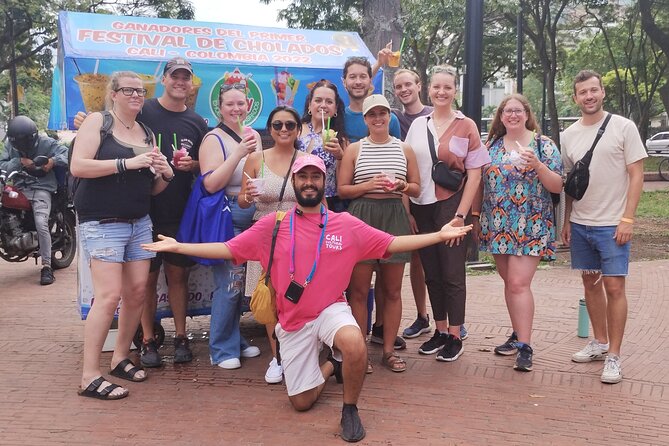
Calle de la Escopeta is one of the most historic streets on the walk. The tour spends around 15 minutes here, placing you in Cali’s old downtown.
This is where the food walk gains some depth. You are not only moving between places to eat. You are also seeing an older part of the city and hearing how the central area developed over time.
The stop is brief, so think of it as a useful introduction rather than a full historical tour. If you enjoy old streets and city stories, you may want to note the location and come back later when you can wander without watching the clock.
More guided walks in Cali
- Cali: Walking tour of the historic center
★ 5.0 · 69 reviews - Afro Walking Tour. The colors of Cali.
★ 5.0 · 61 reviews - Cali: Walking tour of the historic center
★ 4.9 · 18 reviews - Cali: Walking Tour of the 11 Neighborhoods of Commune 20
★ 5.0 · 10 reviews
Chila Gamboa House and community life
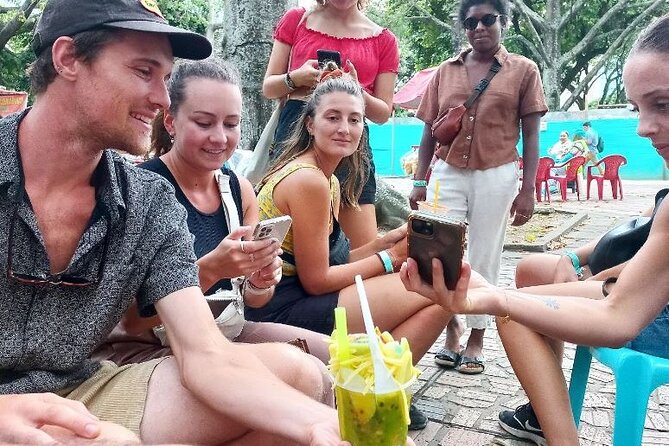
Artesanías Chila Gamboa House is one of the older homes on the route. Today, it supports a community of single mothers who run a souvenir shop, café, and restaurant.
I like this stop because it connects tourism with local enterprise. You see a historic building, but the point is not to preserve it as a silent museum. It is being used by people who run businesses and earn a living.
The visit lasts about 10 minutes. You may not have time to browse every product or sit for a full café break, but you will get a quick look at how an older house has found a working role in the neighborhood.
The first food stop at Panadería Quinta con Quinta
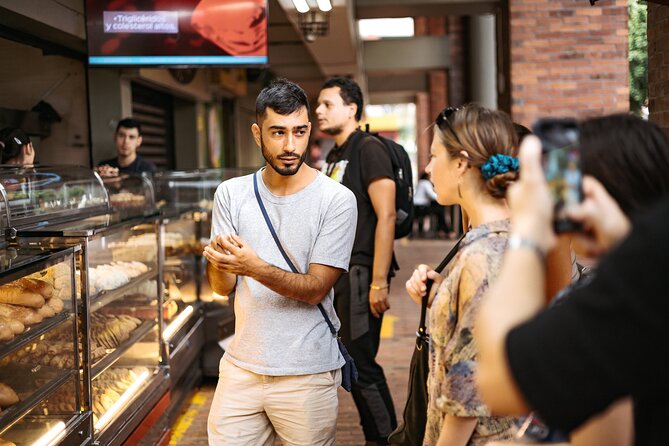
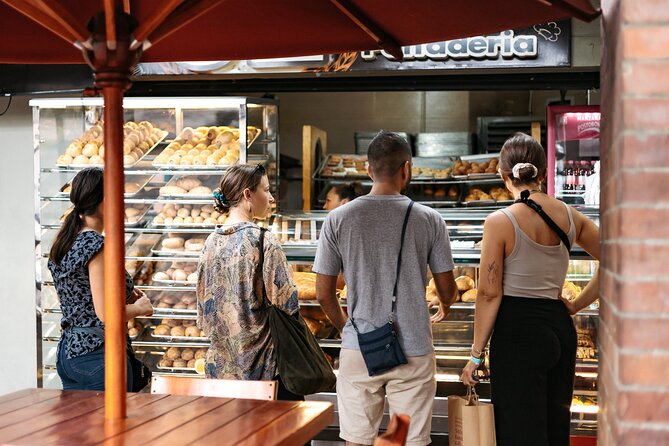
After the opening sights, the tour settles into its first main tasting at Panadería Quinta con Quinta. You spend about 25 minutes here, making it one of the longer stops.
The bakery gives the guide a chance to explain the role bakeries play in Colombian society. You can choose from items such as pandebono, buñuelo, arepa, almojábana, empanada de cambray, coffee, fruit juice, oatmeal, fruit-flavored yogurt, and bottled water.
This range matters. You are not limited to one signature dish, and you can choose between savory food, baked goods, drinks, and lighter options. Pandebono and almojábana offer a useful introduction to Colombian baked snacks, while buñuelo gives you another texture and flavor from the same broad food tradition.
The portions are part of the tour’s design. People often choose up to two items at a stop, so pace yourself. If you eat a full serving of everything offered, the later fried-food stop may feel like a challenge rather than a pleasure.
Exploring a food neighborhood on foot
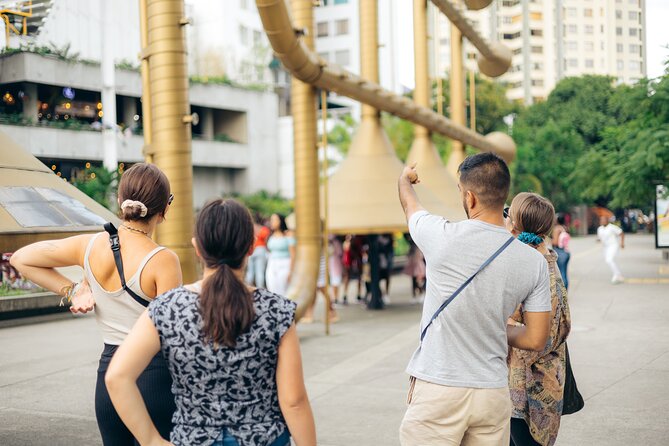
Between the bakery and the next major tasting, the walk continues through a neighborhood known for food and small local finds. The route is not only about sitting down to eat. You also see the corners, storefronts, and everyday details that make a food district feel like part of the city.
This section is useful because it gives the food a setting. A dish tastes different when you understand the streets where people buy it, share it, and build businesses around it.
The tour remains short, so you should not expect long pauses at every storefront. If you like stopping for photographs, keep an eye on the group and ask the guide when there is time to linger.
Fried Colombian favorites at Champús de Fabiola
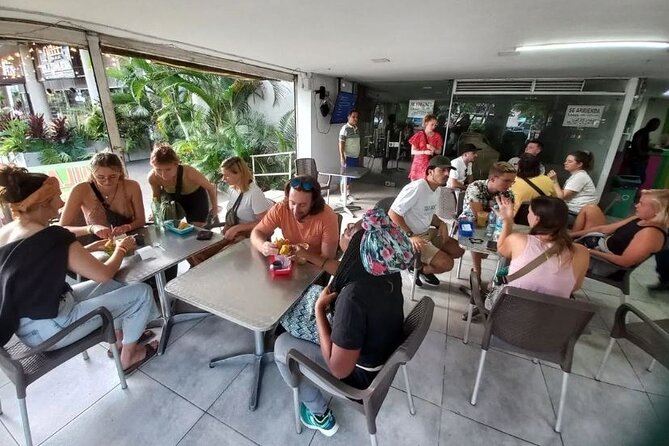
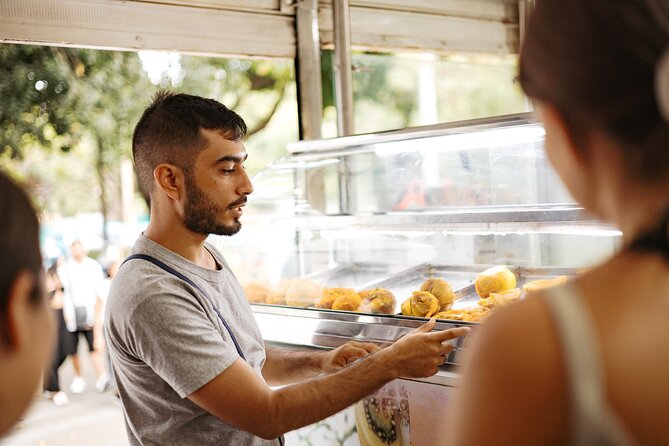
The second main food stop is Champús de Fabiola. You spend about 20 minutes here, choosing from empanadas, marranitas, papa rellena, papa aborrajada, and maduro aborrajado.
This is the hearty part of the tour. The food is warm and fried, with potatoes, plantains, and filled snacks taking center stage. Marranitas and the aborrajado options give you a chance to try combinations that may be new even if you have already eaten Colombian food elsewhere.
The guide explains what you are eating, which helps you order with some confidence. You can ask questions instead of guessing from names alone.
Here is the practical warning: this stop comes after the bakery. The tour promises snacks, but you may end up eating two items at each stop. Treat the tastings as a meal spread across the route, not as casual bites between meals. Arriving hungry is sensible.
La Linterna, where old printing still works
La Linterna is one of the most unusual stops. The shop has lithography printing machines originally designed to run on steam, later adapted to electricity, with some machines dating to the 1870s.
You spend only about five minutes here, so the visit is short. Even so, it may be the cultural highlight for anyone interested in printing, craft, design, or working history.
This stop also breaks up the food in a useful way. After baked goods and fried snacks, you get a look at a working creative business with an unusual technical past. If La Linterna catches your interest, ask the guide whether there is time to look closely at the prints before moving on.
Finishing in San Antonio with unusual ice cream
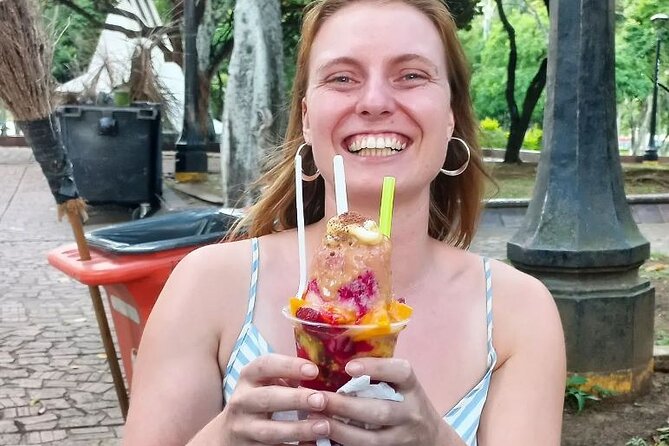
The final stop is Butterfly Tongue, an artisan ice cream parlor in San Antonio. You receive two scoops, and the flavors can be far outside the usual chocolate, vanilla, and strawberry range.
The shop’s specialty is passion fruit with honey-caramelized fried pork. The idea is to sum up parts of Colombia in a scoop, combining sweet, tart, salty, and savory notes.
You do not have to treat the unusual flavor as a dare. The value is in seeing how a local chef thinks about Colombian ingredients and turns them into dessert. If you prefer safer choices, the shop has other flavors, but the tour’s final stop is designed to be playful and surprising.
Ending here works well. You finish with a memorable taste rather than another historical explanation, and the end point is clearly given at Carrera 6 #1-19 in Comuna 3. Since the tour does not return you to the starting point, plan the rest of your day from San Antonio.
What the guides add
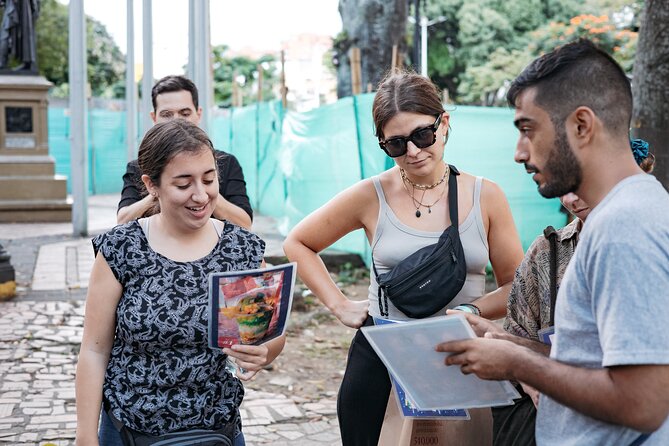
Past departures have been led by Juan and Andrés. The strongest part of their style is not simply giving facts. They make the walk interactive.
Andrés has been described as kind, funny, and attentive to the group’s comfort. He asks what you see in murals and responds to your ideas. Juan brings a warm approach and connects the food with Cali’s past and present.
A small salsa lesson has also been part of the experience. It is not presented as a full dance class, so do not book this expecting a long instruction session. Think of it as a light cultural extra that fits the city.
The guide matters on a food tour because the same snack can feel generic without context. Here, the explanations help you understand why a bakery, a fried-food counter, an old print shop, and an ice cream parlor belong in the same two-hour story.
Pace, group size, and practical details
The advertised duration is about two hours. That is enough time for a compact introduction, but it leaves little room for wandering. You will be moving between stops, eating along the way, and listening to short explanations.
The maximum group size is 30 people. A smaller group may feel more personal, while a full group can make ordering and staying together slower. The route has worked for families that included an elderly parent, with breaks and pace checks built into the walk, but you should still be comfortable spending two hours on foot.
The tour is near public transportation, and service animals are allowed. Most people can take part. Tips are not included, so bring extra money if you want to thank the guide.
Confirmation arrives when you book. Free cancellation is available if you cancel at least 24 hours before the local start time. Changes or cancellations inside that window are not refunded.
Who should book the Cali Street Food Walking Tour?
I would choose this tour if you want a compact first look at Cali and prefer food to lead the way. It suits curious eaters, first-time visitors, families, and anyone who wants history in small portions rather than a formal lecture.
It is also a good choice early in your stay. The guide can point out foods and parts of central Cali that you may want to revisit later. The mix of bakery items, fried snacks, public art, old streets, printing machines, and ice cream gives you several directions for the rest of your visit.
I would hesitate if you want a slow, highly detailed history walk, a quiet small-group experience, or a light meal. The route can be filling, the group may be large, and the cultural stops are short.
Is the $32.90 price worth it?
For $32.90, you receive multiple tastings, bottled water, a two-hour guide-led walk, and access to a route that connects food with local places and stories. That is stronger value than paying for a single restaurant meal if you want variety and orientation.
The value depends on your appetite. If you only try one small item at each stop, the price feels less compelling. If you sample several foods and use the guide’s explanations to understand what you are eating, it becomes a well-rounded introduction.
Should you book it?
Book it if you want to taste Cali in a lively, informal way and appreciate a guide who talks about murals, old streets, local businesses, and food with equal interest. The combination of pandebono, fried plantain snacks, historic downtown, La Linterna, and two scoops of inventive ice cream is unusually varied for a two-hour walk.
Skip it if you need a quiet pace, a tiny group, or a strict focus on one subject. For most visitors who want a friendly starting point in Cali, the tour offers plenty of food, useful context, and a few surprises for $32.90.
FAQ
How long does the Cali Street Food Walking Tour last?
The tour lasts approximately two hours.
How much does the tour cost?
The price is $32.90 per person.
What food is included?
Included tastings can include bakery items such as pandebono, buñuelo, arepa, almojábana, and empanada de cambray, along with drinks. At Champús de Fabiola, choices include empanadas, marranitas, papa rellena, papa aborrajada, and maduro aborrajado. The final stop includes two scoops of ice cream.
Is bottled water included?
Yes. Bottled water is included.
Where does the tour start and end?
It starts at Subway, Calle 8 #1-02, San Pedro, Cali. It ends at Butterfly Tongue Artisan Ice Cream Parlor, Carrera 6 #1-19, Comuna 3, Cali.
Can I cancel for a refund?
Yes, if you cancel at least 24 hours before the experience start time. Cancellations or changes made less than 24 hours before the start time are not refunded.
More Food in Cali
- Medellin: Street Food and Poblado Rooftop Tour with a Local
★ 4.8 · 317 reviews - Medellin: Party Bus with DJ & Street Food Tastings
★ 4.5 · 112 reviews - Medellín: E-bike and Foodie Tour
★ 4.8 · 102 reviews - Street Food Tour in Medellín with Tastings
★ 5.0 · 76 reviews
More Food & Drink in Cali
- Craft Beer Pub Crawl in Cali
★ 5.0 · 4 reviews - Cartagena: Guided Street Food Tour with Tastings
★ 4.9 · 833 reviews - Medellín: Pablo Escobar Tour with beer included
★ 4.7 · 612 reviews - Bogota Food Tour with over 12 Tastings & Tejo
★ 4.9 · 454 reviews
Just added in Cali
- Cali: TRES CRUCES – Cali’s most popular hike and monument★ 4.9 · 19 reviews
- Cali: Walking tour of the historic center★ 4.9 · 18 reviews
- Cali: Two hours walking Cali City discovery tour★ 5.0 · 3 reviews
- From Cali: Whale Watching Day Trip in Buenaventura★ 4.6 · 3 reviews
- Cali: Tour of Waterfall in Pance River – Chorrera del Indio★ 4.9 · 34 reviews
- Cali: Pico de Loro Trekking Adventure – Farallones de Cali★ 5.0 · 4 reviews
- Cali: Three hours walking Cali City discovery tour★ 4.7 · 3 reviews
- Cali: Fruit Market Walking Tour with Tastings★ 4.6 · 7 reviews
Colombian Street Food Tours, compared.
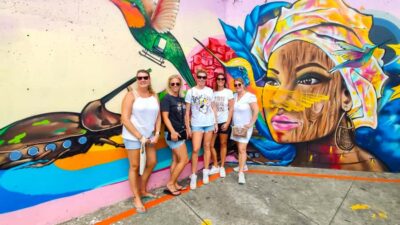
Comuna 13 Graffiti Tour, Cable Car & Street Food
Read our review →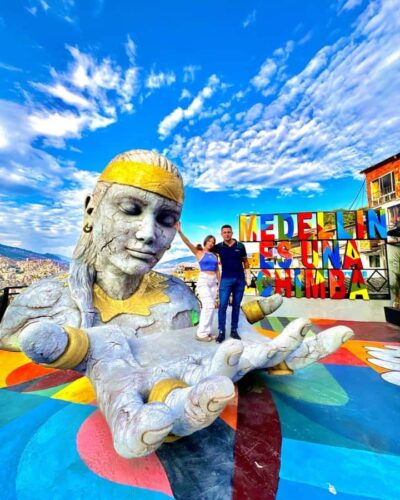
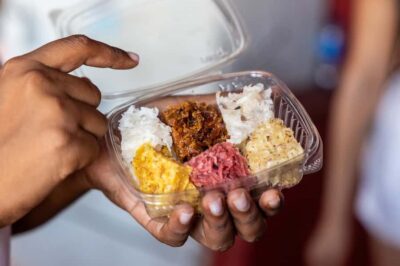
Street Food and Poblado Rooftop Tour with a Local
Read our review →
Browse the lists this tour appears in