
Reviewed · SALT CATHEDRAL & ZIPAQUIRÁ TOURS
Bogotá: Zipaquirá Salt Cathedral, with tickets and guide
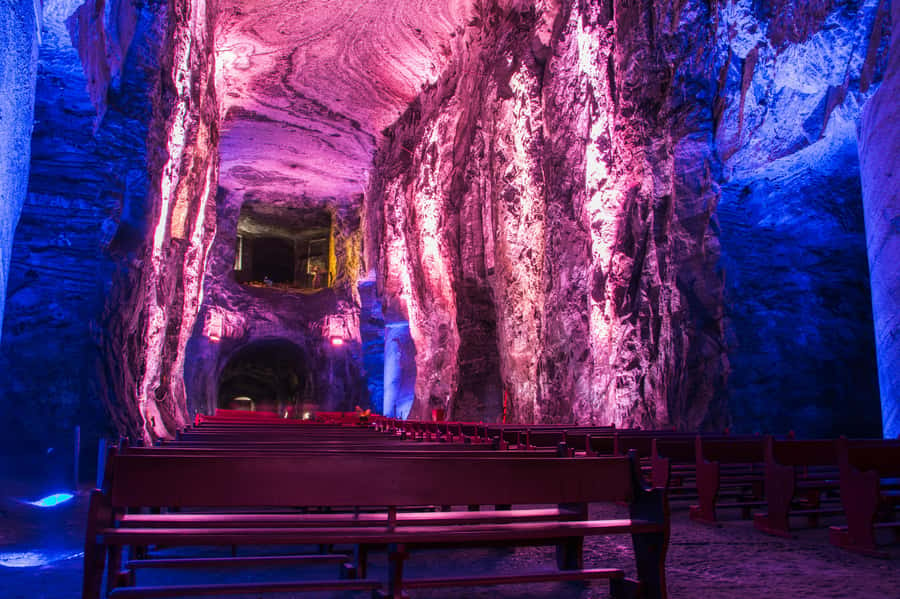
The most striking part of this trip comes below ground. You descend 180 meters into a former salt mine, where carved chambers, glowing salt walls, water mirrors, and religious symbols form Zipaquirá’s Salt Cathedral. It is part church, part mine, and part feat of engineering.
I like the door-to-door transport, since the ride from Bogotá can be much easier than arranging your own way to Zipaquirá. I also like the historical thread, from Muisca gold and salt to the cathedral’s 14 stations and its massive underground cross. The main drawback is physical: the walk underground is not suitable for people with mobility impairments, and the tour is not recommended during pregnancy.
Key points at a glance
- 180 meters underground: Explore a former salt mine transformed into a religious complex.
- 14 stations of the cross: Your guide explains the symbols, architecture, and spiritual meaning.
- Muisca history: Hear about pre-Columbian life and the importance of salt and gold in the region.
- Capilla de los Mineros: Visit the miners’ chapel, a particularly fitting stop inside the old mine.
- Free time in Zipaquirá: Stop for lunch and a look at the town, though food is not included.
- English or Spanish guiding: Choose a private or small-group format, with pickup and return to Bogotá.
What makes the Salt Cathedral worth the trip from Bogotá
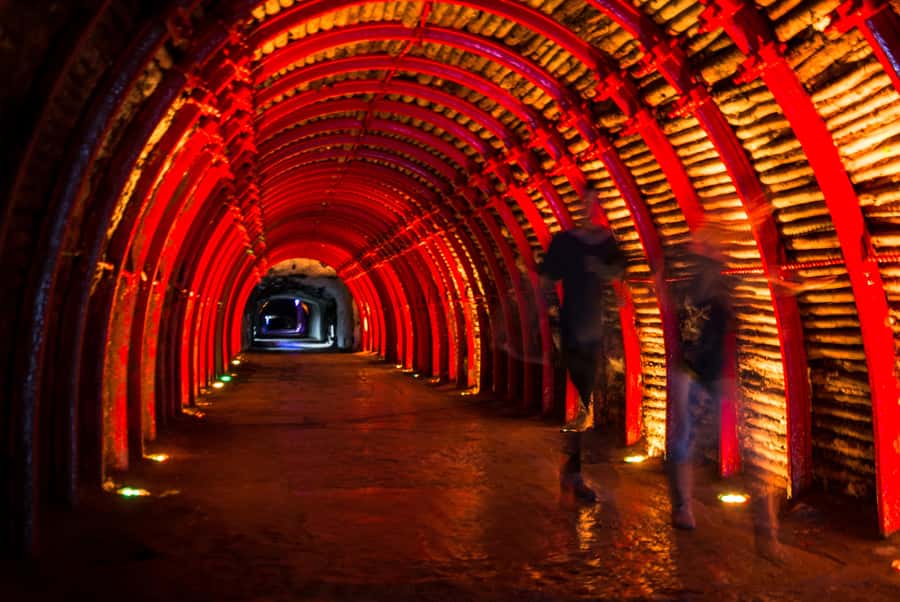
Zipaquirá’s Salt Cathedral is not a church built in an ordinary setting. It lies inside a salt mine, and the route takes you through a subterranean world shaped by both extraction and faith. The setting gives the visit its force. Salt is not simply part of the decoration. It is the material that defines the rooms, walls, sculptures, and atmosphere.
The cathedral is reached after descending about 180 meters underground. That figure matters because this is not a quick peek into a shallow tunnel. You spend time moving through a series of large chambers and passageways, with the guide explaining how the site developed and why it has such importance in Colombia.
The religious route follows 14 stations of the cross. You can expect the guide to connect each station with the mine’s structure and the meaning of the symbols. The experience is less about a standard church visit and more about seeing how a working environment was reshaped into a place of worship.
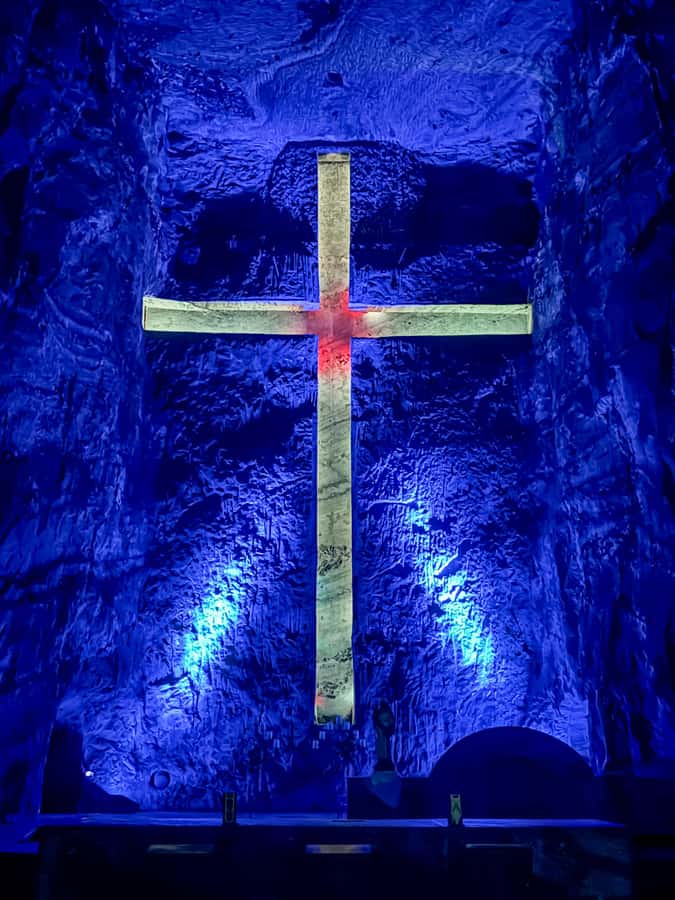
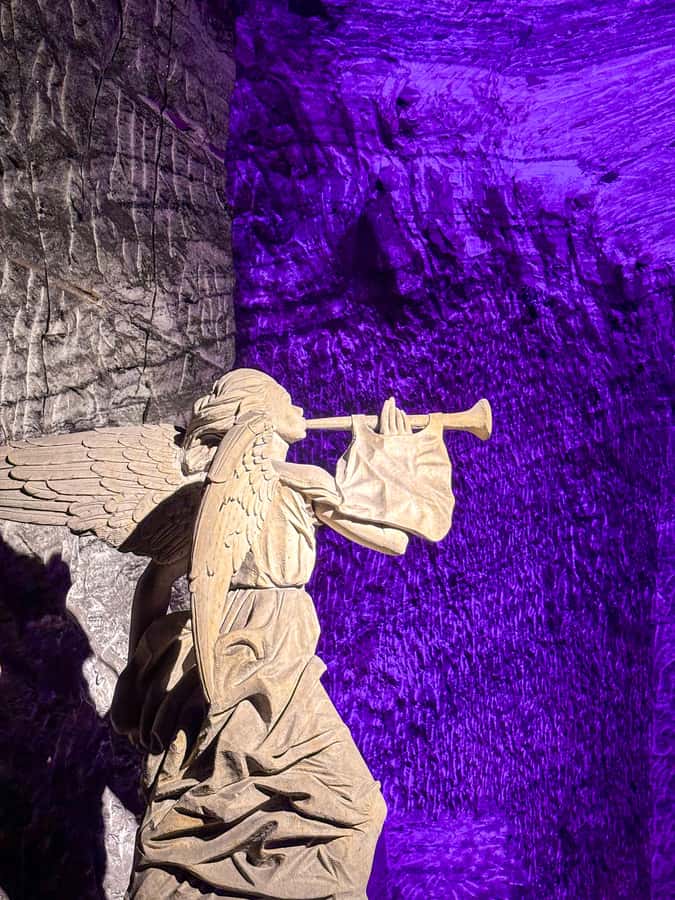
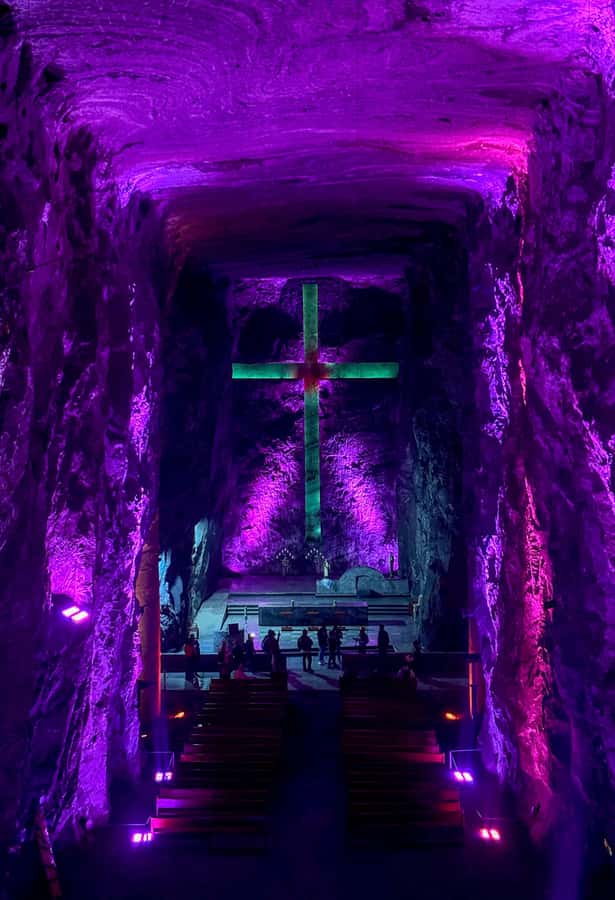
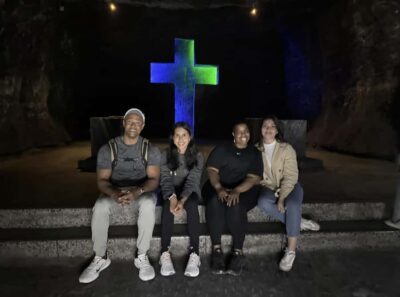
At the center, the large cross and dome provide the tour’s strongest visual moments. The cross rises within the cathedral’s main space, while the dome gives the underground complex a sense of scale. Crystallized salt details catch the available light, and water mirrors formed in the cavities create reflections and optical effects.
You do not need to be religious to appreciate the work involved. The cathedral brings together devotion, mining, design, and engineering. I find that combination more interesting than a simple sightseeing stop because the place cannot be separated from the material beneath it.
More Salt Cathedral trips from Colombia
- Zipaquirá: Salt Cathedral Group Tour with Pickup
★ 4.8 · 1,606 reviews - Bogota: Guatavita and Salt Cathedral Daily Group Tour
★ 4.7 · 615 reviews - Bogota: Zipaquirá Salt Cathedral and Lake Guatavita Day Tour
★ 4.8 · 551 reviews
The Bogotá pickup and ride across Cundinamarca
The tour begins with pickup from your specified location. The published pickup information lists Cra. 11a #93A-80 in Bogotá, while the service also includes hotel pickup and drop-off. Confirm the exact meeting point when you book, especially if you are staying somewhere else in the city.
The drive takes you across the Bogotá savanna toward Zipaquirá and the Cundiboyacense highlands. During the ride, your guide shares historical information about the region, including pre-Columbian life and the role of salt and gold in Muisca culture.
This background helps the cathedral make more sense. Salt was not just a modern industrial product. It shaped trade, settlement, and local importance long before the present-day attraction existed. Learning about the Muisca connection gives the visit a wider frame, linking the mine to the people and traditions of the region.
The guide is an important part of the experience because the drive is not merely transportation. You have time to ask questions and get context before reaching the cathedral. One Spanish-language guide, Daniel Melo, is specifically noted for friendly, clear explanations, while Rosita is praised for her cheerful manner, strong command of the subject, and willingness to leave time for photographs. The service is offered in English or Spanish, so select the language that lets you follow the history easily.
The drive time can vary, since the total outing lasts from about 270 minutes to five hours. Traffic, pickup arrangements, and the time spent in Zipaquirá can affect the schedule. If you have an evening reservation or another fixed plan in Bogotá, leave a cushion.
Inside the mine: 14 stations, salt walls, and water mirrors
The cathedral visit lasts about three hours within the stated itinerary. That gives you time to move through the underground route rather than rushing from one display to the next.
The first major theme is the transformation of the mine. Your guide explains the architectural work that turned the excavated chambers into a subterranean temple. The result is not polished in the same way as a conventional cathedral. The salt surfaces and mine cavities remain central to the feeling of the place.
The 14 stations help organize the route. Each one offers a point for the guide to explain the religious imagery and how it fits within the mine. Listen for the connection between the carved forms and the natural or excavated spaces around them. That is where the visit becomes more than a series of sculptures.
The salt details can be subtle. Lighting picks out textures in the walls, while darker passageways lead into larger chambers. The water mirrors add another layer by reflecting the surrounding forms and lights. They are among the best places to pause for photographs, although the underground setting can make photography conditions change from room to room.
The great cross is the cathedral’s defining feature. It gives the main chamber a clear visual center and shows how the designers used height and scale underground. The dome adds to that effect, opening the space upward and making it feel larger than you might expect from a mine.
You should wear comfortable shoes. The route involves walking through an underground attraction, and the experience is specifically not suitable for people with mobility impairments. It is also not recommended for pregnant women. Those restrictions are worth taking seriously rather than treating them as minor footnotes.
The Capilla de los Mineros and the human side of the mine
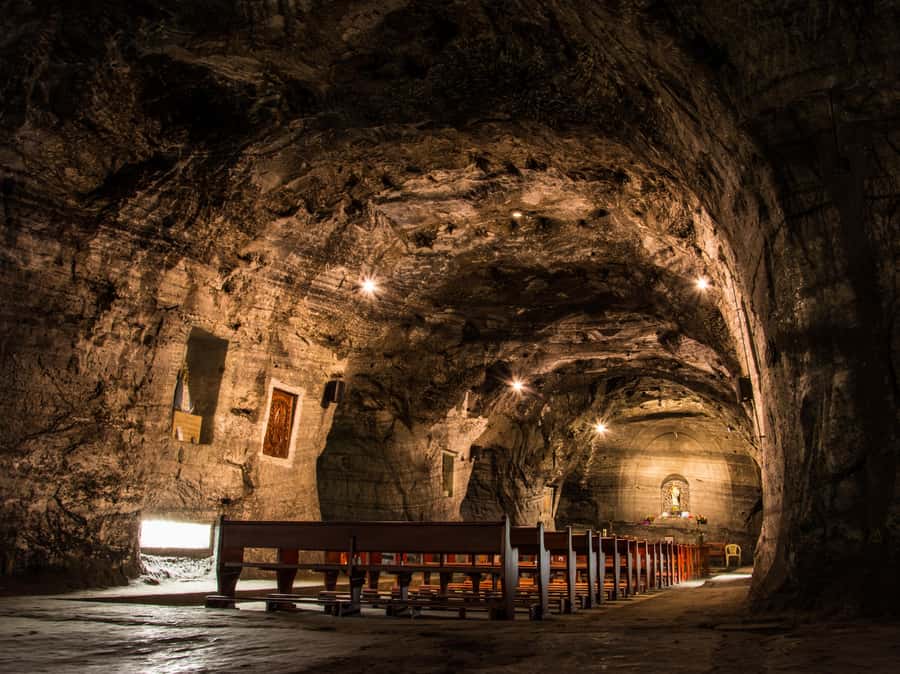
The Capilla de los Mineros, or miners’ chapel, gives the visit a more personal focus. It reflects the people who worked in the salt mine, rather than only the grand religious and architectural ideas of the cathedral.
A guide can help you understand why this chapel belongs in the route. The mine was a workplace before it became a major attraction, and the chapel keeps that connection visible. It is a useful reminder that the cathedral’s setting comes from real labor and a long relationship between people and salt.
This stop may appeal especially to visitors who want more than a dramatic photograph. The cathedral’s grand chambers are memorable, but the miners’ chapel connects the site to everyday working life. Along with the Muisca material, it gives the outing two historical layers: the pre-Columbian importance of salt and the later life of the mine.
The tour also provides medical assistance as part of the included service. That does not remove the need to prepare sensibly. Bring comfortable shoes, and tell the operator about any concern that could affect your ability to complete the underground walk.
A few more trips around Colombia worth a look
- Medellín: Private Guatapé with Peñol Tickets and Boat Ride
★ 4.9 · 256 reviews - Bogota: Monserrate Entry Ticket
★ 4.4 · 233 reviews - Medellin: Football Tour with Match Tickets and Pre-Game
★ 4.9 · 150 reviews - Monserrate Tour in Bogotá Including Tickets
★ 4.5 · 82 reviews
Free time in Zipaquirá after the cathedral
After the guided cathedral visit, you have free time in Zipaquirá. The town is described as a place of charm and tradition, and this pause gives you a chance to see more than the attraction below ground.
Lunch fits naturally here, but food and drinks are not included in the price. Plan to pay separately for your meal. Because the total tour lasts between four and five hours, this break can also give you a chance to slow down after the underground visit.
The exact amount of free time is not specified, so do not count on a long independent town tour. Treat it as useful breathing room for lunch, a short walk, and photographs. If you want an extended visit to Zipaquirá beyond the cathedral, ask the operator how much time is available on your date.
Is $117 a fair price?
At $117 per person, this is not the cheapest way to reach Zipaquirá. The price makes more sense if you value convenience and a guide who handles the day’s moving parts.
Your fee includes hotel pickup and return transport, admission to the Salt Cathedral, a professional guide in English or Spanish, and medical assistance. You are also paying for the historical explanation during the drive and inside the mine. For a first visit to Bogotá, that can be worthwhile because you do not have to arrange transport, find the entrance, or build your own historical background.
The value is stronger for a private or small group than for someone who prefers to travel independently at the lowest possible cost. A smaller group can make it easier to ask questions and hear the guide. It may also feel less hurried, though the exact group arrangement depends on the option you select.
The weak point is that meals are not included. You should budget separately for lunch in Zipaquirá, and you should confirm the pickup details before the day begins. If you are mainly interested in entering the cathedral and are comfortable organizing transport yourself, you may prefer a lower-cost independent plan. If you want a guided day with return transport to Bogotá, the package is easier to justify.
What to bring and what to leave behind
The underground cathedral is only part of the outing. You will also spend time outside in and around Zipaquirá, so prepare for both settings.
Bring:
- Passport or ID card
- Comfortable shoes
- Sunglasses
- Sun hat
- Sunscreen
The passport or ID card is listed as required, so do not leave identification at your hotel. Sunglasses, a hat, and sunscreen make sense for the outdoor portions and the drive, even though the main attraction is underground.
Pets, oversized luggage, large bags, smoking, alcohol, and drugs are not allowed. Pack light. A small day bag is more practical than bringing luggage, especially since this is a half-day outing rather than a transfer to another destination.
The operator offers free cancellation up to 24 hours before departure for a full refund, and you can reserve now and pay later. Starting times vary, so check availability before booking. These terms are useful if your Bogotá schedule may change, but they do not replace the need to confirm the pickup point.
Who will enjoy this experience most?
I would recommend this tour to someone staying in Bogotá who wants one major day trip with transport and a guide already arranged. It suits first-time visitors who want context about the region instead of simply entering the cathedral, taking pictures, and leaving.
It is also a good fit if you are interested in architecture, mining, Colombian religious culture, or the Muisca connection to salt and gold. The mix of underground engineering and regional history gives the outing more substance than a standard attraction visit.
The tour may not suit you if you dislike structured outings, need a fully accessible route, or want a long, independent visit in Zipaquirá. Pregnant women and people with mobility impairments should not book this activity based on the stated restrictions.
The guide can shape the quality of the day. Daniel Melo and Rosita are names associated with especially warm, clear service, but guide assignment depends on availability. Choose English or Spanish based on the language in which you can best follow detailed explanations.
Should you book the Zipaquirá Salt Cathedral tour?
Book it if you want the practical version of this day trip: pickup from Bogotá, admission handled, a live guide, historical context, time inside the cathedral, and a return to your hotel. The strongest parts are the 180-meter descent, the 14 stations, the water mirrors, the miners’ chapel, and the chance to connect the mine with Muisca history.
Skip it if you want the lowest possible price, plan to eat at a specific restaurant, or need an accessible experience. For everyone else, $117 buys a well-organized half-day trip to one of Colombia’s most unusual sights, with enough explanation to show why the Salt Cathedral is more than a photogenic underground room.
FAQ
Where does the tour begin?
Pickup is included from your specified location. The listed pickup address is Cra. 11a #93A-80 in Bogotá, and the service also provides hotel pickup. Confirm your exact meeting point when booking.
How long does the experience last?
The stated duration is between 270 minutes and five hours. The cathedral portion of the itinerary is listed as about three hours, with additional time for transport and the stop in Zipaquirá.
How far underground is the Salt Cathedral?
The route descends about 180 meters underground.
What is included in the price?
The price includes hotel pickup and drop-off, entrance to the Salt Cathedral, a professional guide, transportation, and medical assistance.
Are food and drinks included?
No. Food and drinks are not included. You have free time in Zipaquirá for lunch, which you pay for separately.
What languages are available?
Live guiding is available in English and Spanish.
Is the tour private or shared?
Private or small-group options are available. The exact arrangement depends on the option selected at booking.
What should I bring?
Bring your passport or ID card, comfortable shoes, sunglasses, a sun hat, and sunscreen.
Can I bring luggage or a pet?
No. Pets, oversized luggage, and large bags are not allowed. Smoking, alcohol, and drugs are also prohibited.
Is the tour suitable for people with mobility impairments or pregnant women?
No. The experience is not suitable for people with mobility impairments and is not recommended for pregnant women.
Can I cancel the booking?
You can cancel up to 24 hours in advance for a full refund. The activity also offers a reserve-now, pay-later option.
Just added in Colombia
- Cartagena: CITY TOUR IN ENGLISH, Old city, Monuments, Castle★ 4.4 · 5 reviews
- Cartagena: White Night Boat Tour with Dinner and Open Bar★ 4.6 · 12 reviews
- Cartagena: Speed Boat Party on the Bay with open bar★ 4.3 · 12 reviews
- Cartagena: Sunset in boat in the bay with music and liquor★ 4.5 · 46 reviews
- Cartagena: Tour to Playa Tranquila with Snorkeling + Luminous Plankton and Parasol★ 3.0 · 4 reviews
- Cartagena: Walled City Walking Tour★ 4.4 · 26 reviews
- Cartagena: Volcano of Totumo with Entry Ticket and Transfer★ 3.5 · 4 reviews
- Cartagena Travel Memories: A cover magazine Photo Shoot★ 5.0 · 8 reviews
Salt Cathedral & Zipaquirá Tours, compared.

Zipaquirá Salt Cathedral & Guatavita Trip with Pickup
Read our review →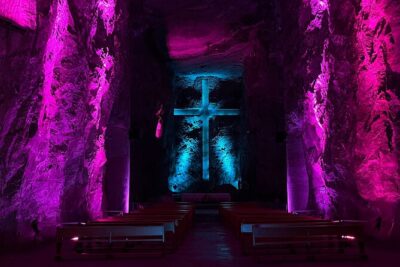
New & Cheapest ZIPAQUIRA & GUATAVITA LAKE Visit 5 Sites/PICKUP
Read our review →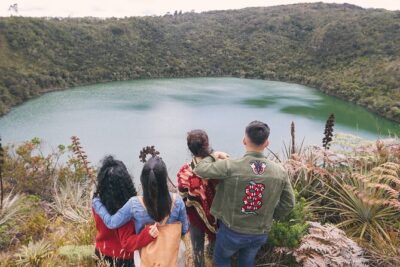
Shared Tour Zipaquirá Salt Cathedral and Guatavita Lagoon
Read our review →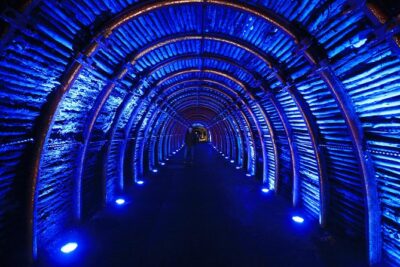
Salt Cathedral of Zipaquirá & Lake Guatavita: Private or Shared
Read our review →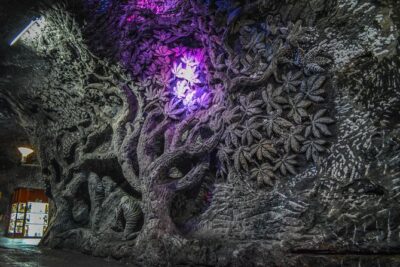
Private Salt Cathedral of Zipaquira Tour from Bogota with Lunch
Read our review →Browse the lists this tour appears in