
Reviewed · SALT CATHEDRAL & ZIPAQUIRÁ TOURS
Bogota: Zipaquirá Salt Cathedral and Lake Guatavita Day Tour
The best thing about this day trip is the sharp contrast between Lake Guatavita’s open mountain air and Zipaquirá’s man-made world far below ground. One stop explains how the El Dorado story grew from Muisca ritual. The other shows what miners carved into salt rock, including chapels, crosses, and a huge central nave.
I like the way the tour joins nature with culture, rather than treating the Salt Cathedral as an isolated photo stop. I also like the bilingual support, hotel pickup, and the chance to hear useful stories during the long drives. The main drawback is the length: at 12 hours, with traffic and several hours on foot, this is a full day with little spare energy at the end.
Key points at a glance
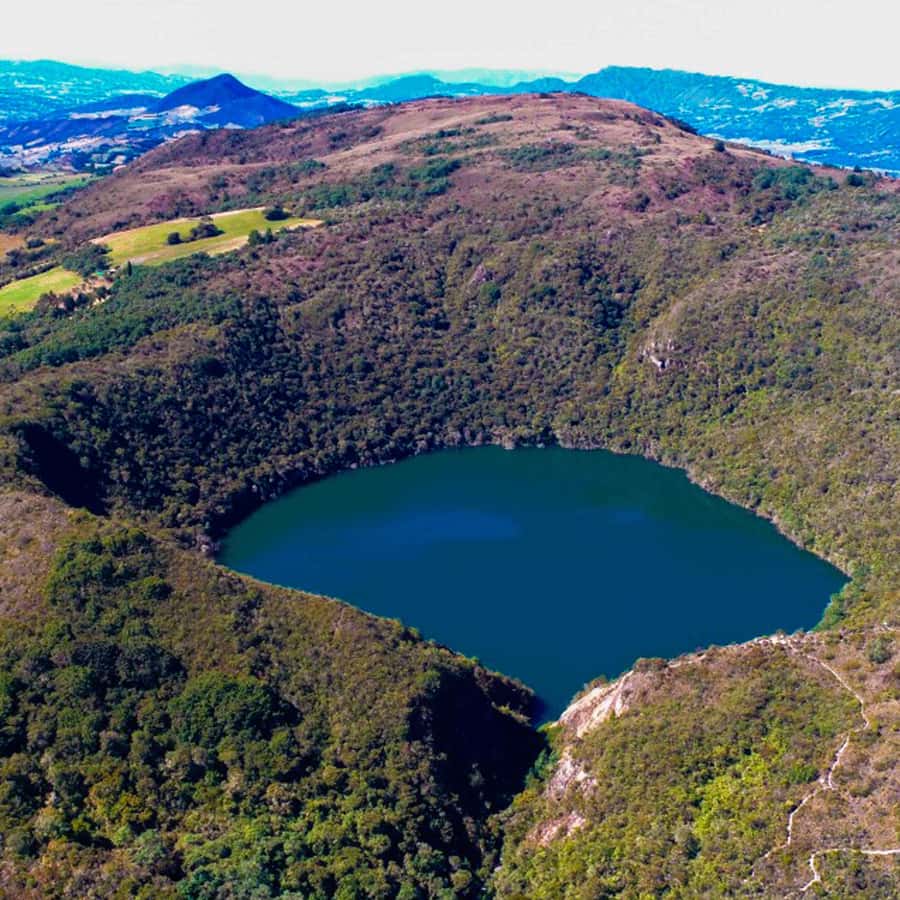
- The two-hour walk to Lake Guatavita includes steps, uphill sections, thin mountain air, and slippery ground in wet weather.
- The El Dorado story is explained through Muisca traditions, where gold served as a spiritual gift from the earth, not simply as money.
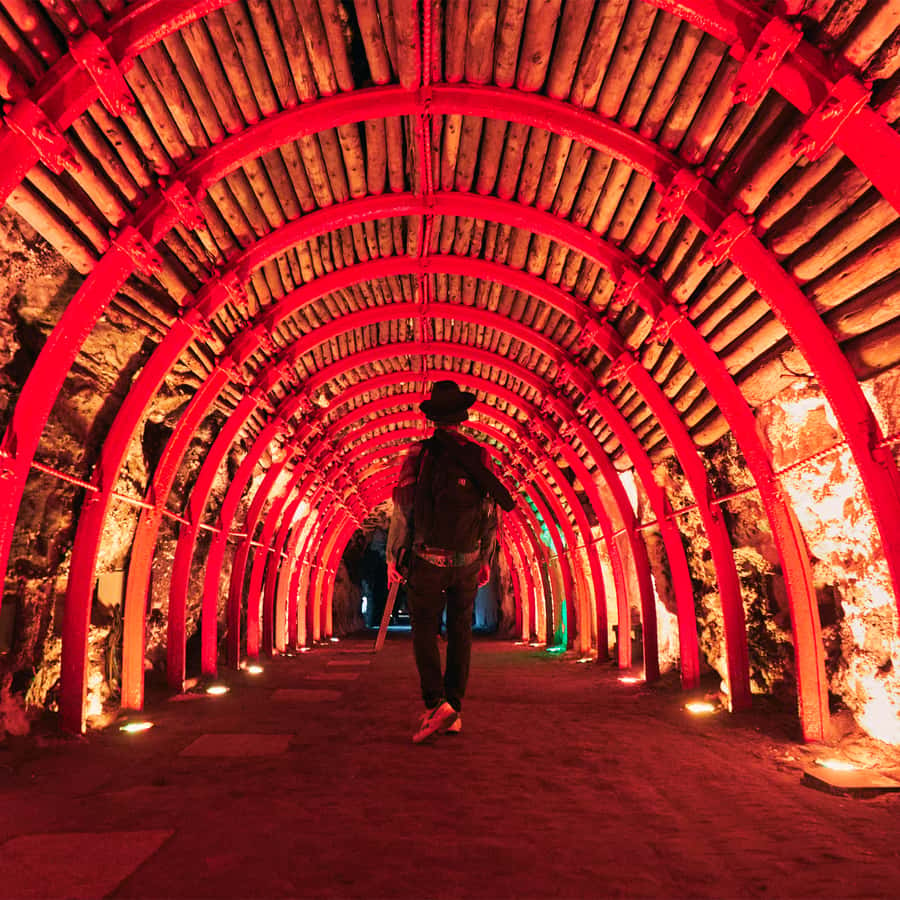
- Zipaquirá’s Salt Cathedral sits about 180 meters underground, with illuminated tunnels, carved stations, a dome, and a broad central nave.
- The tour covers five major stops, including Guatavita Town, the lagoon, the Bogotá Savannah, Zipaquirá, and the cathedral.
- Guides such as Sebastián, Diego, Sergio, and Camilo are praised for clear English, Spanish interpretation, humor, and care with mixed-ability groups.
- Lunch is not included, and the restaurant choice can vary, so bring snacks and keep some flexibility in your budget.
Why this day outside Bogotá works so well
Bogotá gives you museums, city streets, and high-altitude views. This tour adds two of the region’s most distinctive sights in one long outing. At $61 per person, you are paying for hotel pickup and return, transport, entry to both main attractions, a driver-guide, and additional guide support for larger groups.
That price makes good sense if you want the easy version. Organizing both places yourself would require arranging transport, checking opening days, buying admission, and keeping an eye on the clock. The tradeoff is less freedom and a fixed pace. You are joining a shared tour, not hiring a private car and guide.
The day usually begins early in Bogotá. The first drive takes about 80 minutes, though city traffic can affect the exact timing. You then move through the Bogotá Savannah and the northern Andean countryside, with another 25-minute drive between Guatavita Town and the lagoon.
The return from Zipaquirá can take about two hours. That is why I would not book this on a day when you have an evening flight or another fixed appointment.
More Salt Cathedral trips from Bogotá
- Zipaquirá: Salt Cathedral Group Tour with Pickup
★ 4.8 · 1,606 reviews - Bogota: Guatavita and Salt Cathedral Daily Group Tour
★ 4.7 · 615 reviews - Bogota: Salt Cathedral of Zipaquira Private daily Trip
★ 4.8 · 262 reviews
Guatavita Town adds context before the hike
The short stop in Guatavita Town gives you time to see the town, browse, and take a break before reaching the national park. It is not the main event, but it helps the day feel like more than a quick bus ride to a lake.
Your guide can place the lagoon in the wider story of the Muisca people and the surrounding region. This is especially useful because the famous El Dorado tale often gets reduced to a hunt for a lost city of gold. The more interesting point is how a real ceremonial practice was reshaped by outsiders into a much larger legend.
Keep this stop practical. You may have time for coffee, photos, or a small purchase, but the schedule must also allow for the walk at the lagoon and the cathedral later.
The uphill trail to Lake Guatavita
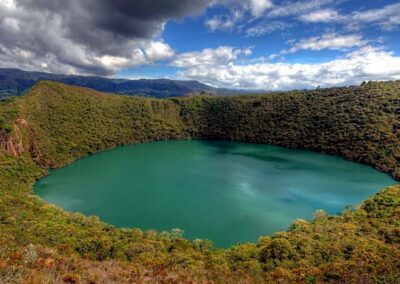
Lake Guatavita is the natural highlight for many people. The trail takes roughly two hours and includes walking, steps, uphill sections, and viewing points. It is often described as manageable, but altitude and thin air can make the route feel harder than the distance suggests.
Wear proper walking shoes. Add a rain jacket or umbrella, since the weather can shift quickly, and the stones and steps may become slippery. Sunscreen is also useful because cool mountain air can hide strong sun.
The setting is quiet and spare, with fresh air and wide mountain views. You may see local plants and wildlife along the path, and your guide can point out details that are easy to miss when you are focused only on reaching the water.
This is not a coach stop where you step out, take one photograph, and climb back in. You need to be ready to walk for a sustained period. If you have mobility limits, are pregnant, or use a wheelchair, this tour is not a suitable choice according to the activity information.
How the Muisca story changes El Dorado
The guide’s explanation at Guatavita is one of the tour’s most valuable parts. Muisca traditions connected gold with a spiritual offering from the earth. It was not valued only as currency or personal wealth. That distinction gives the old story a more human and more accurate foundation.
The ceremony associated with the lagoon helped inspire the El Dorado legend. European accounts turned a sacred act involving gold into stories of a fabulously wealthy ruler and a place that outsiders could seize. The myth then grew with each retelling.
Listen for the difference between the real ceremonial tradition and the later fantasy. You are not simply visiting a pretty lake connected to a treasure tale. You are seeing a place where Indigenous beliefs were misunderstood, commercialized, and turned into one of the world’s most persistent myths.
Guides such as Sergio, Sebastián, and Diego have been praised for adding information about plants, animals, Colombian history, and local traditions in both English and Spanish. That matters here because the lagoon is best understood through its meaning, not just its appearance.
More Guatavita trips from Bogotá
- Bogota:Zipaquirá Salt Cathedral & Guatavita Trip with Pickup
★ 4.8 · 183 reviews - New & Cheapest ZIPAQUIRA & GUATAVITA LAKE Visit 5 Sites/PICKUP
★ 5.0 · 153 reviews - Shared Tour Zipaquirá Salt Cathedral and Guatavita Lagoon
★ 5.0 · 139 reviews - Salt Cathedral of Zipaquirá & Lake Guatavita: Private or Shared
★ 5.0 · 88 reviews
Lunch in Zipaquirá, with a few caveats
After the lagoon, the van takes about 70 minutes to Zipaquirá. You have roughly an hour for lunch and free time. Regional food is part of the plan, but meals and drinks are not included in the $61 price.
The lunch stop can be a weak point, since the restaurant choice may not always feel especially local or memorable. Some people enjoy the meal and music, while others find the food merely acceptable or the setting too tourist-oriented. I would treat lunch as a convenient break rather than a central reason to book.
Bring some cash for food, drinks, and souvenirs. A breakfast before pickup is sensible, particularly because the lake walk can be active and food and plastic bottles are not allowed on the trail itself. Small items such as empanadas or arepas may be available near the start of the walk, but you should not depend on that as your only meal plan.
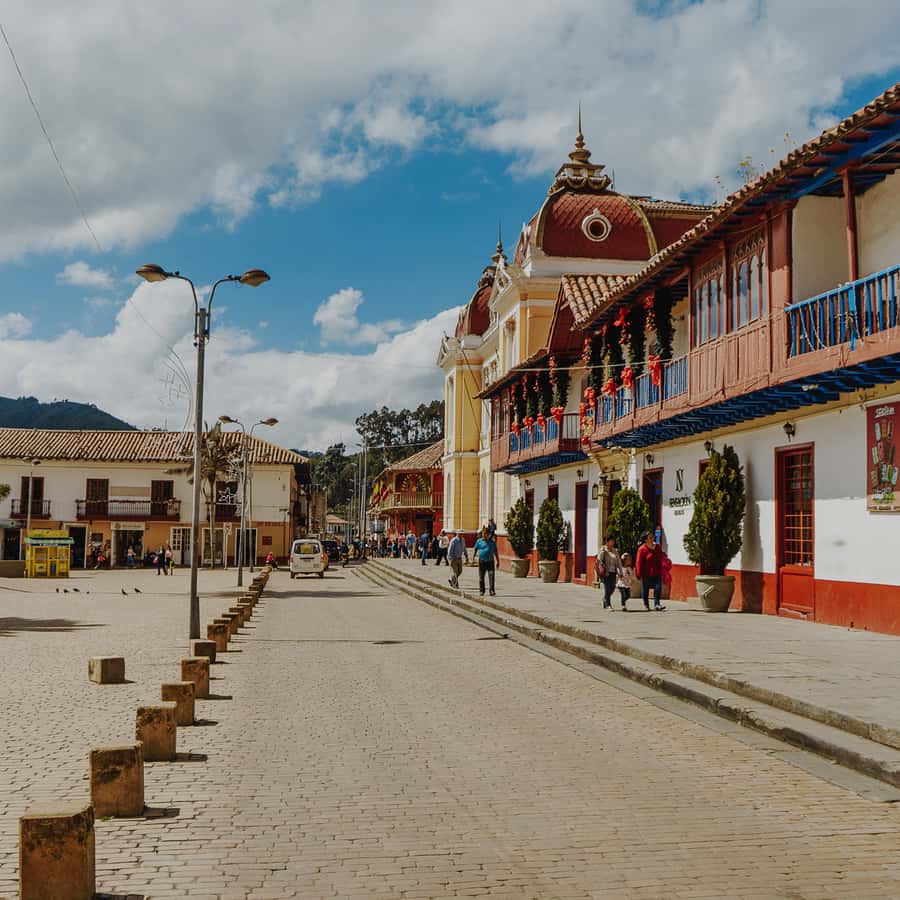
Zipaquirá itself gives you a pleasant change of pace. The tour includes a panoramic look at the town, with time to walk and see some of its character before heading underground.
Entering Zipaquirá’s Salt Cathedral
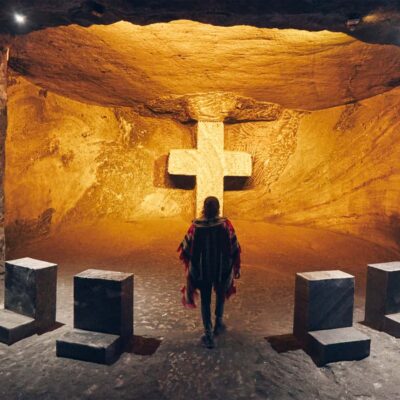
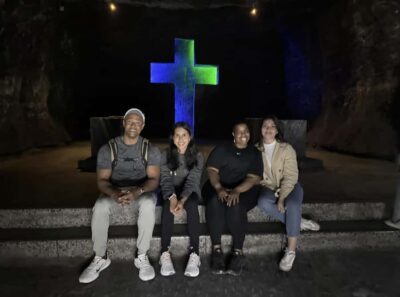
The Salt Cathedral is the afternoon’s big architectural surprise. It is carved into former salt workings about 180 meters below ground, and the visit takes roughly two hours.
The first thing you notice is the scale of the underground passageways. Illuminated tunnels lead through chapels and sculpted spaces, turning an industrial mine into a place of worship and reflection. The Stations of the Cross are built into the salt, and the changing light gives the walls a cool, otherworldly appearance.
The central nave and dome provide the strongest sense of scale. This is where the engineering becomes clear. Miners had to work within the limits of salt chambers, supports, tunnels, and underground safety. The result is not a natural cave with a few religious objects added. It is a carefully shaped complex made from the mine itself.
You may receive an audio guide in your language, while your group guide explains the wider story and helps with timing. This arrangement has a practical advantage: you can move through the cathedral at your own pace rather than staying shoulder to shoulder with the group.
It also has a limitation. An audio guide can sometimes feel more formal or sermon-like than a lively personal explanation. If you want detailed questions answered as you go, ask your guide before entering or at the meeting points.
Photography is a major part of the appeal. The tunnel lighting, carved crosses, broad chambers, and dark salt walls make striking pictures. Still, give yourself time to look without a camera in hand. The cathedral’s size is hard to understand from photographs alone.
The original miners’ church and the engineering story
One of the most interesting details is the connection to the first miners and the earlier church used by them. The modern cathedral is part of a longer working tradition, not a completely separate attraction created for tourism.
Your guide can help explain how miners adapted underground salt chambers for worship and how later work produced the larger cathedral visitors see today. This adds a human layer to the engineering. Workers were not only extracting salt; they were also making space for belief, community, and ritual below the surface.
For me, this is where the two main stops echo each other. At Guatavita, the earth provides a sacred setting for a Muisca offering. At Zipaquirá, miners reshape the earth into a place of worship. The subjects are different, but both sites connect spirituality with natural materials.
Transport, group size, and the pace of the day
Transport is by shared van, with hotel or hostel pickup and drop-off in Bogotá. Drivers such as Alejandro, Andrés, William, Hernán, Jesús, Carmelo, and Carlos have been singled out for safe driving and friendly service. That is worth noting because the route includes long stretches, traffic, and some rougher roads.
The vehicle is generally described as comfortable, but one important warning comes from the seating. Taller or broader passengers may find the van seats narrow, and headrest placement can be awkward. If comfort matters greatly to you, ask about the vehicle before booking.
Groups may include both English and Spanish speakers. For groups larger than four, a separate tour guide is included, and an audio guide is available in your language. The exact rhythm can depend on the guide and the language mix, but guides such as Sebastián and Steven have been praised for translating and making sure English speakers are not left out.
The activity information lists English and Spanish as the tour languages. Even with good interpretation, a bilingual day can take a little longer than a tour conducted in one language.
Who should book this tour
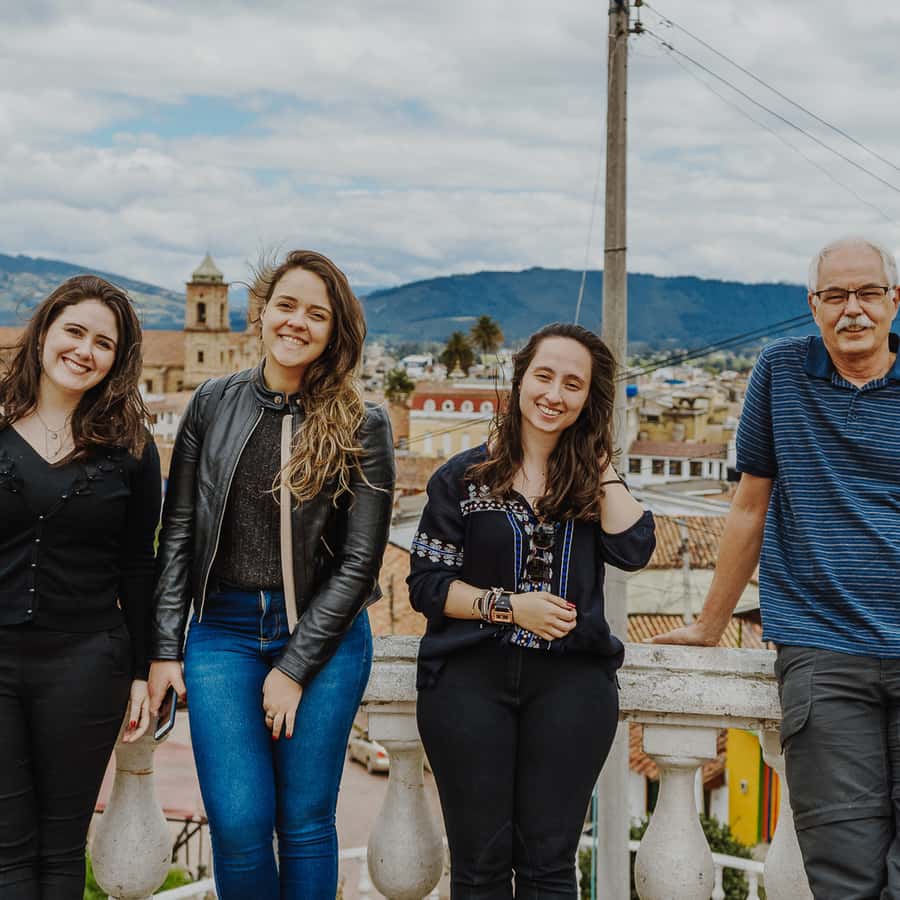
I would choose this tour if you want to see both major sights without handling regional transport yourself. It is especially useful for a first stay in Bogotá, when you want a broad introduction to Indigenous culture, Colombian geography, colonial town life, mining, and religious art.
It also suits photographers and people who like a day with varied scenery. You get mountain views, a trail, a small town, an underground complex, and plenty of material for pictures.
You should think twice if you dislike long drives, fixed schedules, or shared vans. The day can feel tiring, especially after the uphill walk and the return trip through traffic. It is not a gentle sightseeing day.
Pack comfortable clothing, sturdy shoes, sunscreen, water for the permitted parts of the trip, and rain protection. Avoid booking on a Monday because Guatavita Lagoon is closed for maintenance that day. If Monday is a public holiday, the closure shifts to Tuesday.
Free cancellation is available up to 24 hours before departure, and you can reserve while paying later. Those terms are useful if your Bogotá plans may change, but they do not shorten the day or make the walk easier.
Is the $61 price good value?
At $61, the tour is not the cheapest way to spend a day in Colombia. Food, drinks, and souvenirs cost extra, and the shared format means you do not control every stop.
Still, the price covers the two main entrance tickets, pickup and return, transport, and guiding. You also avoid the uncertainty of arranging a taxi or several buses between Bogotá, Guatavita, and Zipaquirá. For many people, that convenience is worth more than the small savings of doing it independently.
The strongest value comes from the explanations. Without a guide, Guatavita can become a scenic walk attached to a familiar treasure story, while the Salt Cathedral can become a series of dark rooms and photographs. With good narration, both places connect to Colombia’s Indigenous traditions, mining work, religion, and national identity.
Should you book this full-day outing?
Book it if you want two major attractions in one carefully timed day and you are comfortable walking uphill, sharing a van, and returning to Bogotá late. The best guides, including Sebastián, Diego, Sergio, Camilo, and Steven, make the long transfers useful rather than wasted time.
Skip it if you need a relaxed pace, a private vehicle, a guaranteed gourmet lunch, or easy access for limited mobility. For everyone else, this is a strong choice for seeing the countryside beyond Bogotá and understanding why Guatavita and Zipaquirá matter.
FAQ
How long is the tour from Bogotá?
The activity lasts about 12 hours, including transport, visits, walking time, lunch, and the return to Bogotá.
What attractions are included?
The day includes Guatavita Town, Lake Guatavita, the Bogotá Savannah by panoramic route, Zipaquirá Town, and the Salt Cathedral of Zipaquirá.
Is transportation included?
Yes. Hotel pickup and drop-off in Bogotá and shared round-trip transportation are included.
Are entrance fees included?
Yes. Admission to Guatavita Lagoon National Park and the Salt Cathedral is included.
Is lunch included in the price?
No. You receive free time for lunch in Zipaquirá, but food and drinks are not included.
How difficult is the Lake Guatavita walk?
The walk takes about two hours and includes uphill sections, steps, and possible slippery ground. Altitude and thin air can make it feel more demanding.
What languages are available?
The live tour guide languages are English and Spanish. Spanish guidance is confirmed, and English is available when possible. An audio guide in your language is also included.
Is the tour suitable for wheelchair users or pregnant women?
No. The activity information lists it as unsuitable for wheelchair users and pregnant women.
Just added in Bogotá
- Candelaria Unveiled: Cool-tural Heritage Walking Tour★ 4.4 · 6 reviews
- Bogota: Zipaquira, Salt Cathedral & Lake Guatavitá Tour★ 4.9 · 32 reviews
- BOGOTA: Tour of Jaime Duque Park, Zoo, and Aerospace Museum★ 4.6 · 15 reviews
- BOGOTA: Visit to the Botanical Garden and Ugly Betty’s House★ 4.9 · 15 reviews
- Bogotá: Villa de Leyva Full-Day Tour with Meals★ 4.2 · 10 reviews
- BOGOTA: Tour of Villa de Leyva, Ráquira, Pozos Azules, and Puente de Boyacá★ 5.0 · 8 reviews
- Bogotá: Private Candelaria Walking Tour and Gold Museum★ 5.0 · 17 reviews
- Bogota: Tour to Salitre Mágico, An Extreme Fun Trip★ 4.3 · 7 reviews
Salt Cathedral & Zipaquirá Tours, compared.

Zipaquirá Salt Cathedral & Guatavita Trip with Pickup
Read our review →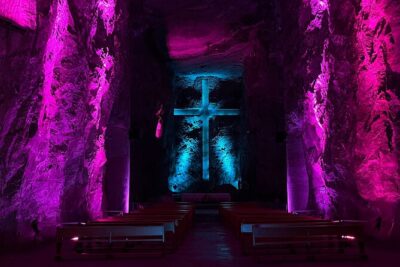
New & Cheapest ZIPAQUIRA & GUATAVITA LAKE Visit 5 Sites/PICKUP
Read our review →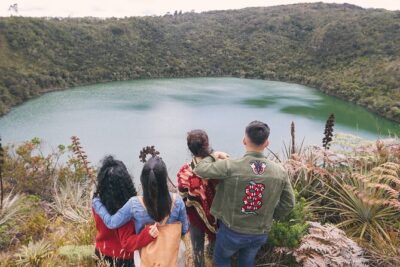
Shared Tour Zipaquirá Salt Cathedral and Guatavita Lagoon
Read our review →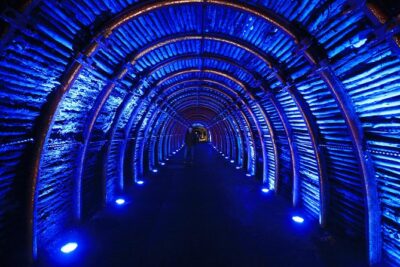
Salt Cathedral of Zipaquirá & Lake Guatavita: Private or Shared
Read our review →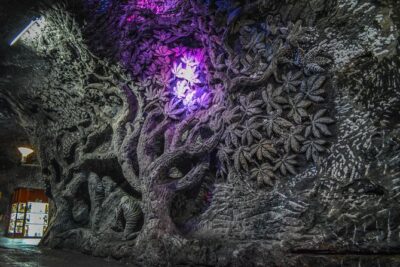
Private Salt Cathedral of Zipaquira Tour from Bogota with Lunch
Read our review →Browse the lists this tour appears in