
Reviewed · SAN FELIPE CASTLE & WALLED CITY TOURS
Cartagena: Historic Center and Getsemaní Shared Walking Tour
Cartagena’s past is impossible to miss, but it is easy to misunderstand without context. This 150-minute walk connects the Spanish conquest, the slave trade, independence, African heritage, music, and modern street life as you move from the Walled City into Getsemaní. The history is not polished smooth, and that is one of the tour’s strengths.
I like two things right away. First, the route covers the major old-town sights without wasting time on transport. Second, it links grand buildings to everyday culture, from the legacy of San Pedro Claver to salsa, champeta, braids, dancing, and street food advice. The main drawback is the heat: even a well-paced walk can feel long in Cartagena’s sun, especially if your guide cannot keep the group in shade.
Key points to know before you go
- A full old-town introduction: See the Clock Tower, Plaza de la Aduana, San Pedro Claver, a defensive bastion, Plaza Bolívar, and the city walls.
- A serious look at slavery: Learn how Cartagena’s trade, buildings, and social order were shaped by enslavement and African heritage.
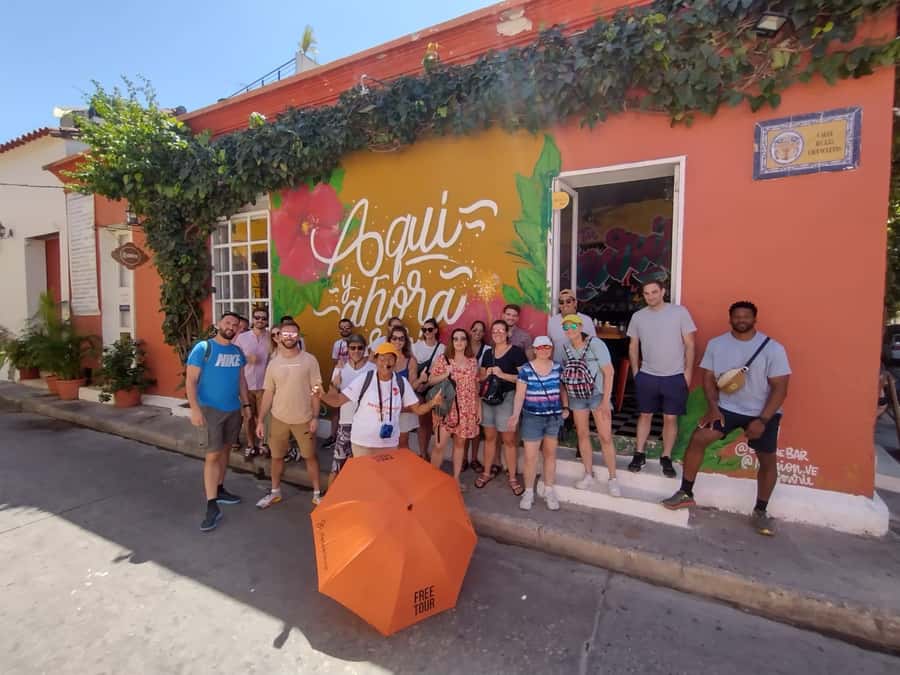
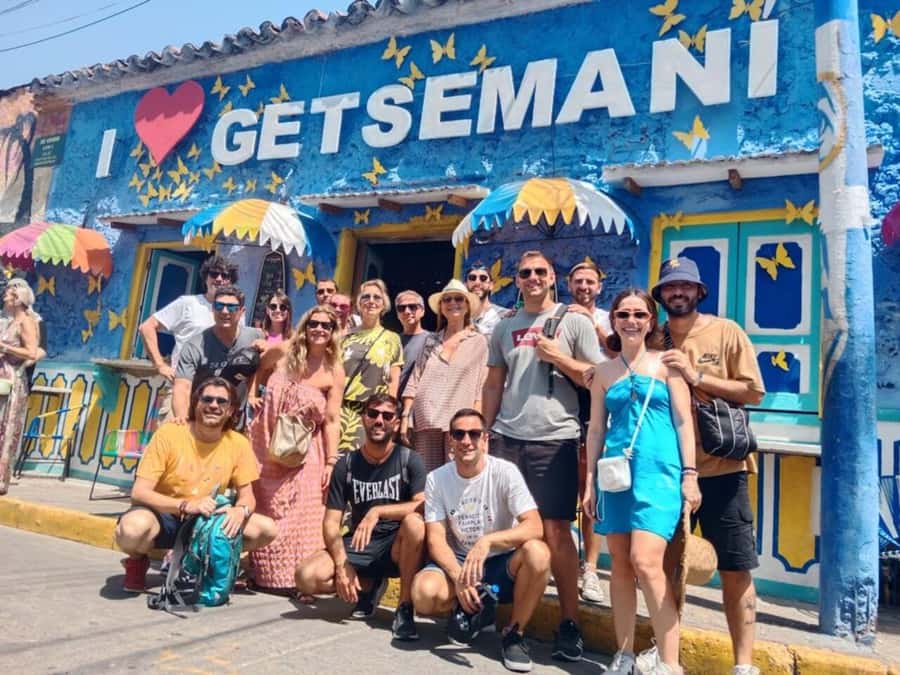
- Getsemaní adds a different mood: Umbrella streets, graffiti, local architecture, salsa, and champeta bring the city into the present.
- Guides bring different strengths: Dani and Daniela are noted for dance and local pride, Legacy for energy and humor, and Robert for practical food and sightseeing advice.
- Good value at $12: The price covers a guide, both neighborhoods, and the tip, making this a low-cost first look at Cartagena.
- Come prepared for the tropics: Wear walking shoes and light clothes, use sunscreen, and carry water even though water is not listed as an inclusion.
Starting at Plaza Cervantes under the orange umbrella
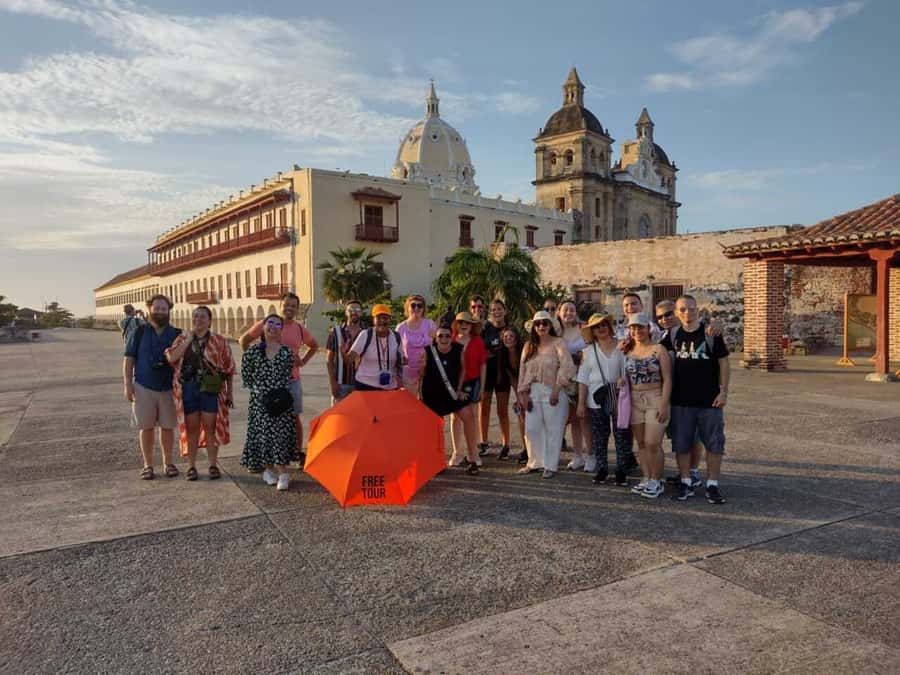
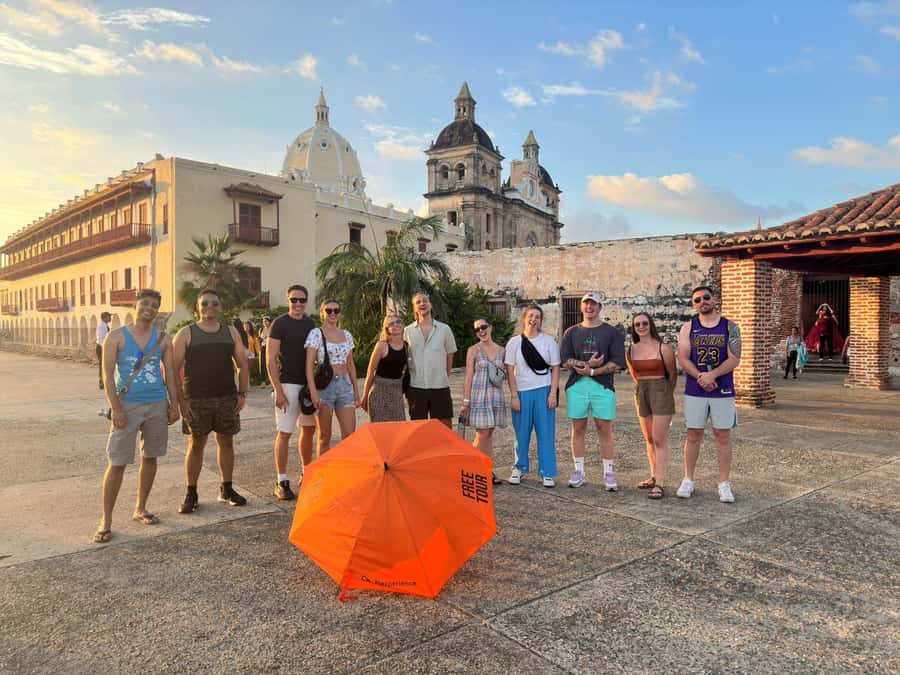
Meet at Plaza Cervantes, also called Camellón de los Mártires, directly in front of the Clock Tower. Look for the orange umbrella. This is a sensible meeting point because the Clock Tower is one of Cartagena’s clearest landmarks, and you are already at the threshold of the old city.
The opening stop looks toward the people and events that came before and accompanied Spanish arrival. That matters because Cartagena’s story did not begin with colonial buildings. The walk frames the city as a place shaped by Indigenous communities, Spanish power, African enslavement, Caribbean mixing, and later independence.
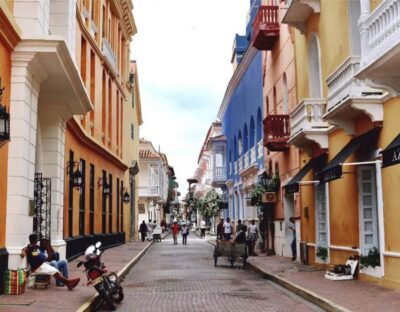
From here, you enter the old center through the Clock Tower, known as the Golden Key of Cartagena. The group passes into Plaza del Ecuador, once associated with the Plaza del Esclavo, then follows streets connected with the route used in the enslavement trade. Porto Carrero and Candilejo are not just pretty lanes. They help show how commerce and human suffering occupied the same urban space.
Pedro de Heredia, the city’s founder, appears early in the story. His presence gives the guide a chance to explain the Spanish foundation of Cartagena, while the surrounding squares show how official history can look very different from the lives of the people controlled by it.
More Walking Tours in Cartagena
- Cartagena: Walled City and Getsemani Shared Walking Tour
★ 4.5 · 352 reviews - Walking Tour of Cartagena Including a Colombian Cup of Coffee
★ 5.0 · 30 reviews - Walking Tour Cartagena Old City with Gold Museum and Plaza de Bolivar
★ 4.5 · 28 reviews
From the Portal de los Dulces to Plaza de la Aduana
The Portal de los Dulces is one of the route’s more human stops. It is tied to women’s work during the period of slavery, and descendants still continue related traditions. The point is not simply to admire colorful sweets under an arcade. You begin to see how food, trade, family labor, and memory can survive political change.
At Plaza de la Aduana, the guide turns to the old business of selling and moving goods, including enslaved people. The square also contains important civic buildings, including the Municipal Hall. I appreciate this part because it puts Cartagena’s beauty beside its economic machinery. The elegant facades were connected to money, authority, and an international trade system that caused great harm.
The route also passes the Museum of Modern Art, which presents Caribbean and Latin American work from the 1950s onward. You should not expect a full museum visit during the walk. Instead, the exterior and its place in the route offer a quick reminder that Cartagena is not only a colonial city. It has an artistic life that continues well beyond its old walls.
The Gold Museum adds another layer, with Indigenous pieces from the Colombian Caribbean. The Emerald Museum points toward Colombia’s famous stones, including their appeal to celebrities. These stops are brief, but they help widen the story beyond Spanish architecture and pirate attacks.
San Pedro Claver and the moral weight of the city
The Church and Museum-Monastery of San Pedro Claver provide one of the tour’s strongest historical moments. San Pedro Claver is remembered as the Slave of the Slaves, and the complex now also serves as a headquarters for human rights.
The building matters for its architecture, but the larger value is moral and historical. Cartagena’s colonial wealth depended heavily on forced labor, and the guide’s explanation connects that past to later conversations about dignity and rights. You do not get a long museum tour here, yet even a short explanation can change how you read the surrounding plazas and churches.
This is also a good place to ask questions. Guides such as Ingrid and Álvaro David are praised for explaining both Cartagena’s past and present, while other guides may bring more humor or performance. The company operates in English and Spanish, so the quality of your experience will partly depend on the guide assigned and how comfortable you are with the tour language.
Bastions, pirates, and Cartagena’s defensive walls
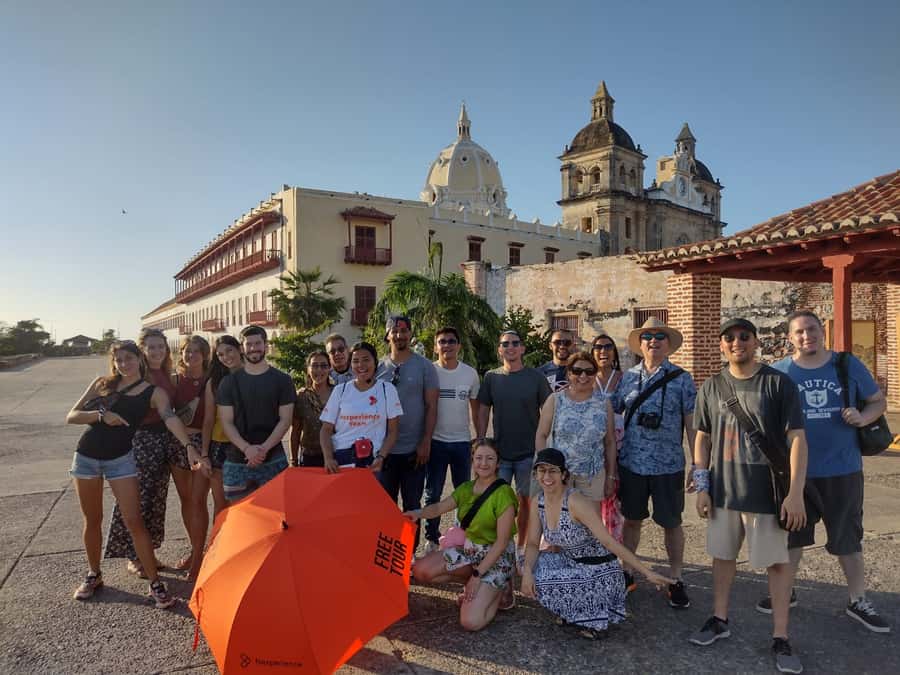
At the San Ignacio Bastion, the walk shifts from social history to military history. The bastion was built to defend the Bay of Souls from pirate attacks. Here you see how Spanish engineers used walls, fortified platforms, and strategic positions to protect a valuable Caribbean port.
Pirates and corsairs are an easy way into Cartagena’s past, especially if you are traveling with children or do not usually enjoy military history. The better part of this stop is that it does not treat the fortifications as decoration. You learn why they were built and how they fit into the city’s defense.
The tour gives you the history behind Cartagena’s walls, but it is not a dedicated fortress visit. If your main goal is to explore Castillo San Felipe de Barajas or walk every section of the wall, you will need a separate visit. This route gives you an overview and helps you decide what deserves more of your time later.
After the bastion, the group reaches Plaza Bolívar, named for the figure associated with independence. It is a useful pause point, and guides may allow time to refresh. The square also helps mark the transition from the formal colonial center toward a more open, contemporary side of Cartagena.
More walled city and castle tours in Cartagena
- Cartagena: Guided Tour, with La Popa Convent, and San Felipe
★ 4.4 · 599 reviews - Cartagena: BILINGUAL CITYTOUR + SAN FELIPE CASTLE & Old city
★ 4.2 · 387 reviews - Cartagena: Walled City & Getsemani Private Tour
★ 4.8 · 107 reviews - Walled City, Getsemani San Felipe Castle Cartagena City Tour
★ 4.7 · 91 reviews
Centennial Park brings in trees, animals, and local life
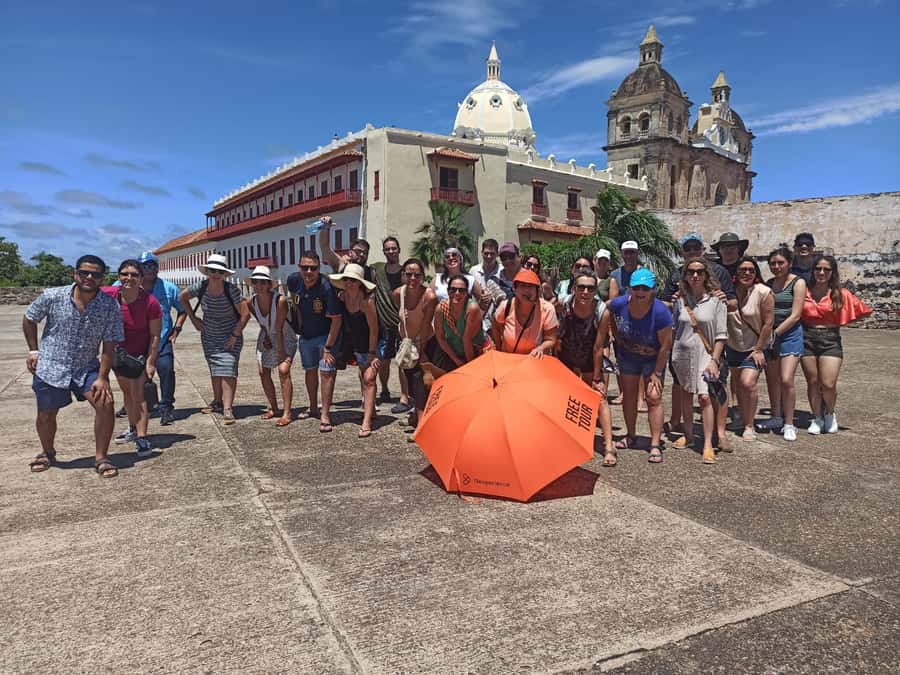
Centennial Park occupies the site of the former railway station and acts as one of Cartagena’s important green spaces. Its tropical dry forest setting gives the group welcome shade after several stone-paved streets and open plazas.
This is one of the route’s unexpected pleasures. You might spot sloths, squirrels, and iguanas among the trees. The park is not a traditional zoo, though one guide jokingly used that idea while pointing out the animals. The stop gives you a chance to watch local life and catch your breath without leaving the city center.
For families, this can be especially useful. One guide, Legacy, made a point of checking on a two-year-old child during the walk, and the park offers a natural break for young children. Still, do not mistake the shaded section for a cool one. Cartagena remains hot, and comfortable clothes plus sunscreen are essential.
Getsemaní shows Cartagena after dark and in motion
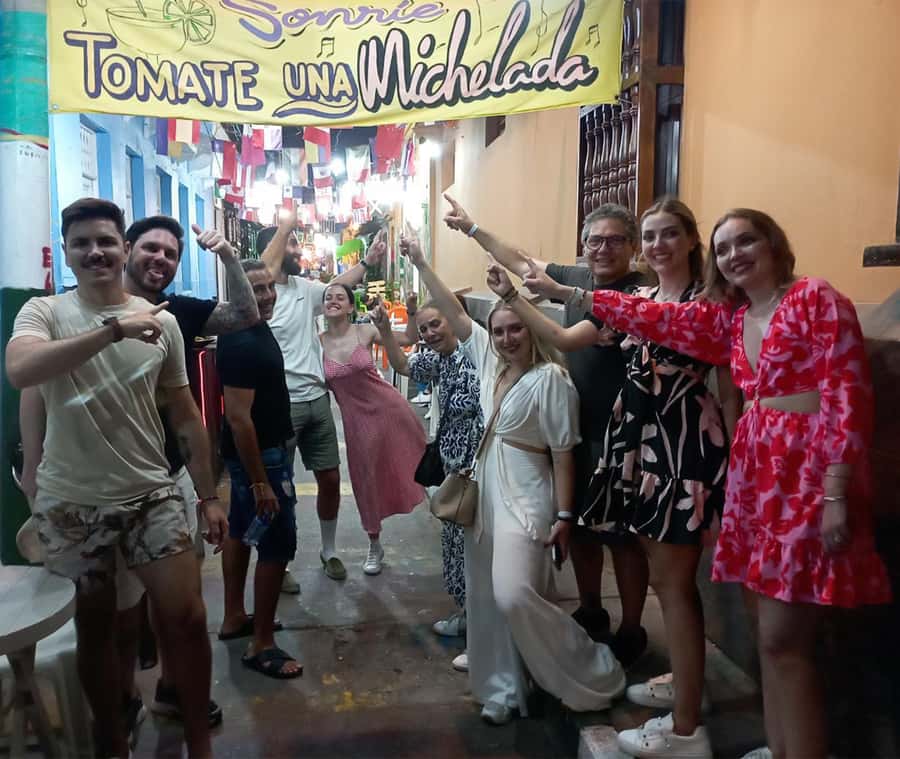
The final hour moves into Getsemaní, one of the most memorable parts of the experience. The neighborhood brings together painted walls, umbrella-covered corridors, unusual architecture, and a strong street presence. The walk through this area feels less formal than the plazas of the Walled City.
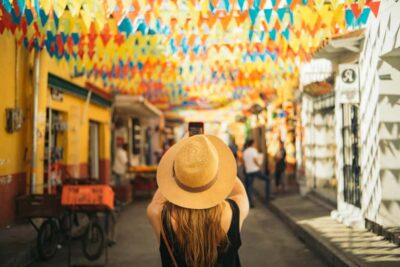
The umbrellas are described as a symbol of advertising, while the graffiti and architecture add layers of local expression. Your guide may explain how the neighborhood’s image and social role have changed, but the key point is that Getsemaní is not merely an extension of the old center. It has its own identity.
The route continues through Callejón Ancho and ends around Calle San Juan, with salsa and African champeta supplying the soundtrack. That ending gives the historical story a living conclusion. Cartagena’s African influence is not locked inside a museum. It appears in music, dance, language, style, and public celebration.
Some guides make the cultural section especially active. Dani and Daniela have taught traditional dances during the walk, and one guide got the group dancing three times. You do not need to be a good dancer, but you should be ready to join in if the group is willing. If you prefer a quiet lecture, this part may feel a little theatrical. If you want history connected to daily life, it works well.
A particularly meaningful theme is the history of African braids and their connection to freedom, pride, and hope for women in Colombia and other places shaped by the same history. This is the sort of detail that gives the tour more depth than a standard checklist of churches and squares.
The guides shape the experience
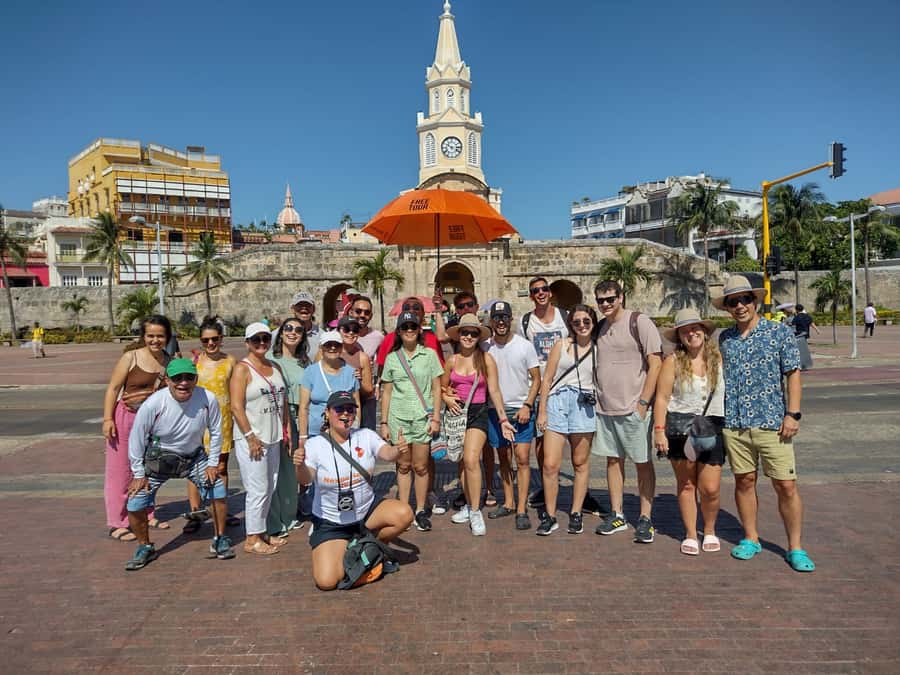
The route is set, but the tone can vary. The guide names associated with this experience include Álvaro David, Dani, Daniela, Legacy, Robert, Ingrid, Liz, Rebeca, and others.
Dani and Daniela are good matches if you enjoy an interactive walk with dancing and strong local pride. Legacy brings humor, energy, and plenty of historical detail. Robert is useful if you want restaurant suggestions, street food prices, and advice about where to go after the tour. Ingrid has a patient style suited to people who ask many questions, while Rebeca leads in Spanish and explains Colombian history in a light, friendly way.
English and Spanish are both offered. One important practical point is pace. Most guides speak clearly, but one account noted that an English-speaking guide sometimes sped up and became harder to follow. If that happens, ask the guide to slow down. You will get more from the tour if you can follow the names, dates, and difficult subjects.
Is $12 good value for 150 minutes?
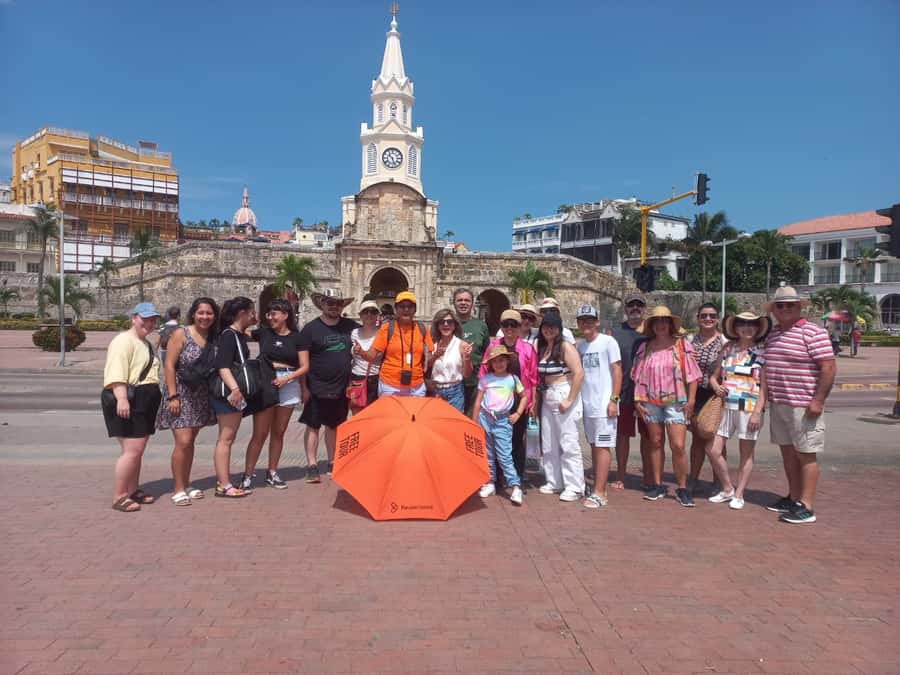
Yes, provided you want an orientation rather than a series of full museum visits. At $12 per person, the tour includes a professional guide, the Walled City walk, Getsemaní, and the tip. No hotel pickup, food, or drinks are included.
The price is especially fair because the route covers two neighborhoods with very different characters. A private guide would cost far more, while walking independently would save the guide fee but leave you to connect the history yourself. The tour also gives you restaurant and sightseeing suggestions that can help you spend your remaining days more wisely.
The tradeoff is group travel. You will not control every pause, and the assigned guide can make a bigger difference than the low price suggests. This is best viewed as a strong first-day introduction, not a substitute for returning to the places that interest you most.
Heat, timing, and what to bring
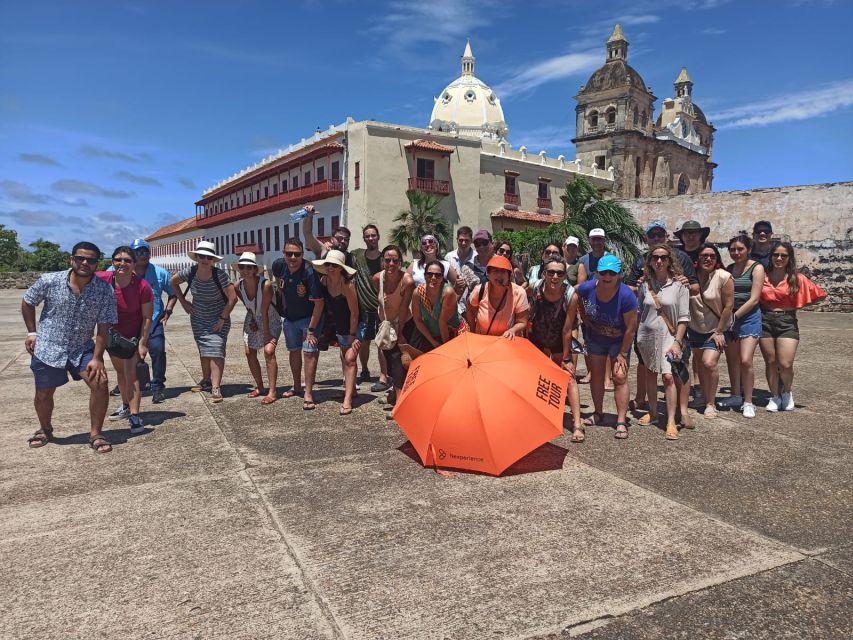
The duration is 150 minutes, with about two hours in the Historic Center and one hour in Getsemaní. Check the available start times when booking, since the heat can affect how comfortable the walk feels.
Wear comfortable shoes. The route uses city streets and includes enough walking that poor footwear will become a problem. Choose light, weather-appropriate clothes, apply sunscreen, and bring water. Several guides make a real effort to keep groups in shade, but that depends on the street and the size of the group.
Rain can also change the mood. The walk can continue in wet weather, but it will be less enjoyable. A rainy day does not erase the value of the history, yet the outdoor parts are clearly better when the streets are dry.
The tour is wheelchair accessible according to the activity information. Since this is a walking route through historic streets, you may still want to confirm any personal mobility concerns before booking.
Who should book this Cartagena walk?
I would choose this tour if you are visiting Cartagena for the first time and want the city to make sense quickly. It suits history fans, families, first-time visitors, and anyone who wants both major landmarks and a look at present-day music and neighborhood life.
It is also a good fit if you want help deciding what to do next. The tour can point you toward museums, restaurants, food stalls, and places that deserve a longer visit. Book it early in your stay so the advice has time to shape your plans.
You may want something else if you dislike walking in heat, prefer small private groups, or want extended time inside museums and churches. For those needs, a private tour or separate museum visits would give you more control.
Should you book it?
At $12, this is an easy recommendation for a first look at Cartagena. I especially like the way it moves from conquest and slavery to San Pedro Claver, fortifications, animals, street art, salsa, and champeta without pretending that the city’s past was simple.
Book it if you want history with a human voice and do not mind a little dancing along the way. Bring water, use sunscreen, meet at the orange umbrella in Plaza Cervantes, and arrive ready to listen, ask questions, and walk at a steady pace.
FAQ
Where does the tour begin?
It begins at Plaza Cervantes, also called Camellón de los Mártires, in front of the Clock Tower. Look for the orange umbrella.
How long does the tour last?
The total duration is 150 minutes. The Historic Center portion takes about two hours, followed by about one hour in Getsemaní.
Which languages are available?
The tour is available in English and Spanish with a live guide.
What places are included?
The route includes Cartagena’s Walled City and Getsemaní. Stops and sights include the Clock Tower, Plaza del Ecuador, Portal de los Dulces, Plaza de la Aduana, the Modern Art Museum, Gold Museum, Emerald Museum, San Pedro Claver, San Ignacio Bastion, Plaza Bolívar, Centennial Park, and several Getsemaní streets.
Is the tour wheelchair accessible?
The activity information states that the tour is wheelchair accessible.
Are food and drinks included?
No. Food and drinks are not included. Hotel pickup and drop-off are also not included.
Is the tip included?
Yes. The activity information states that the tip is already paid as part of the free walking tour arrangement.
Walking Cartagena
- Cartagena: Walled City Walking Tour
★ 4.4 · 26 reviews - Cartagena: Street Food Walking Tour
★ 5.0 · 5 reviews - Cartagena: Private Walking Tour with German or Italian Guide
★ 5.0 · 4 reviews - Cartagena: Shared Walking Tour of the Colonial Old Town
★ 4.8 · 3 reviews
Just added in Cartagena
- Cartagena: CITY TOUR IN ENGLISH, Old city, Monuments, Castle★ 4.4 · 5 reviews
- Cartagena: White Night Boat Tour with Dinner and Open Bar★ 4.6 · 12 reviews
- Cartagena: Speed Boat Party on the Bay with open bar★ 4.3 · 12 reviews
- Cartagena: Sunset in boat in the bay with music and liquor★ 4.5 · 46 reviews
- Cartagena: Walled City Walking Tour★ 4.4 · 26 reviews
- Cartagena Travel Memories: A cover magazine Photo Shoot★ 5.0 · 8 reviews
- Cartagena: Tour the emblematic Cerro de la Popa★ 4.5 · 6 reviews
- Cartagena: Islabela Islands Boat Trip with Lunch & Cocktail★ 4.1 · 41 reviews
San Felipe Castle & Walled City Tours, compared.
Guided Tour, with La Popa Convent, and San Felipe
Read our review →
BILINGUAL CITYTOUR + SAN FELIPE CASTLE & Old city
Read our review →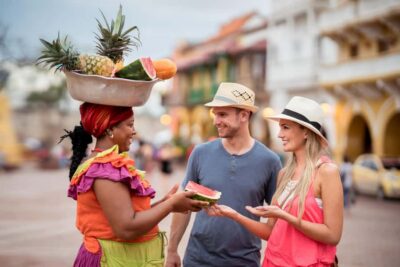
Walled City, Getsemani San Felipe Castle Cartagena City Tour
Read our review →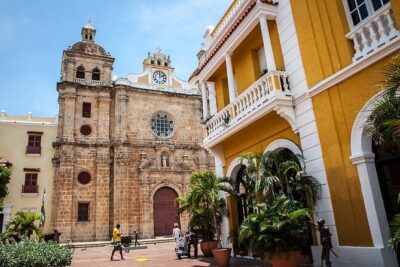
Cartagena Highlights: San Felipe, Popa & Coffee Experience
Read our review →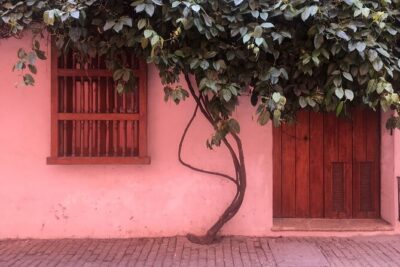
Walking Tour Cartagena Old City with Gold Museum and Plaza de Bolivar
Read our review →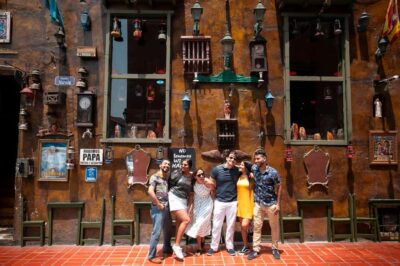
Browse the lists this tour appears in