
Reviewed · BOGOTÁ TOURS
Shared Tour Colombian Conflict War, Drug Trafficking & Peace
Bogotá’s political past is not tucked away in a museum. It is written into the streets, especially around the historic center, where this walking tour traces the Bogotazo of 1948, the armed groups that followed, and the peace agreement with FARC. You get a useful timeline rather than a tour built around famous names alone.
I like the focus on essential sites and the promise of objective discussion. I also like the price: $13 for about 150 minutes is a strong deal for an English-language introduction. The main catch is the walking distance. You may cover about 9 kilometers, and the subject can feel rushed if you want a detailed account of present-day politics.
Key points at a glance
- The Bogotazo takes center stage: Learn why the 1948 riot became a turning point in Colombia’s modern history.
- The walk links politics to place: Historic-center sights are explained through conflict, power, and social change rather than treated as isolated photo stops.
- You cover the major armed actors: The tour introduces FARC, ELN, M-19, guerrillas, paramilitary groups, the military, and drug traffickers.
- The peace process gets attention: You hear about the FARC agreement and the arguments that still shape Colombian politics.
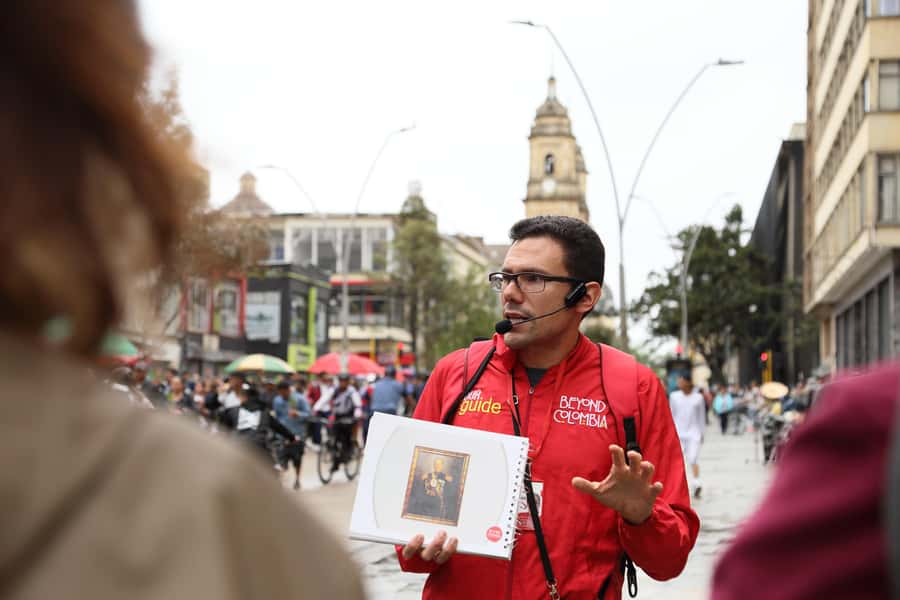
- Guides bring different strengths: Lorenzo is noted for clear connections and humor, while Hector, Santi, and Daniel are praised for their command of a difficult subject.
- Prepare for a serious walk: Comfortable shoes, water, sun protection, and rain gear matter more than dressing up.
Why Bogotá is the right classroom
This is not a general city sightseeing walk with a little politics added on. The central purpose is to explain how Colombia moved from partisan rivalry into decades of armed conflict, drug violence, negotiations, and an uneasy peace.
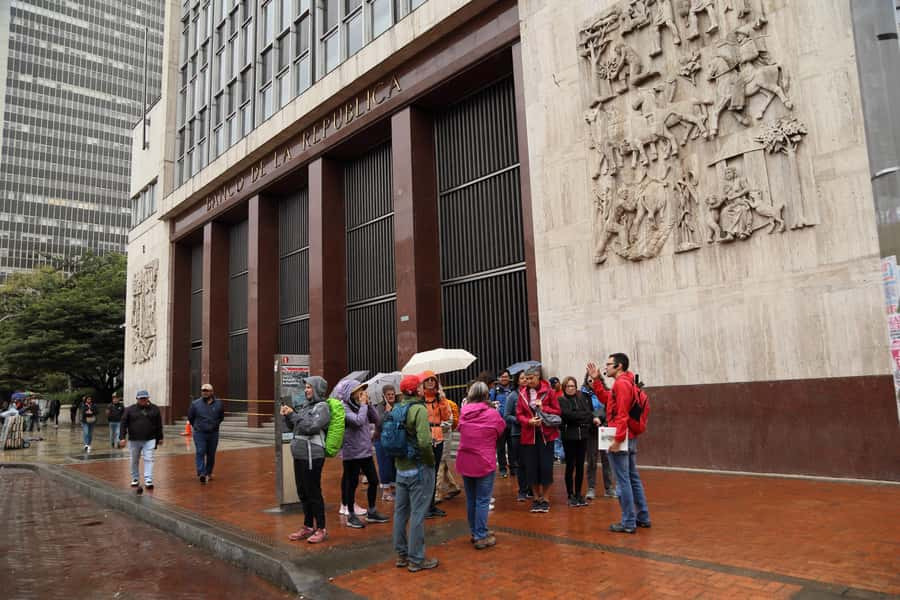
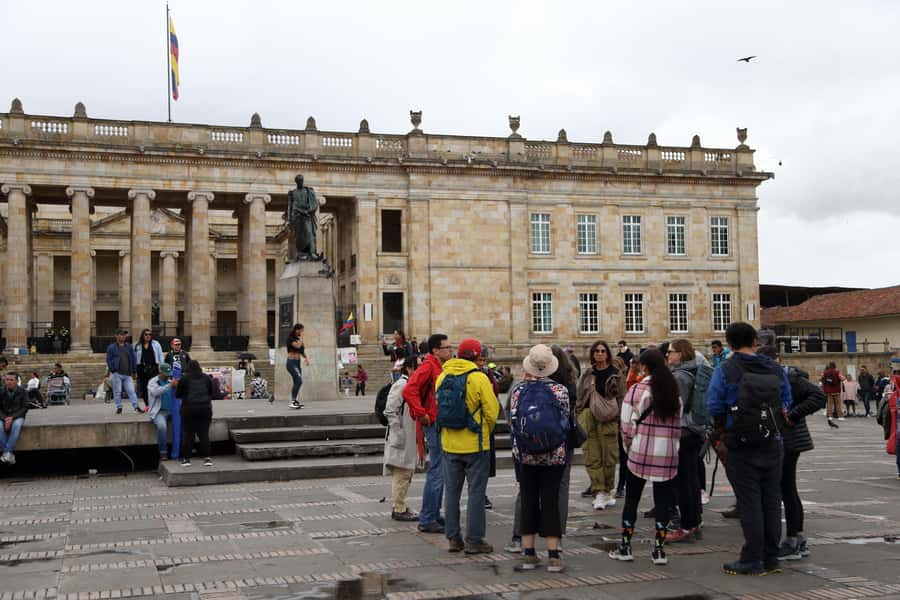
That makes Bogotá a useful setting. You meet at the Museo del Oro, one of the easiest landmarks to find in the historic center, then set out under Beyond Colombia’s red umbrellas. The places along the route are framed as evidence of political change. The point is not only what a building or square looks like, but what happened around it and why it still matters.
You begin with the country’s independence process and the struggle between Liberals and Conservatives. That early political rivalry helps explain the later violence. Colombia’s conflict did not appear out of nowhere, and the tour tries to show the chain of events rather than present a simple story of good people against bad people.
I appreciate that approach. Colombia’s recent past is often reduced to cocaine and cartel stories, but this experience places drug trafficking within a wider political and social crisis. That gives you a better base for understanding the country you see today.
A few more trips around Bogotá worth a look
- Bogota: Bicycle City Tour
★ 4.9 · 2,156 reviews - Zipaquirá: Salt Cathedral Group Tour with Pickup
★ 4.8 · 1,606 reviews - Bogotá: Guided La Candelaria Walking Tour
★ 4.8 · 1,229 reviews
The Bogotazo and the start of the Violence Era
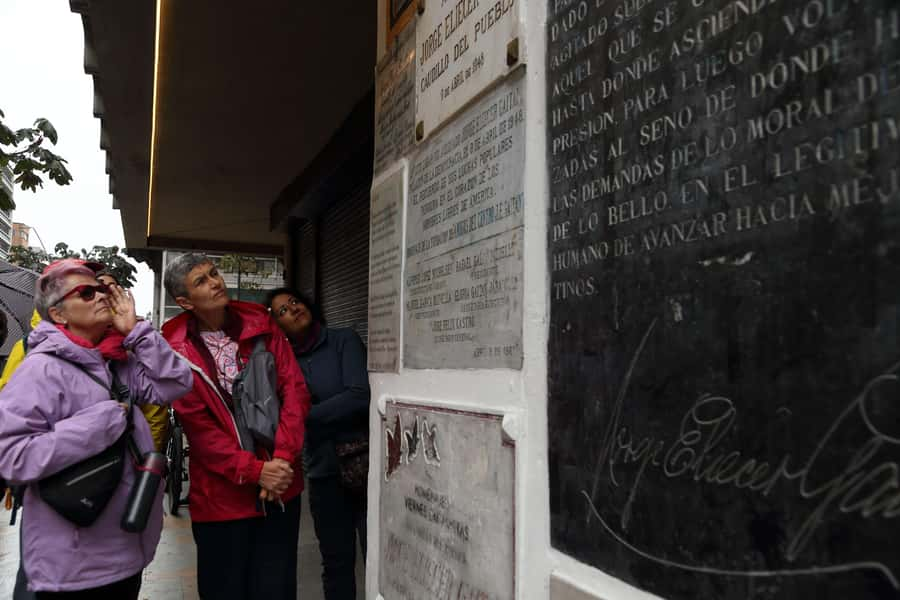
The 1948 Bogotazo is the emotional center of the walk. The assassination of Liberal leader Jorge Eliécer Gaitán triggered riots and destruction in Bogotá, and the event helped push Colombia into the period commonly called La Violencia, or the Violence Era.
You will hear how the Liberal and Conservative struggle shaped daily life and national power. The useful lesson here is that political labels were not distant ideas. They affected loyalties, fear, elections, and violence in towns and rural areas across the country.
This section should help you avoid a common mistake: treating 1948 as one isolated riot. The tour presents it as a major break in a longer contest for political control. That context matters because the later rise of guerrilla groups cannot be understood without first understanding the weakness and distrust left by partisan conflict.
The stop-and-listen format also has a practical advantage. You are not expected to absorb everything while walking through traffic. Resting stops give the guide room to explain events, then take questions. Still, this is a lot of history for a single outing, so you may want to write down unfamiliar names and dates for later reading.
From military rule to guerrilla movements
The tour continues through the political changes that followed, including the military dictatorship and the creation of major guerrilla organizations. FARC, ELN, and M-19 each emerged from different conditions, and the guide explains the reasons behind their formation rather than presenting them as one identical force.
That distinction is important. You learn how political exclusion, rural inequality, distrust of institutions, and competition for power contributed to armed movements. The tour also addresses the reasons guerrilla groups continued fighting, which gives you more useful context than a list of acronyms.
M-19 is especially important to the story of Bogotá because it became a major urban guerrilla movement. ELN and FARC followed different paths and had different areas of strength. The guide’s job is to make these differences understandable within the limited time available.
This is also where the tour can feel compressed. A roughly 150-minute walk cannot explain every commander, region, negotiation, and military operation. You will get the framework. If you want a full academic account of the conflict, use the recommended material at the end as a starting point rather than expecting the walk to answer every question.
Paramilitaries, drug trafficking, and the cost of war
The experience also connects the armed conflict to drug trafficking and paramilitary groups. This is one of its most useful features because Colombia’s international image has often been shaped by cartel violence alone.
The tour explains how illegal drug money affected the conflict and how different armed actors used force, territory, and fear. You also hear about the fight against national and international drug trafficking. The discussion aims to show how political conflict and criminal economies overlapped, rather than claiming that one cause explains everything.
Expect sensitive material. This is a serious history tour, not a crime-themed attraction. The focus is on causes, power, and the people and institutions involved. An open mind helps, especially when the guide explains views that remain disputed.
The company promises not to take sides. That is a worthwhile goal, but objectivity does not mean every question will receive a final answer. One guide may explain the broad arguments clearly while leaving you wanting more detail about current politics. The experience is best treated as a starting point for your own reading and conversations.
Same city, a different sort of day:
- Bogotá: Private City Tour, Monserrate, Emerald and Botero
★ 4.9 · 798 reviews - Bogotá´s Barrios: El Paraíso Favela Tour with Cable Car
★ 4.8 · 731 reviews - Bogota: Guatavita and Salt Cathedral Daily Group Tour
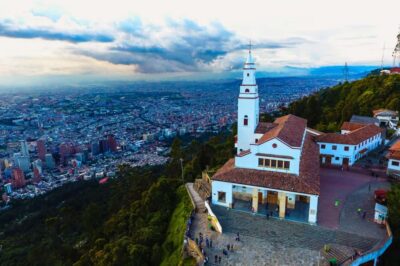
★ 4.7 · 615 reviews - Bogotá City Tour with Monserrate, Gold and Botero Museums
★ 4.9 · 584 reviews
The FARC peace agreement and Colombia today
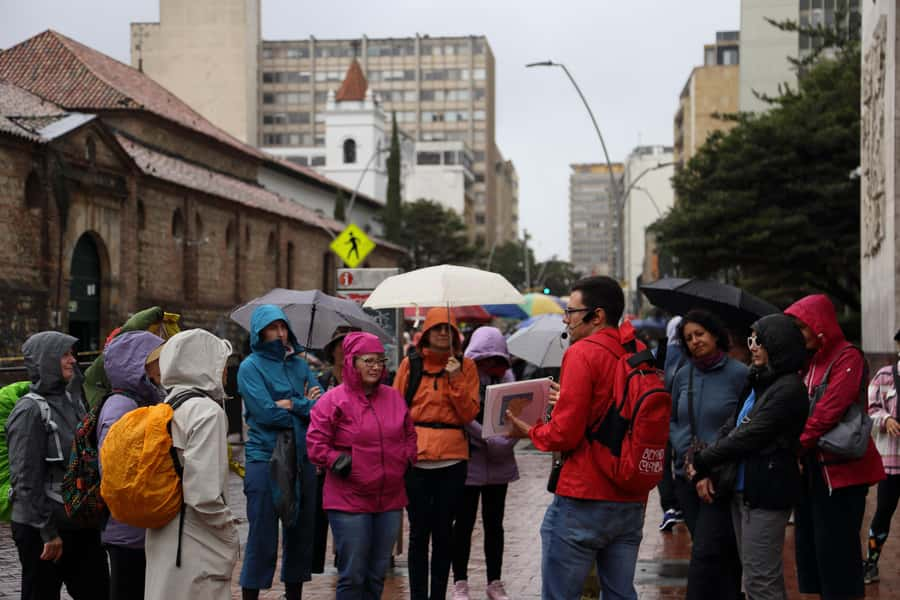
The final part brings the story toward the peace process and the agreement signed with FARC. You learn why negotiations were needed, what the agreement attempted to address, and why peace remains a live political issue rather than a finished chapter.
The tour also discusses current guerrilla and paramilitary fighting, including the reasons these groups continue to operate. This is a useful reminder that signing an agreement with one armed organization does not erase every source of violence. Political disputes, illegal economies, local power struggles, and the presence of other armed groups continue to shape the situation.
The coverage of present-day politics is the area where you should keep your expectations measured. The tour promises an overview, not a specialist briefing. If you want a clear introduction to the main arguments around the peace process, it can help. If you want detailed analysis of current administrations and regional developments, you may find the time too short.
Guide quality matters here. Lorenzo is described as using questions, humor, and clear connections to involve the group. Hector is praised for patiently answering questions, while Santi and Daniel are noted for strong command of the subject. Those details suggest that your experience may depend partly on who leads the walk and how much time the group spends asking questions.
A walking route with real physical demands
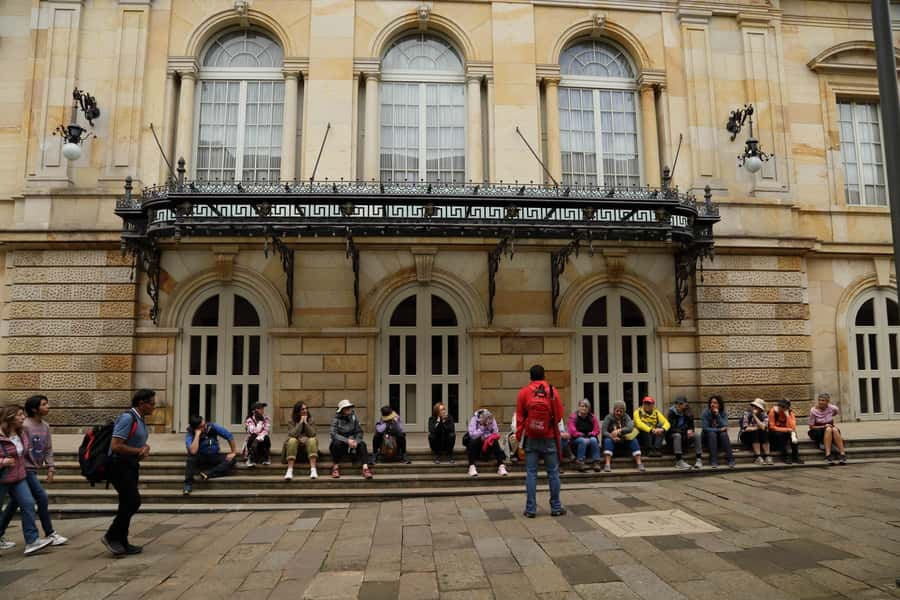
The route covers essential places in Bogotá’s historic center, with the city itself providing the setting for the story. You will walk about 9 kilometers, with stops to hear the guide. That is a substantial distance for a tour lasting around two and a half hours, or close to three hours depending on the pace and schedule.
Wear comfortable shoes. Bring water, sunscreen, and a hat. Bogotá’s weather can change, so pack a rainproof coat or umbrella. The company does not provide transport to or from your hotel, and you should plan your own way to the Museo del Oro meeting point.
The walk may be a good fit if you like moving through a city while learning. It may be less suitable if you prefer long indoor talks, frequent seating, or short distances. The published information gives conflicting accessibility details: it says the activity is wheelchair accessible, but it also says it is not suitable for wheelchair users or people with mobility impairments. Contact the provider before booking if this affects you.
Because you pass through crowded areas, keep your phone, wallet, and passport secure. The practical warning is simple: keep your belongings close and avoid displaying valuables. Smoking, alcohol, and drugs are not allowed.
What $13 really gets you
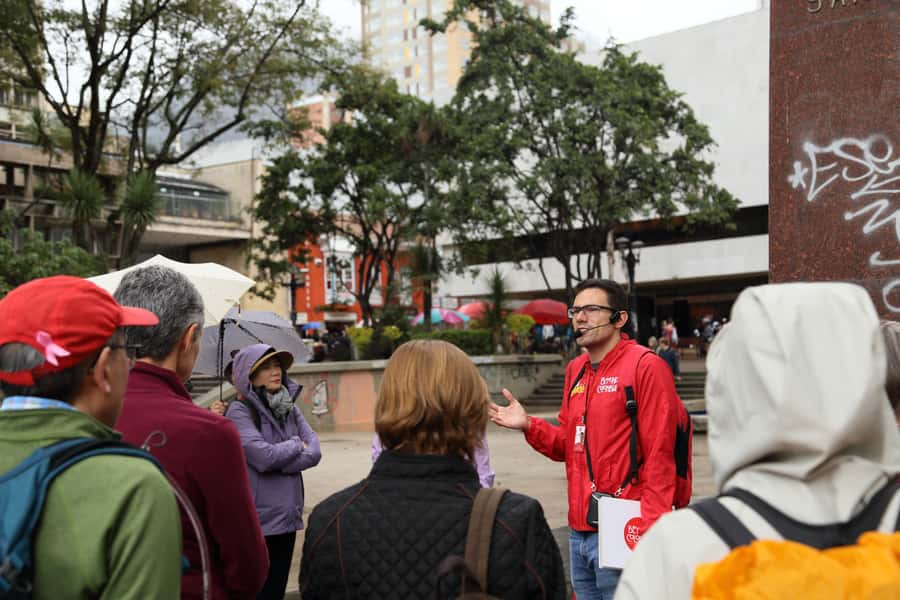
At $13 per person, this is inexpensive for an English-language history walk of roughly 150 minutes. You are paying for a live guide, a planned route, historical interpretation, and the chance to ask questions. There are no extra entry fees along the route, and you do not need to budget for food, drinks, or souvenirs unless you choose to buy them separately.
It is a shared tour, not a private lesson. You will meet other people, and the guide must serve the pace and interests of the whole group. That keeps the price low, but it also means your preferred topic may receive less time than you would like.
The free-tour tradition affects the value calculation too. The advertised price is $13, and you should check the booking terms for how payment is handled. Beyond Colombia also provides partner discounts with a wristband and recommends further material for study. Those extras are modest, but they add a little practical value after the walk.
I would call the price a good buy if you want an accessible introduction before exploring Bogotá on your own. It is less compelling if you already know Colombian political history well or want an intensive specialist tour.
The guide can shape the whole experience
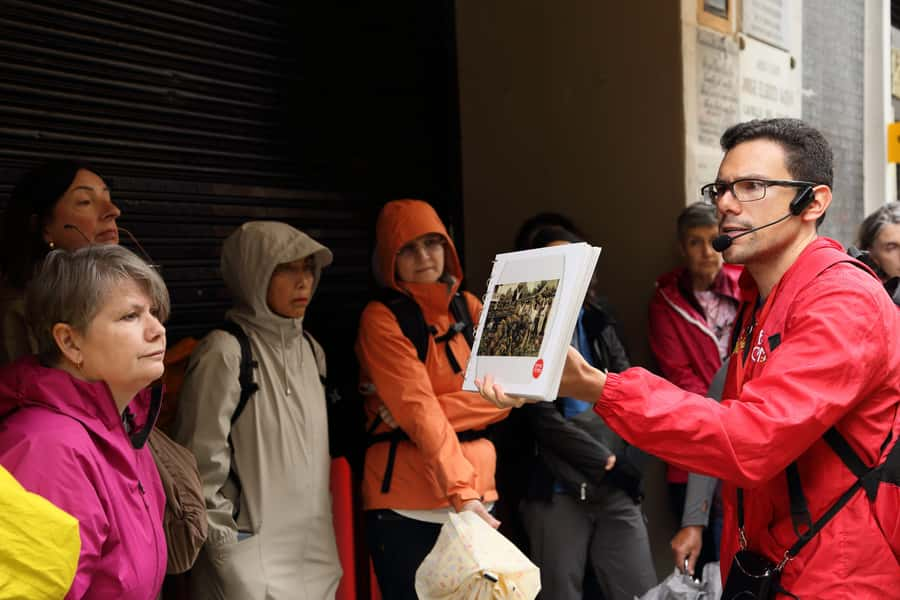
This subject needs a guide who can explain without turning the walk into a lecture. The strongest guide comments point to clear explanations, humor, patience, and a willingness to take questions.
Lorenzo’s approach sounds particularly useful for a mixed group because he connects major events and brings people into the discussion. Hector is a good name to look for if you value question time. Santi and Daniel are also associated with strong subject knowledge and a calm explanation of difficult material.
That does not guarantee an identical experience every day. Some groups ask many questions, while others move quickly from stop to stop. A guide may also spend more time on the Bogotazo, the guerrillas, or the peace process depending on the group’s interests.
You can improve the experience by arriving with one or two questions. Ask how the Liberals and Conservatives shaped later conflict, why different guerrilla groups formed, or what the FARC agreement changed. Specific questions often produce a more useful conversation than a request to explain all of Colombia’s history at once.
Who should book this history walk?
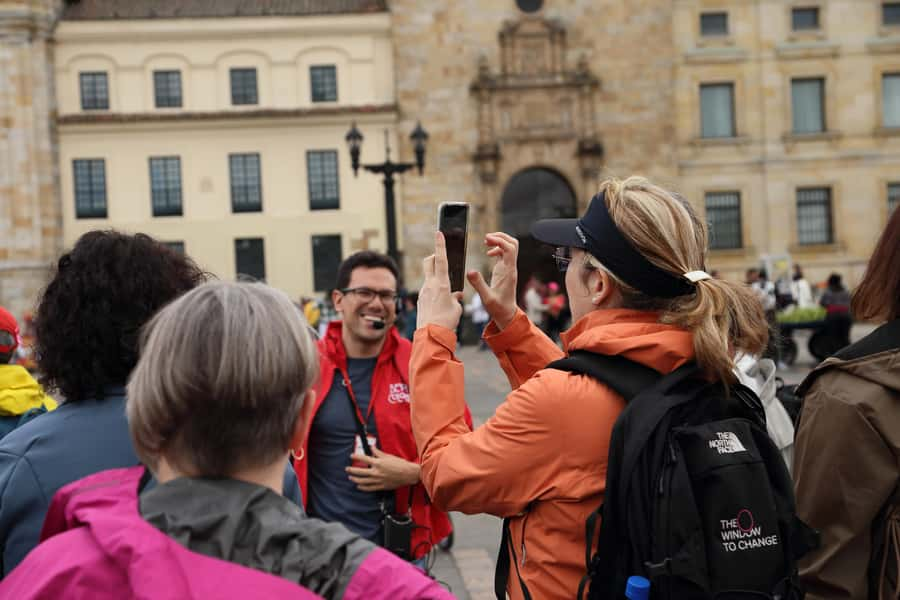
I would recommend it to first-time visitors who want to understand Colombia beyond its food, architecture, and famous attractions. It also suits anyone who has heard about FARC, cartels, or the peace agreement but lacks the timeline connecting them.
It is a good choice for:
- Adults and older teens interested in politics and recent history
- Visitors who want an English-language introduction
- People comfortable walking long distances in a city
- Anyone who prefers local explanation and discussion to a museum visit alone
- Visitors planning to explore Bogotá’s historic center afterward
I would think twice if you are traveling with very young children, since children under five are not suitable for the tour. I would also skip it if you want a light sightseeing outing. The subject includes war, political violence, drug trafficking, and the consequences of armed conflict.
The walk is also not ideal for anyone with mobility limits unless the provider confirms that the route works for them. The 9-kilometer distance is the most important practical concern.
Should you book the Beyond Colombia conflict tour?
Book it if you want a clear first look at the forces that shaped modern Colombia and you are ready for a serious, active afternoon. The combination of the Bogotazo, partisan rivalry, guerrilla groups, paramilitaries, drug trafficking, and the FARC peace process gives you a useful framework for the rest of your visit.
Do not book it expecting a final verdict on current politics or a detailed account of every conflict zone. The tour gives you the structure and vocabulary to keep learning. At $13, that is a fair trade, especially if your guide is as engaging as Lorenzo, Hector, Santi, or Daniel.
Bring water, wear good shoes, protect your belongings, and leave room for questions. If you do, this walk can turn Bogotá’s historic center from a collection of old streets into a place where Colombia’s political story becomes easier to follow.
FAQ
Where does the tour meet?
The meeting point is in front of the Museo del Oro in Bogotá. Look for the Beyond Colombia team with red umbrellas.
How long does the tour last?
The stated duration is 150 minutes, or about two and a half hours. The tour description also says approximately three hours, so allow extra time in your schedule.
What language is the tour in?
The tour is conducted in English with a live English-speaking guide.
How much does the tour cost?
The listed price is $13 per person.
Is this a private tour?
No. It is a shared group tour, so you will take part with other people rather than have an exclusive guide.
What subjects does the tour cover?
It covers Colombian independence, the Bogotazo, the Violence Era, the military dictatorship, FARC, ELN, M-19, guerrilla and paramilitary groups, drug trafficking, the peace process, the FARC agreement, and current political issues.
How far will I walk?
You should expect to walk about 9 kilometers, with stops to listen to the guide and rest.
What should I bring?
Bring comfortable shoes, water or another drink, sunscreen, a hat, a camera, and a rainproof coat or umbrella.
Are entrance tickets included?
The walk does not include tickets or paid attractions. The route does not include places where sudden extra charges apply.
Is the tour suitable for wheelchair users?
The activity information gives conflicting details. It describes the tour as wheelchair accessible but also says it is not suitable for wheelchair users or people with mobility impairments. Contact Beyond Colombia before booking to confirm the route.
Can children join the tour?
Children under five are not considered suitable for this activity.
Can I cancel my booking?
You can cancel up to 24 hours in advance for a full refund. You can also reserve now and pay later, according to the booking terms.
Just added in Bogotá
- Zipaquira: 5 hrs Salt Cathedral Tour★ 4.4 · 9 reviews
- Zipaquirá: Private tour to the Salt Cathedral, Colombia’s first wonder★ 4.9 · 33 reviews
- Wonders of Salt: Colombia’s Underground Cathedral★ 5.0 · 18 reviews
- Zipaquirá Salt Cathedral & Andrés Carne de Res (Chía)★ 4.6 · 30 reviews
- Private Zipaquira Salt Cathedral and Guatavita Lagoon Tour from Bogota★ 4.5 · 44 reviews
- MINA CATEDRAL DE SAL ZIPAQUIRA Tour Privado★ 4.5 · 38 reviews
- Hiking to the largest paramo on earth : Sumapaz★ 5.0 · 49 reviews
- Theatron Party-Tour, 20 Clubs, Map, cocktail, bottle, After-party★ 5.0 · 27 reviews
Bogotá Tours, compared.
Private City Tour, Monserrate, Emerald and Botero
Read our review →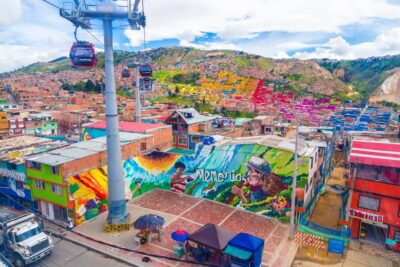
Bogotá´s Barrios: El Paraíso Favela Tour with Cable Car
Read our review →
Bogotá City Tour with Monserrate, Gold and Botero Museums
Read our review →
Browse the lists this tour appears in