
Reviewed · PABLO ESCOBAR TOURS
Private Pablo Escobar Tour – Dark days and the new Medellin
Pablo Escobar’s story is still written into Medellín’s streets, cemeteries, and public memorials. This private tour uses those places to explain his rise, the Medellín Cartel, the war with the government and Los Pepes, and the city’s long effort to face its past. I like the small private format and the way the route links famous sites with the wider story of Medellín.
I also like that you ride between stops in an air-conditioned vehicle, with hotel pickup and return in El Poblado. Guides Andrés and Daniel are singled out for clear English, local insight, humor, and useful city tips. The main caution is that the tour focuses heavily on Escobar, so visitors wanting a broader Medellín tour may find the subject matter narrow and sometimes grim.
Key points at a glance
- Inflexión Park: A memorial built around the painful memory of victims and Medellín’s violent years.
- Montesacro Cemetery: Visit the site associated with Escobar’s grave and hear about his family, enemies, and legacy.
- Pablo Escobar neighborhood: See the area he constructed himself and consider how his public image took root.
- El Dorado and Barrio La America: Put his early life and Medellín connections into a local setting.
- Private English-speaking guide: Andrés and Daniel are among the guides named in connection with the experience.
- Four hours for $64: A useful value if you want private transport, a focused route, and a guide rather than a quick photo stop.
Four hours tracing Medellín’s darkest chapter
This is not a general city sightseeing trip with one Escobar stop added on. The entire route is built around his life, the Medellín Cartel, Colombia’s drug trade, and the violence that followed. You visit places tied to his family, public image, death, and lasting effect on the city.
That focus has a clear benefit. Instead of trying to connect scattered sites on your own, you can ask questions as the story unfolds. The guide can explain how Escobar rose, how the government fought back, how Los Pepes entered the conflict, and how his fall changed Medellín.
I would allow the full four hours. The activity is listed as four hours, with one hour assigned to each main guided stop. Pickup and return are included, so the schedule is more practical than attempting the same route independently by taxi.
The tour begins in El Poblado, one of Medellín’s best-known visitor areas. You are collected at your location there and returned after the final stop. Since the group is private, you do not have to fit your questions into a large shared group or wait for strangers at each location.
More Escobar history tours in Medellín
- Medellín: The Real Pablo Escobar Tour
★ 4.8 · 3,205 reviews - Medellín: Pablo Escobar Tour with beer included
★ 4.7 · 612 reviews - Medellin: Guatapé Day Trip & Boat to Pablo Escobar’s Estate
★ 4.7 · 365 reviews
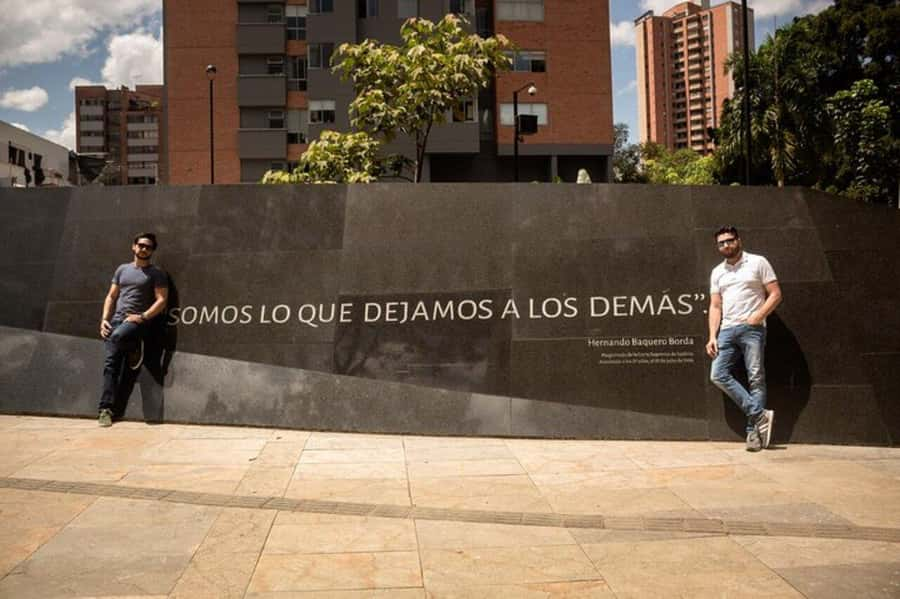
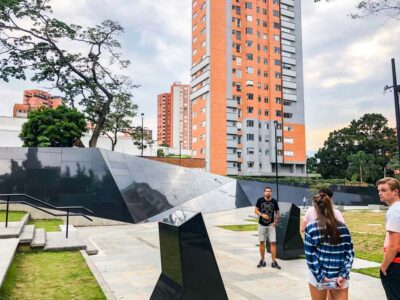
Inflexión Park remembers the victims

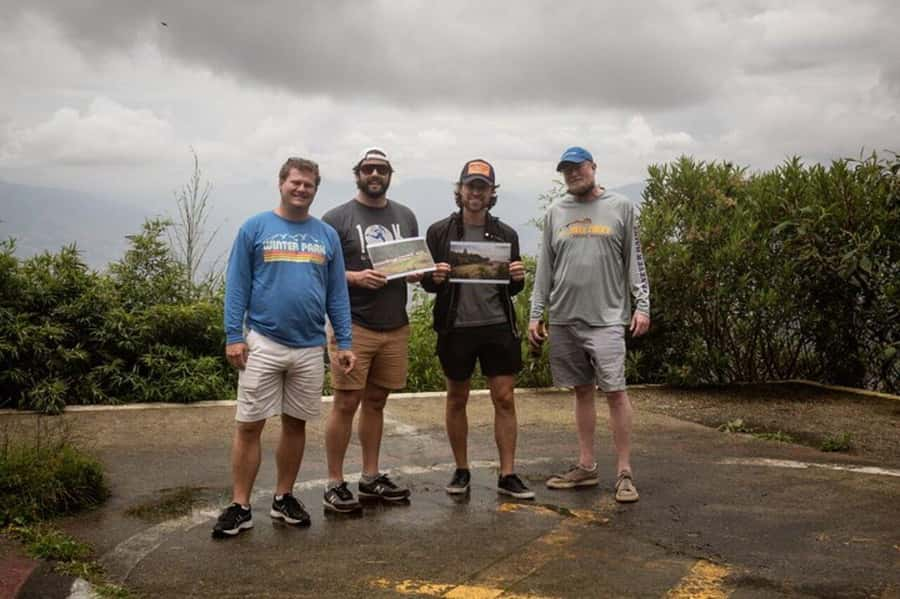
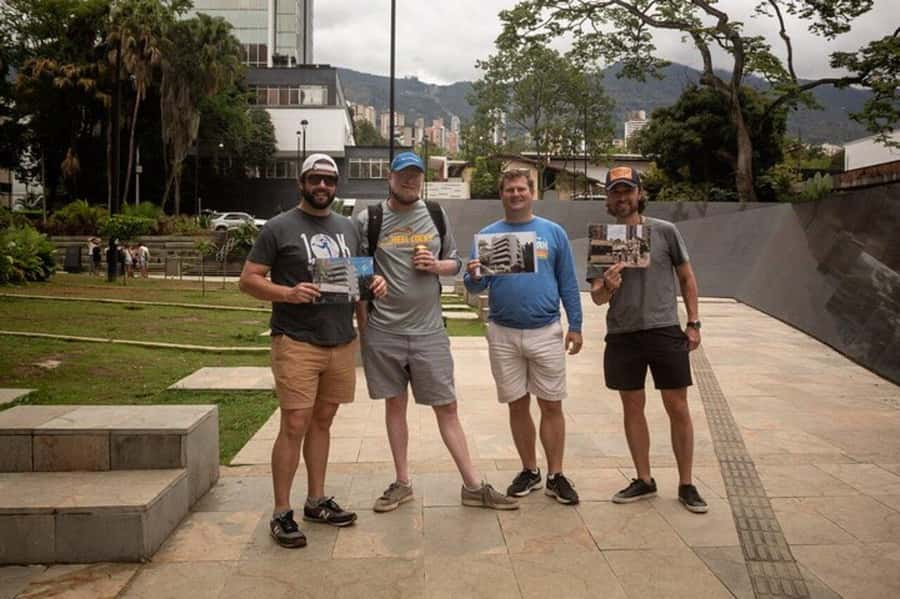
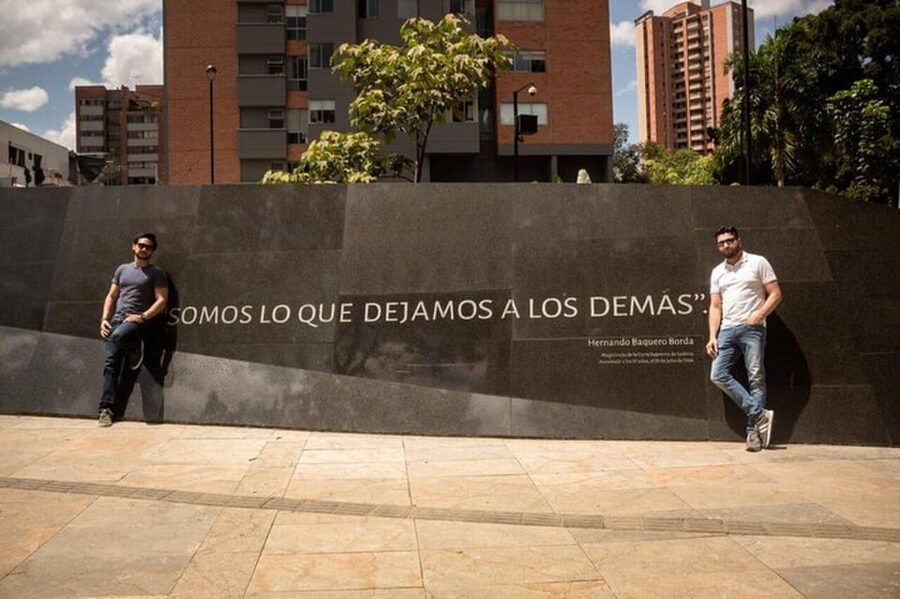
The first major stop is Conmemorativo Inflexión Park, where the focus shifts from Escobar as a famous criminal figure to the people affected by the violence. The stop is guided and lasts about an hour.
This is an important choice for the route. Escobar-related tourism can easily become a procession of houses, murals, and graves, with the criminal treated like a celebrity. Inflexión Park gives the guide a place to discuss the human cost and the city’s attempt to remember those who suffered.
You can expect the conversation here to cover the darkest days of Medellín, when cartel violence reached the streets, as well as the conflict between the Medellín Cartel and the government. The tour also addresses Los Pepes, a group connected to the struggle against Escobar.
I would treat this stop with respect. It is not simply a dramatic backdrop for photographs. The value comes from listening to how the guide frames the memorial and links it to Medellín’s new identity. The park makes the tour less about collecting Escobar souvenirs and more about understanding the damage left behind.
Montesacro Cemetery and Escobar’s grave
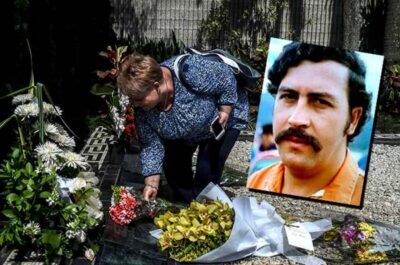
The next stop is Montesacro Cemetery, also with about an hour of guided time. This is where you visit Escobar’s grave and hear more about his family, enemies, and legacy.
A cemetery visit can feel more personal than a city street or a mural. It places the end of Escobar’s story in a real setting, while giving the guide room to explain the people around him. The stop is useful if you want more than the familiar rise-and-fall outline.
The cemetery also raises a practical point about this type of tour. Escobar’s grave is one of the most recognizable sites connected to him, but the visit should not be confused with approval of his actions. The strongest part of the experience is the context around the grave: how the guide explains the different ways Escobar has been remembered, criticized, and used in Medellín’s public story.
You may want to save some questions for this stop. Ask about his family, his enemies, and how his legacy is viewed in Colombia. The private format gives you more room for that kind of conversation than a large group usually allows.
The neighborhood he constructed himself
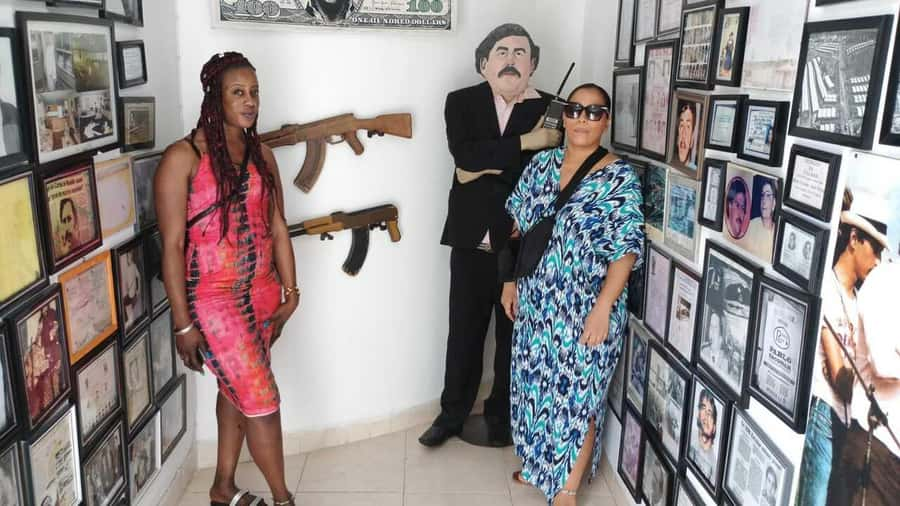
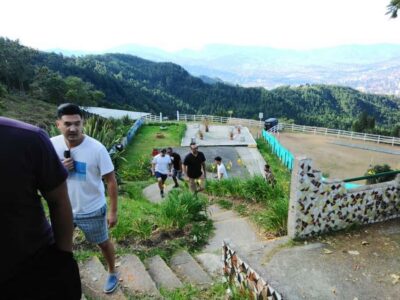
The tour then visits the Pablo Escobar neighborhood, described as a neighborhood he constructed himself. This stop offers a different angle from the cemetery. Here, the subject is not only the criminal network but also the way Escobar built a public image through his relationship with local communities.
The neighborhood helps explain why his story is more complicated than a simple villain biography. The guide discusses his rise and the social setting around it, while also covering the drug trade and the effects of cartel power. You will hear about the gap between public generosity, political ambition, fear, and violence.
This part is especially valuable with a local guide. A place can look ordinary if you arrive without context. A guide such as Andrés or Daniel can connect the street-level setting to the larger story of Medellín and explain details you would likely miss alone.
Keep your expectations grounded. The neighborhood is not presented as a theme park or a polished museum. Its importance comes from the history attached to it. You are going to hear stories and see places linked to Escobar’s influence, not encounter a formal collection of exhibits.
A few more trips around Medellín worth a look
- Medellín: Private City Tour with Metrocable and Comuna 13
★ 4.9 · 330 reviews - Medellín: Private Guatapé with Peñol Tickets and Boat Ride
★ 4.9 · 256 reviews - Medellín: Private Pablo Escobar and Comuna 13 Tour
★ 4.9 · 233 reviews - Medellín: Private Pablo Escobar Tour with Cable Car Ride
★ 4.8 · 228 reviews
The Pablo Escobar mural and Medellín’s public memory
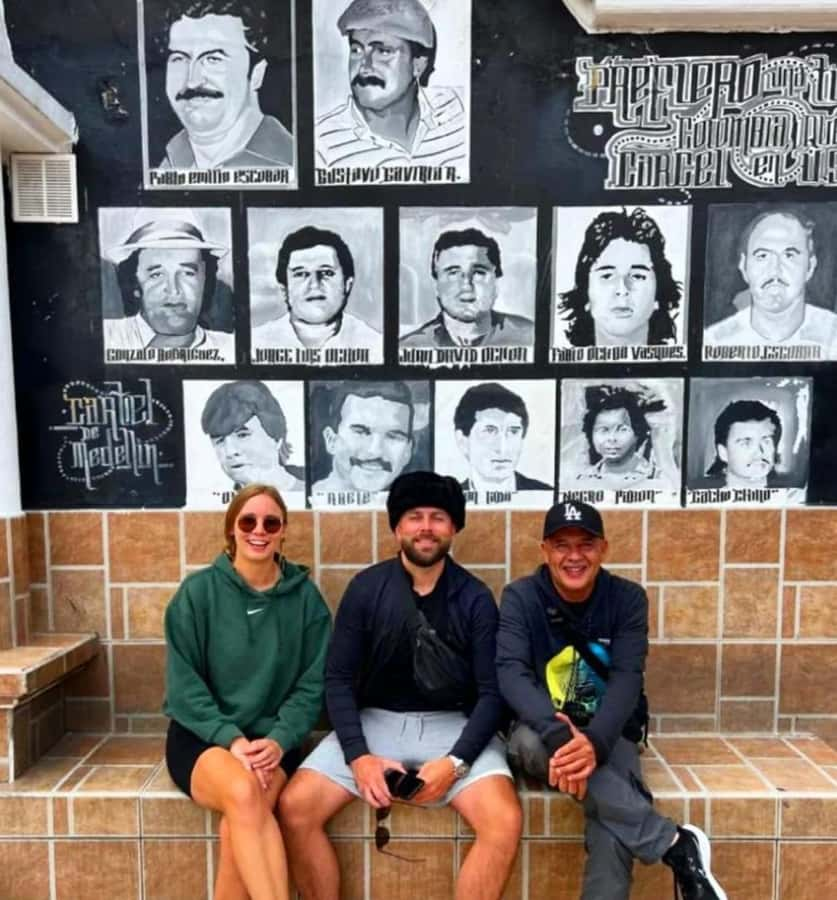
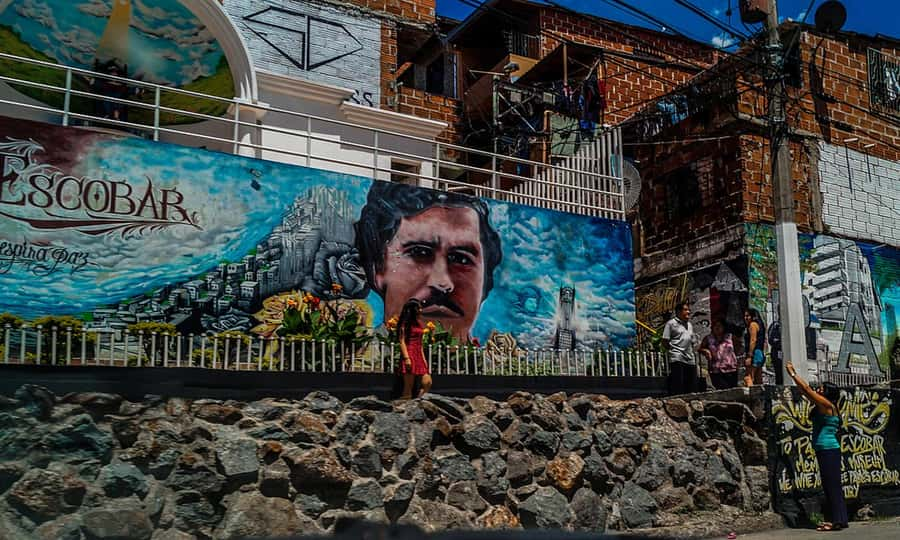
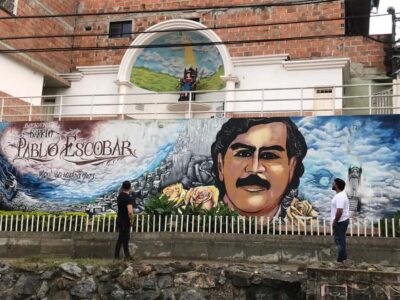
Another stop is the Pablo Escobar mural. Murals can be easy to rush past, especially when a tour includes several locations in one afternoon. Here, the guide gives the image a place within the wider discussion of Escobar’s public reputation and the city’s changing relationship with his name.
The mural is useful because it shows how his image remains visible in Medellín. At the same time, a mural alone cannot explain the history. Its value depends on the discussion around it, including the rise of the Medellín Cartel, the government’s response, and the effect on local communities.
This is a good place to ask how Medellín wants to be seen today. The tour is titled around the city’s dark days and its new direction, so the mural works as a bridge between the past and the modern city. You are not only looking at an image of Escobar. You are considering why such images remain present and what they mean to people who lived through that era.
El Dorado, Barrio La America, and the early story
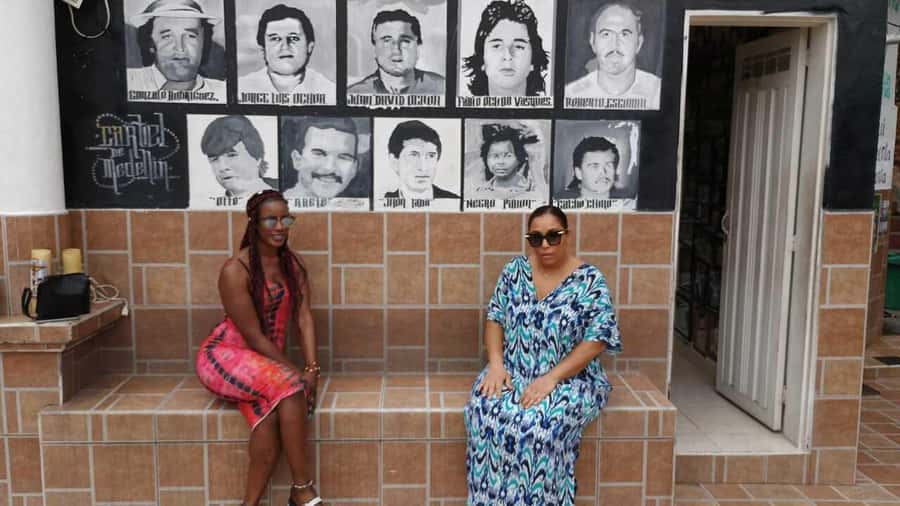
The route also includes the El Dorado neighborhood, identified as the place where Escobar grew up, and a guided visit to Barrio La America. The supplied route details connect these neighborhood stops to the earlier part of his life and to the places associated with his growth in Medellín.
This is where the story moves away from the final years of cartel power and toward Escobar’s beginnings. You will hear about his family, early life, rise, and the conditions that shaped his path. The guide also explains the movement of drugs through Colombia, giving you a framework for understanding how a local story became an international one.
The neighborhood stops are likely to appeal most to visitors who want a sense of place. A biography can make Escobar seem detached from ordinary Medellín. Seeing the areas linked to his early years brings the story back to actual streets and communities.
The route names both El Dorado and Barrio La America, so I would ask your guide to clarify the connection between the two locations as the tour proceeds. That is not a flaw in the experience, but it is a useful question when the route description gives several neighborhood names. A private tour lets you do this without holding up a group.
A guide makes the difference
The tour is available with a live English-speaking guide, and the private arrangement is one of its main strengths. Andrés is specifically praised for speaking clearly, explaining the history well, and adding a friendly local touch. Daniel is also mentioned for providing useful tips while covering everything the group wanted to see.
That matters here. Pablo Escobar’s story is full of names, factions, dates, and competing views. Without explanation, the stops could blur into a collection of famous locations. A good guide gives each place a purpose and helps you understand how the pieces fit together.
The tone also matters. The available guide feedback points to Andrés as both well spoken and funny. Humor can make a long history easier to follow, but this is still a serious subject. You should expect a guide who can keep the conversation engaging while discussing violence, victims, and the drug trade.
Because the group is private, you can shape the conversation. Ask for more detail about Escobar’s family, the government conflict, Los Pepes, the drug trade, or Medellín’s changes. If you want less attention on the sensational side and more on victims and the city’s recovery, say so early.
Why the private vehicle is worth the price
The cost is $64 per person. For a four-hour private tour with hotel pickup, return transport, an air-conditioned vehicle, a specialized local guide, and all taxes and fees included, that is a fair price for visitors who value convenience and personal attention.
The value is not in admission-heavy sightseeing. The listed stops are primarily places and memorials connected to the story. You are paying for the route, the transport, and the guide’s ability to explain what you are seeing.
That makes the price easier to justify for two people or a small private group. If you are traveling alone, the per-person cost may feel less attractive than a shared walking tour. In return, you get pickup from El Poblado, no need to arrange several rides, and the freedom to ask questions throughout the afternoon.
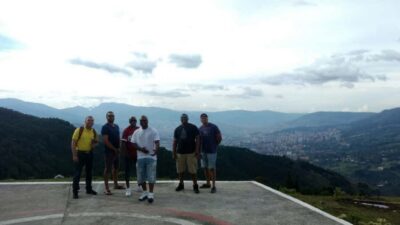
The vehicle is also useful in Medellín’s hilly urban setting. You are not spending the whole tour figuring out how to move between distant neighborhoods. The air conditioning is a small but welcome comfort, especially during a four-hour route with several stops.
What the experience does well, and where it is limited
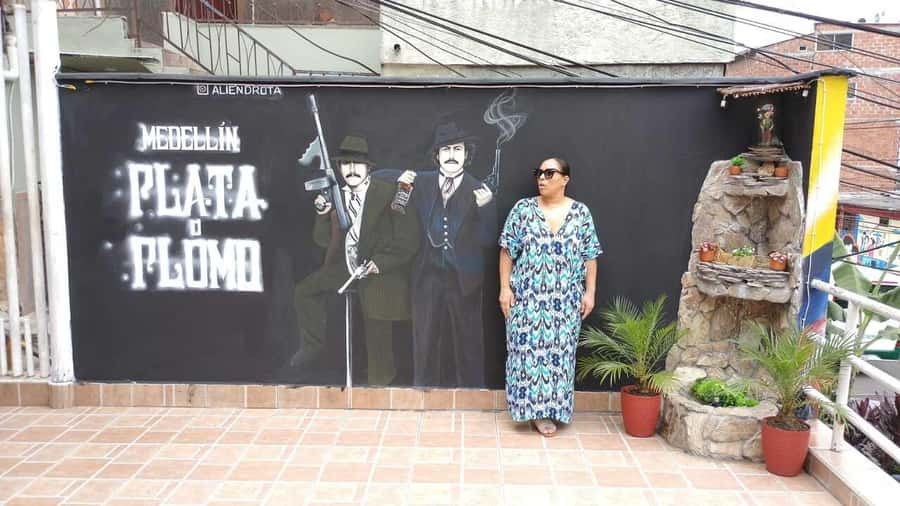
The strongest feature is the combination of local transport and focused storytelling. You see the major Escobar-related locations in one half-day, while the guide explains the rise and fall of the Medellín Cartel and the effect of that period on the city.
The second strength is the balance between personal biography and public history. The route covers Escobar’s family, enemies, neighborhood connections, grave, mural, and political conflict. Inflexión Park adds an important victim-centered stop.
The limitation is the narrow subject. If this is your first visit to Medellín and you want food, art, architecture, public transport, parks, or everyday city life, this tour will not cover those subjects in depth. Its purpose is to understand the Escobar era and its consequences.
The route may also feel emotionally heavy. You are visiting a cemetery, a victims’ memorial, and locations tied to violence. That is part of the tour’s value, but it is worth knowing before you book. This is better suited to visitors interested in difficult history than to anyone seeking a light afternoon outing.
The activity has a 4.9 rating from six verified bookings, and the strongest praise centers on punctual pickup, clear English, full coverage of the planned sites, and guides Andrés and Daniel. The small number of ratings means I would treat the score as encouraging rather than final proof, but the comments point to the practical qualities that matter most on a private tour.
Who should book this four-hour route
I would recommend it if you want a structured introduction to Pablo Escobar’s life and the Medellín Cartel, especially if you prefer private transport over working out the route yourself. It suits visitors who want to ask questions and who care about the difference between Escobar’s public image and the damage caused by his organization.
It is also a good fit if you have limited time in Medellín. Four hours covers the main Escobar-related sites without taking an entire day, and pickup in El Poblado keeps the logistics simple.
You may want a different tour if your main goal is to see modern Medellín, learn about local food, or explore the city beyond Escobar. You can still book this as a focused history outing, but do not expect it to serve as a complete introduction to the city.
Free cancellation is available up to 24 hours before the activity, and you can reserve while paying later. Starting times depend on availability, so check the schedule before building the rest of your day around it.
Should you book the Pablo Escobar tour?
Book it if you want context, not just famous locations. The cemetery, mural, neighborhood, and Inflexión Park are more meaningful when a local English-speaking guide explains the rise, fall, violence, victims, and Medellín’s changes.
The $64 price is sensible for a private four-hour route with transport and pickup, particularly for couples or small groups. I would choose it over an unguided search for Escobar sites because the history is complicated and the memorials need careful explanation.
Skip it if you want a broad city tour or prefer to avoid dark subjects. For everyone else, this is a focused and practical way to examine one of Medellín’s most painful chapters while keeping the city’s present-day changes in view.
FAQ
How long does the Pablo Escobar tour last?
The tour lasts four hours, with starting times available according to the schedule.
Where does pickup take place?
Pickup is included from your location in El Poblado, and the tour returns you to El Poblado afterward.
Is the tour private?
Yes. The experience is for a private group rather than a shared group.
What language is the tour conducted in?
The live tour guide speaks English.
Which places are visited?
The route includes Conmemorativo Inflexión Park, Montesacro Cemetery, the Pablo Escobar mural, the Pablo Escobar neighborhood, El Dorado neighborhood, and Barrio La America.
What is included in the price?
The price includes a private local guide specializing in Pablo Escobar’s history, an air-conditioned vehicle, pickup, and all taxes and fees.
Just added in Medellín
- City tour, Commune 13, Metro Cable, Botero Park and more. Private★ 5.0 · 34 reviews
- Aerial Hammocks, Zip and Waterfall Trek on Medellin Private Tour★ 5.0 · 39 reviews
- Commune 13, Graffitour street food. History.All inclusive★ 5.0 · 35 reviews
- Barrio transformation and urban escalator of Comuna 13★ 5.0 · 47 reviews
- Walking tour downtown Medellín★ 5.0 · 39 reviews
- Tour to the Hacienda Nápoles Theme Park★ 4.0 · 22 reviews
- Hiking Mountains and Magical Forests★ 5.0 · 27 reviews
- Tour Santa Fe de Antioquia★ 5.0 · 46 reviews
Pablo Escobar Tours, compared.

Guatapé Day Trip & Boat to Pablo Escobar’s Estate
Read our review →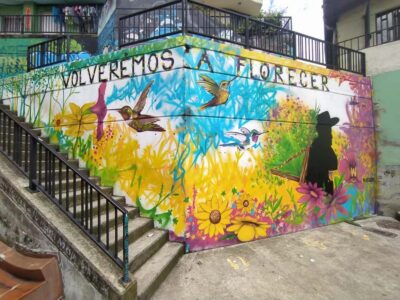
(Private Guatapé) Mansion Pablo Escobar+Paintball+Cuatrimoto+Boat
Read our review →Browse the lists this tour appears in