
Reviewed · COLOMBIAN WALKING TOURS
Walking tour downtown Medellín
Medellín’s downtown makes more sense when someone explains the layers behind its plazas, churches, sculptures, and grand old buildings. This small-group walk of up to eight people takes you from La Alpujarra through the city center, ending near Parque Berrío.
I especially like the mix of landmark sightseeing and ordinary city life. You get Botero’s instantly recognizable sculptures, a cup of Colombian coffee at El Laboratorio de Café, and a sweet fruit snack called salpicón. I also like the choice of departure times and the reasonable pace, which one guest found just right for a first full day in Medellín.
The main consideration is the downtown setting. Parts of the route can feel crowded and uncomfortable, especially around dense groups of street vendors. Wear good shoes, stay alert, and expect a real city walk rather than a polished sightseeing circuit.
Key points to know before you book
- A compact route through central Medellín: See La Alpujarra, Plaza Cisneros, Plaza Botero, historic churches, and Parque Berrío in one morning or afternoon.
- A genuinely small group: The tour is capped at eight people, giving you a better chance to hear the guide and ask questions.
- Oscar has made a strong impression: When Oscar leads the walk, expect clear meeting instructions, a good sense of humor, and detailed explanations of daily life and city history.
- Coffee is a stop, not an included drink: Your break at El Laboratorio de Café is included in the route, but you pay for your own coffee or tea.
- A moderate physical outing: You walk for three to four hours through central streets, so comfortable footwear and punctuality matter.
- Useful first-day orientation: The tour connects Medellín’s past, public spaces, art, and present-day city life in one introduction.
Why this walk is useful on your first full day
This is not just a checklist of downtown buildings. The route gives you a working introduction to Medellín’s paisa culture, a term used for the regional identity associated with Antioquia and its people. You begin at Centro Administrativo La Alpujarra, where the guide sets the scene before the walk moves into the historic center.
I like this order. You start with context, then see the city’s public squares, architecture, religious buildings, art, and cafés with that context in mind. Instead of looking at a sculpture or church as an isolated photo stop, you get a reason to notice it.
The tour lasts about three to four hours. That is long enough to cover a good slice of central Medellín without turning the day into an endurance test. It is also short enough to leave you time for lunch, a museum, or a return to El Poblado.
The group limit is important here. Downtown streets can be noisy, and a large group would make it harder to hear explanations or keep together. With no more than eight people, the guide can usually give the walk a more personal feel.
If Oscar is your guide, expect especially clear arrival instructions. One guest singled out his directions for finding the meeting point, which is useful because the tour begins from the El Poblado area before the walking route reaches downtown. Arrive five minutes early, as requested.
More guided walks in Medellín
- Comuna 4 Walking Tour Medellin
★ 5.0 · 217 reviews - Medellin Historic Walking Tour
★ 4.9 · 86 reviews - 2-Hours Street Art Walking Tour in Medellin Comuna 13
★ 5.0 · 54 reviews
From La Alpujarra to Plaza Cisneros
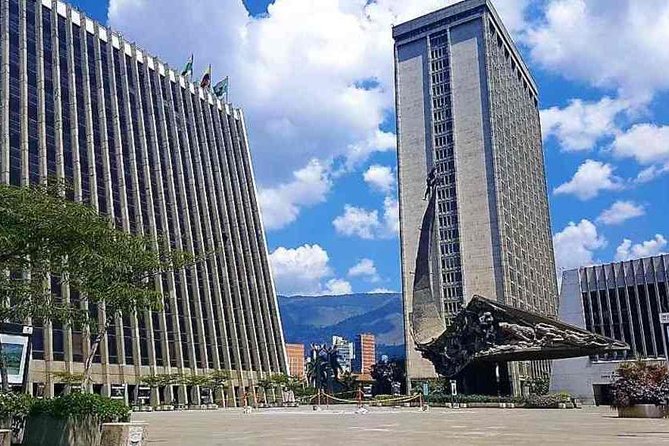
The first scheduled stop is Centro Administrativo La Alpujarra, where you spend about 30 minutes learning about Medellín and paisa culture. This opening section matters because the rest of the walk is filled with names, buildings, and public spaces that are easier to understand once you know the basic city story.
You then reach Plaza Cisneros, also known locally as Light’s Square. Allow about 20 minutes here. The square is tied to Medellín’s urban growth and provides a chance to see some of the city’s first skyscrapers.
This is one of the route’s useful contrasts. Medellín’s center is not only about old churches and colonial-era plazas. It also reflects the city’s push toward modern construction and larger civic spaces. The guide’s explanation should help you connect the older buildings with the newer city around them.
Do not expect every stop to be a quiet place for careful photography. The downtown route passes through active public areas, and street vendors are part of the setting. That can be interesting and revealing, but it may also feel crowded if you prefer calm, carefully managed sightseeing.
Palace Nacional and the Vera Cruz Church
The Centro Comercial Palacio Nacional receives about 15 minutes. Its appeal is architectural: the building contains more than 1,300 arches, making it one of Medellín’s most distinctive structures.
This is a good example of why a guide adds value. A building used for shopping can be easy to overlook if you are focused only on churches and museums. Here, the arches give the stop a clear visual hook, while the explanation puts the structure into the story of downtown Medellín.
The walk continues to Iglesia de la Vera Cruz, where the scheduled visit is short, about five minutes. It is identified as the city’s second-oldest church. That brief stop is best treated as a quick historical marker rather than a long church visit.
The pace may suit you if you like variety. You will not spend half an hour at every building, and the route keeps moving. If you prefer slow architectural study, you may wish to return later to the places that catch your eye.
Plaza Botero and Medellín’s public art
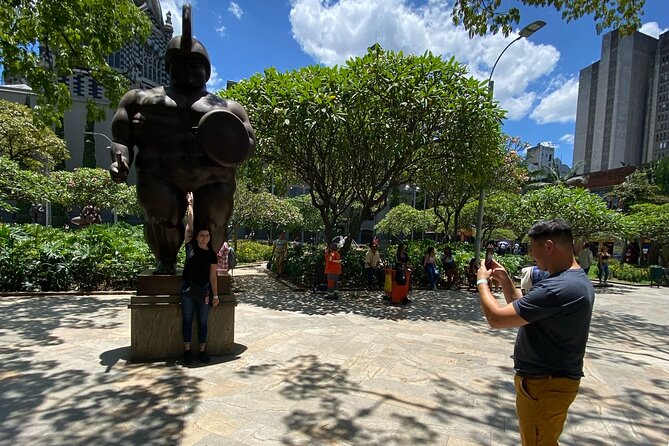
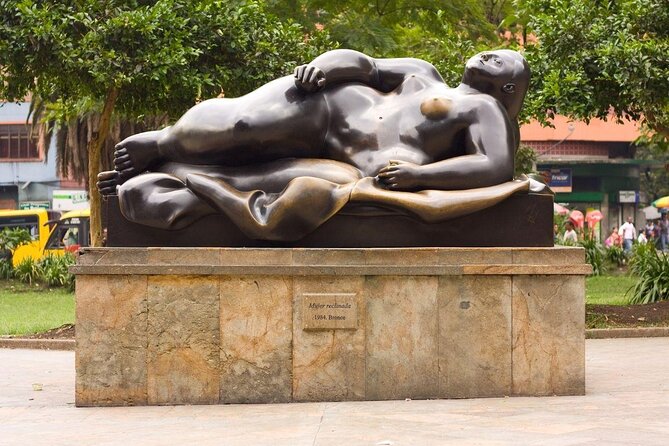
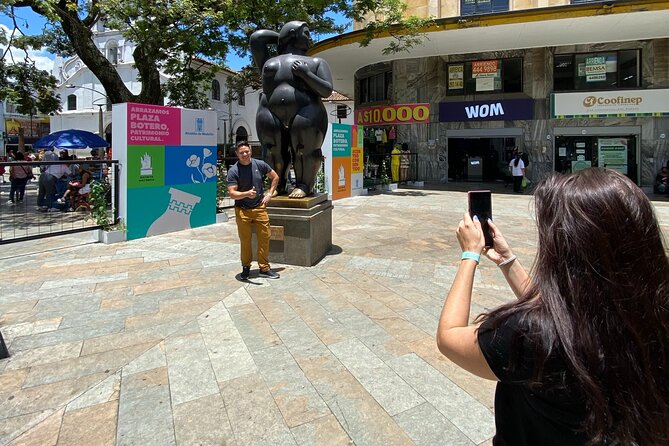
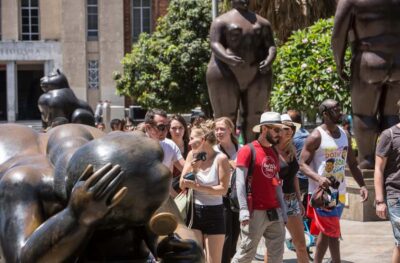
Plaza Botero is the major art stop, with about 30 minutes devoted to the 23 sculptures by Fernando Botero. These large bronze figures are among the most recognizable sights in central Medellín, and the square gives you time to look at them rather than simply walk past.
The guide’s role here is especially helpful. Botero’s rounded forms are easy to recognize, but a good explanation can help you understand why the sculptures matter to Medellín and how they function in a public square. You also get a chance to notice the way the art changes the feel of the surrounding area.
This is likely to be the most rewarding part of the route for anyone interested in Colombian art. It is also the part most likely to appear in your photographs. Keep your attention on the whole setting, though. Plaza Botero is a working public space, not a quiet outdoor gallery.
The next stop, Hotel Nutibara, takes only about five minutes. The hotel was considered Medellín’s most important hotel in the 1980s. This short visit gives the guide a way to discuss the city during a different period, when the hotel occupied a central place in local life.
The stop is less about entering a hotel and more about understanding its place in Medellín’s civic and social story. If you enjoy urban history, this small detail adds texture to the walk.
A few more trips around Medellín worth a look
- Medellin: Comuna 13 Graffiti Tour, Cable Car & Street Food
★ 4.8 · 9,046 reviews - Medellín: The Real Pablo Escobar Tour
★ 4.8 · 3,205 reviews - Medellín: Comuna 13 True Story and Street Food Tour
★ 4.9 · 1,779 reviews - Medellín: Comuna 13 District Tour with Cable Car Ride
★ 4.8 · 1,467 reviews
A Colombian coffee break at El Laboratorio de Café
After the main art and architecture stops, you pause for about 15 minutes at El Laboratorio de Café. Coffee or tea is not included in the $35 price, so plan to pay separately for your drink.
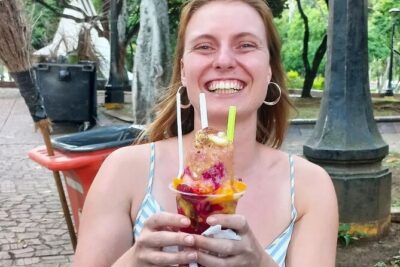
I like this arrangement because the break is flexible. You can choose what you want instead of receiving a standard drink, and you get a natural pause during a fairly active walk. The included snack is salpicón, a mix of fresh fruit, which adds a simple local taste without making the stop into a full meal.
This is not a food tour. The coffee and fruit are small parts of a broader city walk, so you should still plan lunch afterward. The break works best as a chance to rest, sample Colombian coffee, and ask the guide a few questions.
If you are counting every expense, remember that the tour price covers the route and the included salpicón, but not the café purchase. That is a minor extra cost, yet it is worth knowing before you arrive.
The Palace of Culture and Medellín’s first squares
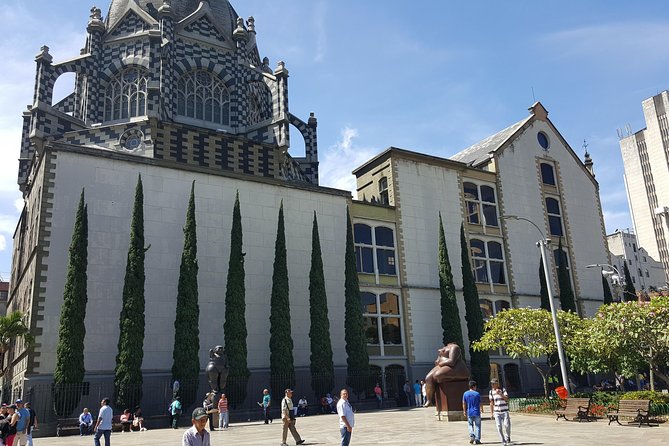
The Palace of Culture Rafael Uribe Uribe receives about 25 minutes. This 1929 palace sits in the heart of downtown and is one of the route’s strongest architectural stops.
The building gives the walk a more formal civic dimension after the street scenes, church visits, and public sculptures. You can expect the guide to explain why this palace matters and how it fits into central Medellín.
The route also touches on the city’s first main square, its first building with an elevator, and its tallest building. These details may not all appear as long, separate stops. Instead, they seem to be points of explanation woven into the downtown walk.
That approach is useful because Medellín’s story is partly a story of changing scale. Old religious buildings, early civic spaces, and tall modern structures sit within the same central area. The guide helps you read those changes as you walk.
Candelaria Basilica and the end at Parque Berrío
The final named church is the Basilica of Our Lady of Candelaria, identified as Medellín’s first church. The scheduled stop is about five minutes, so expect a brief look and explanation rather than an extended religious or architectural visit.
The tour ends at Parque Berrío on Carrera 52 in La Candelaria. Ending there is practical. You finish in central Medellín rather than returning to El Poblado, leaving you free to continue exploring downtown or make your own way elsewhere.
Because the route ends at a different place from the starting point, check the meeting and ending details carefully before booking. The tour begins from El Poblado, while the listed end point is Parque Berrío. The clear instructions supplied by Oscar can be helpful, but you should still arrive early and keep the location information handy.
What the $35 price gives you
At $35 per person, this is a reasonable price if you want an introduction to central Medellín rather than a private, highly specialized tour. The value comes from the guide’s explanations, the small group, and the amount of ground covered on foot.
You are not paying for entrance-heavy sightseeing. Most stops are free, and the Palace of Culture is listed as included. The coffee is extra, and the salpicón is included. So the main product is the guided interpretation of public spaces, architecture, art, and local life.
I would compare this with the cost of spending a half-day wandering downtown without context. You could see Plaza Botero and several churches on your own, but you might miss why the Palacio Nacional matters, how the first squares shaped the city, or why Hotel Nutibara is part of Medellín’s story.
The price is strongest for first-time visitors who want a practical orientation. If you already know central Medellín well, you may find the route less useful unless you want a guide’s cultural and historical commentary.
Pace, comfort, and the downtown setting
You need a moderate level of fitness. The walk lasts three to four hours, and the route moves through city streets, plazas, and public spaces. Comfortable shoes are more important than stylish ones.
The city center can feel intense. Street vendors may gather in large numbers, and some sections may not feel comfortable to every person. That does not make the tour a poor choice, but it does mean you should expect real urban conditions rather than a quiet stroll through a preserved historic district.
I would choose practical clothing, keep valuables secure, and stay close to the group. These are sensible habits for any busy city walk and especially useful when the route includes crowded public areas.
The tour requires good weather. If rain or other poor conditions lead to cancellation, you can take a different date or receive a full refund. A minimum group size is also required, and if that is not met, you are offered another date or experience, or a full refund.
Service animals are allowed, and the activity is near public transportation. Confirmation arrives at booking. You can cancel for a full refund up to 24 hours before the start time, but changes or cancellations inside that window are not accepted.
Who will get the most from this tour
I would recommend this walk to:
- First-time visitors who want downtown explained in one concentrated outing
- People interested in Fernando Botero and public art
- Travelers who like architecture, churches, civic buildings, and city stories
- Visitors who want a small group instead of a large bus tour
- Anyone looking for a useful first full day activity in Medellín
- People comfortable walking for several hours through active central streets
I would think twice if you want a quiet, polished route with long indoor visits. The tour is active, public, and street-based. The short church stops may also disappoint if your main aim is extended religious architecture viewing.
The guide makes a large difference. Oscar has been praised for being prompt, professional, funny, attentive, and detailed, and for giving a fuller picture of both Medellín’s beauty and its problems. His lunch recommendation also received special approval. Guides can vary, but those qualities are worth looking for.
Should you book the downtown Medellín walk?
Book it if you want a well-paced introduction to Medellín’s center, especially early in your stay. The combination of Plaza Botero, the Palace of Culture, historic churches, public squares, coffee, salpicón, and local context gives you a useful base for exploring on your own later.
The strongest reasons to choose it are the maximum group size of eight, the broad range of stops, and the thoughtful explanations associated with Oscar. The main caution is the downtown environment, which can feel crowded and uneasy in places.
At $35, I consider it good value for a guided three to four hour orientation. Bring comfortable shoes, arrive five minutes early, budget separately for coffee, and expect the city as it is, with its art, history, daily commerce, and rough edges side by side.
FAQ
How much does the walking tour cost?
The tour costs $35 per person.
How long does the tour last?
The tour lasts approximately three to four hours.
How many people can join the tour?
The group is limited to a maximum of eight travelers.
Where does the tour start?
The listed starting point is in El Poblado, Medellín, Antioquia, Colombia.
Where does the tour end?
The tour ends at Parque Berrío, Carrera 52 #50-70, in La Candelaria, Medellín.
Is coffee included in the tour price?
No. Coffee or tea at El Laboratorio de Café is purchased separately.
What food is included?
Salpicón, a mix of fruits, is included.
Can I cancel for a full refund?
Yes. You can cancel at least 24 hours before the experience start time for a full refund. Cancellations or changes made less than 24 hours before the start time are not accepted.
Just added in Medellín
- City tour, Commune 13, Metro Cable, Botero Park and more. Private★ 5.0 · 34 reviews
- Aerial Hammocks, Zip and Waterfall Trek on Medellin Private Tour★ 5.0 · 39 reviews
- Commune 13, Graffitour street food. History.All inclusive★ 5.0 · 35 reviews
- Barrio transformation and urban escalator of Comuna 13★ 5.0 · 47 reviews
- Tour to the Hacienda Nápoles Theme Park★ 4.0 · 22 reviews
- Hiking Mountains and Magical Forests★ 5.0 · 27 reviews
- Tour Santa Fe de Antioquia★ 5.0 · 46 reviews
- The “not polite to use his name” City Tour★ 4.5 · 45 reviews
Colombian Walking Tours, compared.
Historic Center and Getsemaní Shared Walking Tour
Read our review →
A Pearl In The Caribbean-walking tour in English
Read our review →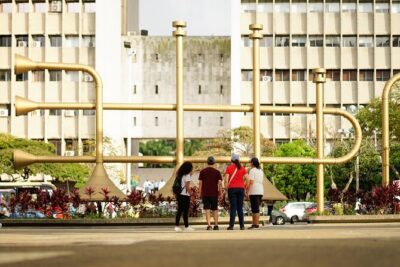
Browse the lists this tour appears in