
Reviewed · COMUNA 13 & GRAFFITI TOURS
Bogotá Street Art and Graffiti Tour 3 Hrs
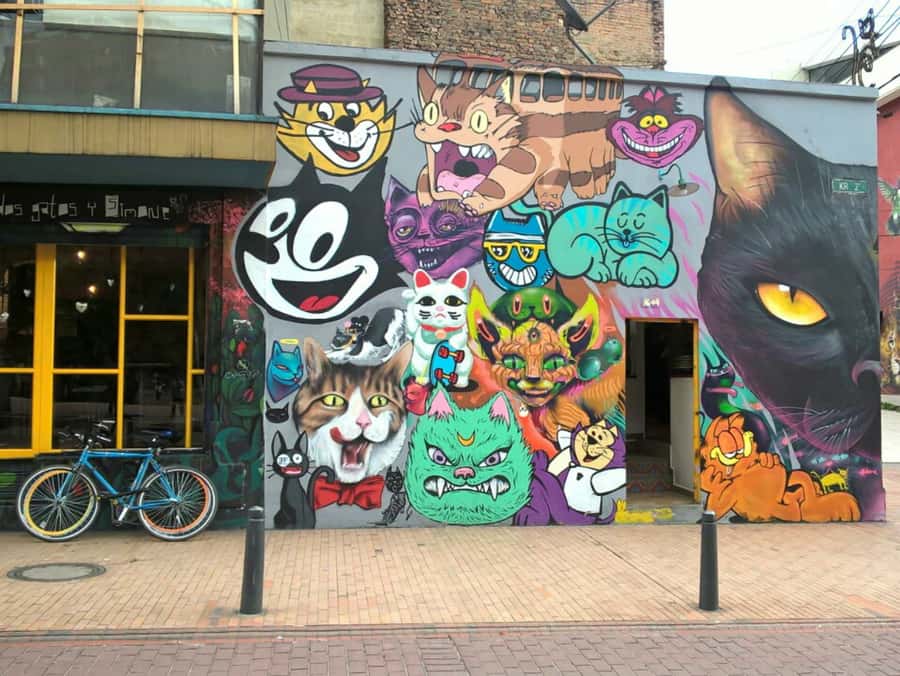
Bogotá’s street art is not just decoration. It can be a political message, a public memorial, a business commission, or a bright burst of color on a tired wall. This private three-hour outing helps you read the city through its murals, with hotel pickup, a private vehicle, and a bilingual guide.
I like the way the tour links art with Colombia’s difficult past, rather than treating graffiti as a photo backdrop. I also like the chance to leave the main mural routes for vintage shops, alternative stores, and local pubs. The main drawback is time: only about two hours are set aside for the guided city visit, so this is an introduction rather than a full art walk.
Key points to know before you book
- Private hotel pickup and drop-off make the outing easy to fit into a busy Bogotá schedule.
- Political and social messages are part of the discussion, not an afterthought.
- Business-sponsored murals show how artists and shop owners have worked together to reduce random tagging.
- Camillo may be your guide, and he is noted for speaking German and having an artistic side.
- Vintage stores and trendy pubs add a local neighborhood feel beyond the murals.
- The $86 price makes the most sense for couples, families, or small groups who value private transport and a personal guide.
Why Bogotá’s walls deserve a closer look
A quick stroll through Bogotá can leave you with a confusing mix of huge faces, sharp lettering, political symbols, and cartoon-like figures. This tour gives you a way to sort out what you are seeing.
Your guide explains where the word graffiti comes from and places the art form in a longer story of public expression. The point is not simply to identify a famous wall. You learn why people write or paint in public, how a mural can carry an argument, and why an image may matter to residents who know the country’s painful past firsthand.
That context changes the experience. A colorful wall may brighten a street, but it may also speak about violence, inequality, politics, or the effort to recover from trauma. You are encouraged to look for the idea behind the image, not just its size or color.
The tour also explains the line between unwanted tagging and commissioned work. In Bogotá, artists have worked with businesses to create approved murals, giving owners a way to bring art to their façades while discouraging mindless tagging. Advertising campaigns have also used graffiti as a way to reach customers.
I find that business connection especially useful. It keeps the conversation honest. Street art can be protest, community expression, commissioned design, or marketing. Sometimes it is several of these at once.
More Comuna 13 and graffiti walks in Bogotá
- Bogotá: La Candelaria Graffiti & Urban Art Guided Tour
★ 4.7 · 250 reviews - Fun Graffiti Workshop: The Art of Aerosol and Color
★ 5.0 · 73 reviews - Graffiti Tour in La Candelaria Bogotá with Transportation
★ 5.0 · 68 reviews
Getting started with hotel pickup and a private vehicle
The outing begins with pickup at your Bogotá hotel. You then travel by private vehicle toward the city center, where the main guided portion takes place.
This arrangement matters more than it may first appear. Bogotá is a large city, and moving between a hotel and downtown can take time. With private transport, you do not need to work out a complicated route before the tour or find your own way back afterward.
The vehicle also gives the guide a chance to frame the visit before you begin walking. You can arrive with a little background on the role of graffiti in Bogotá instead of meeting the first wall without any context.
The tradeoff is that the tour is not described as a continuous three-hour walk. The advertised duration is three hours, with roughly two hours devoted to the guided city visit. Some of that time goes to pickup, driving, and returning to your hotel. If you want a long, wall-by-wall photography session, allow time for a separate walk.
Reading downtown Bogotá through murals
Once in central Bogotá, your guide leads the main visit through areas known for street art. The exact walls can change, since outdoor art is temporary. Buildings are painted over, new works appear, and the city’s art scene keeps moving.
That flexibility can be a plus. You are not simply following a museum display with permanent labels. You are looking at art that belongs to the street and can change with local politics, business needs, and neighborhood life.
Expect the guide to explain how artists use images and lettering to make a point. Some pieces may be direct and political. Others may use humor, portraits, symbols, or unusual characters. You might find that the meaning is less obvious than the technique, which is where the guide’s explanation becomes important.
The experience is strongest for people who enjoy asking why a work was created and who controls public space. It is less suited to someone who wants only a list of the most photographed murals.
A bilingual guide leads the experience in English or Spanish. Camillo is one named guide connected with the tour, and a past booking specifically noted that he speaks German and has an artistic side. His ability to provide plenty of background makes the tour appealing to visitors who want more than a quick explanation in front of a wall.
Since guide assignments can vary, you should confirm your preferred language when booking. The activity lists English and Spanish as available languages.
Art, politics, and Colombia’s difficult past
The most meaningful part of the tour is its attention to public memory. Colombia has experienced a traumatic past, and art in public places can offer a way to discuss what happened without relying only on official buildings or formal memorials.
A mural may make people think about political power. Another may offer a hopeful image to people who have suffered. A third may simply brighten a dull block. The tour connects these different roles and helps you see why public art can matter to people who live nearby.
I appreciate that the experience does not treat politics as a side note. Political commentary is one of the reasons artists choose the street in the first place. A public wall reaches people who may never visit a gallery, and its message can be seen during an ordinary walk to work or a stop at a shop.
Still, the tour does not promise a formal history lecture. You should expect a practical introduction tied to the works you see, not a complete account of Colombia’s modern history. If you want detailed historical study, you will need another museum visit or a dedicated history tour.
A few more trips around Bogotá worth a look
- Medellín: Private Comuna 13 Street Art Tour
★ 4.8 · 88 reviews - 2-Hours Street Art Walking Tour in Medellin Comuna 13
★ 5.0 · 54 reviews - Cali: Comuna 20 Siloé Street Art Tour
★ 5.0 · 4 reviews
How businesses helped change the conversation
One of the more useful themes is the relationship between artists and local businesses. Instead of viewing every painted wall as an act against property owners, you learn how some businesses commission artists to decorate their façades.
That arrangement can help replace random tagging with planned work. It also gives artists a legal way to make large pieces and gives businesses a distinctive public face. The result can be art that serves commercial needs while still carrying a personal or political idea.
Advertising campaigns have used the same visual language. This raises an interesting question for you as a visitor: is a mural still street art when a company pays for it? The tour does not reduce the subject to a simple yes or no. It shows how public art, business, and personal expression overlap.
This part is particularly useful if you are interested in design, branding, or urban culture. You will see that Bogotá’s walls are not only a record of protest. They are also part of the city’s economy.
Vintage shops and alternative places along the way
The tour adds variety by visiting vintage and alternative shops. These stops give you a break from looking upward at walls and let you see the kind of independent businesses that help shape the character of central Bogotá.
The information provided does not name specific shops, so you should not book this expecting a particular store or guaranteed shopping find. Think of the visits as neighborhood stops that connect street art with local style.
You may find something to take home, but shopping is not the main purpose. The value is the setting. Alternative stores show how creative culture appears indoors as well as outdoors, and they help you see the area as a lived-in part of the city rather than a row of photo stops.
If you enjoy browsing, leave a little room in your day after the tour in case a shop catches your eye. The three-hour schedule is fixed, so you may not have much time to linger at every stop.
Meeting locals at pubs and interesting city spots
The final part of the outing brings in trendy pubs and other local places. This is a welcome change of pace after the more serious political discussion.
The tour does not include meals or drinks, so budget separately if you decide to order something. The description presents these places as opportunities to get in touch with local life, not as a pub crawl or tasting program.
That distinction matters. You are not paying for a meal package. You are getting a guide who can point out the social side of the neighborhood and help you understand how art, shops, and nightlife fit together.
If you prefer a quiet cultural walk with no social stops, this part may feel less essential. If you like seeing how a neighborhood feels beyond its landmarks, it adds a useful human touch.
Is $86 per person a fair price?
At $86 per person, this is not a budget street-art walk. The price covers hotel pickup and drop-off, private transportation, a professional bilingual guide, and a private group rather than a large shared outing.
For one person or a couple, the cost may feel high when you compare it with a basic walking tour. You are paying for convenience and privacy as much as for the art commentary. You do not have to navigate downtown on your own, arrange a taxi back to your hotel, or follow a fixed group of strangers.
The value improves for a family or small group that can share the private experience. It also makes more sense if your hotel is not close to the central art areas or if you want a guide who can adjust the pace and conversation to your interests.
The tour has a perfect rating from five recorded bookings, including strong praise for the guide’s information and the unexpected quality of the art. That is encouraging, but five ratings are still a small sample. I would treat the score as a positive sign, not a guarantee that every guide and route will be identical.
Who will enjoy this three-hour experience?
I would recommend this tour to you if you:
- Want a first look at Bogotá’s graffiti scene without arranging transport.
- Prefer a private guide to a large group.
- Enjoy political art and social history.
- Like mixing murals with shops and local pubs.
- Need English or Spanish guidance.
- Are traveling with family or friends and can share the private format.
You may want something else if you:
- Want several hours of uninterrupted walking and photography.
- Prefer a cheap group tour.
- Are mainly interested in shopping or drinking.
- Need a detailed academic history of Colombian politics.
- Expect meals or drinks to be included.
Wear comfortable clothes and bring your passport or ID card. The tour is listed as wheelchair accessible, but you should still discuss your exact mobility needs with the provider before booking, since the route includes city streets and shop visits.
Free cancellation is available up to 24 hours before the start time, and you can reserve now and pay later. Those options are useful if your Bogotá plans are still shifting.
Final verdict: book it for context, not just color
Book this tour if you want Bogotá’s graffiti to make sense. The private vehicle and hotel pickup remove much of the city logistics, while the guide adds political, social, and business context that you will not get from photographing walls alone.
I especially like the combination of commissioned murals, alternative shops, and local pubs. It gives you more than a quick art checklist. The limited guided time and $86 cost are the main cautions, but they are reasonable tradeoffs for a private outing.
If you want the longest possible street-art walk, choose a longer specialist tour. If you want a convenient, thoughtful introduction that connects public art with everyday Bogotá, this is a solid choice.
FAQ
How long does the Bogotá Street Art and Graffiti Tour last?
The experience lasts three hours, including hotel pickup, transportation, the guided city visit, and return to your hotel. The guided tour portion is listed as two hours.
Is hotel pickup included?
Yes. Pickup and drop-off at your Bogotá hotel are included, with transportation by private vehicle.
What languages are available?
The tour is offered in English and Spanish. Camillo, one guide associated with the experience, is also noted as speaking German.
Is this a private tour?
Yes. The activity is arranged for a private group rather than a shared group.
Are food and drinks included?
No. Meals and drinks are not included in the price.
Is the tour wheelchair accessible?
Yes. The activity is listed as wheelchair accessible.
Can I cancel for a full refund?
Yes. You can cancel up to 24 hours in advance for a full refund. The activity also allows you to reserve now and pay later.
Just added in Bogotá
- Candelaria Unveiled: Cool-tural Heritage Walking Tour★ 4.4 · 6 reviews
- Bogota: Zipaquira, Salt Cathedral & Lake Guatavitá Tour★ 4.9 · 32 reviews
- BOGOTA: Tour of Jaime Duque Park, Zoo, and Aerospace Museum★ 4.6 · 15 reviews
- BOGOTA: Visit to the Botanical Garden and Ugly Betty’s House★ 4.9 · 15 reviews
- Bogotá: Villa de Leyva Full-Day Tour with Meals★ 4.2 · 10 reviews
- BOGOTA: Tour of Villa de Leyva, Ráquira, Pozos Azules, and Puente de Boyacá★ 5.0 · 8 reviews
- Bogotá: Private Candelaria Walking Tour and Gold Museum★ 5.0 · 17 reviews
- Bogota: Tour to Salitre Mágico, An Extreme Fun Trip★ 4.3 · 7 reviews
Comuna 13 & Graffiti Tours, compared.
Comuna 13 Graffiti Tour, Cable Car & Street Food
Read our review →
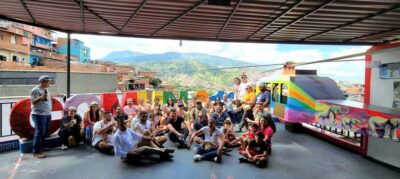
Private City Tour with Metrocable and Comuna 13
Read our review →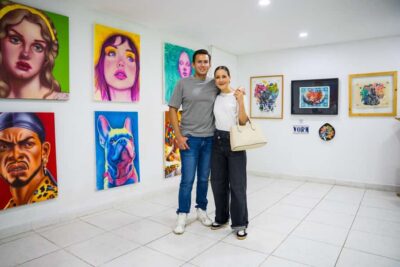
Comuna 13 Tour with Snacks And Your Own Graffiti
Read our review →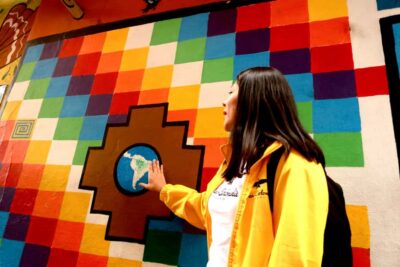
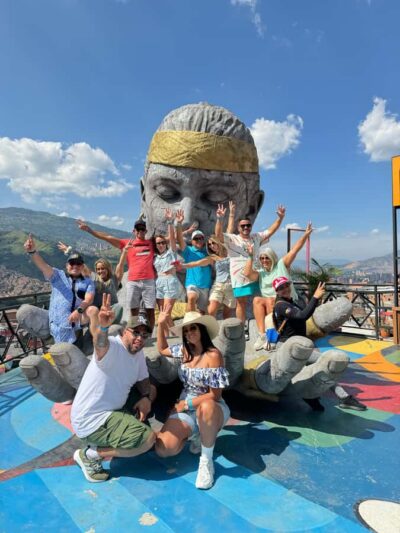
Comuna 13 and Graffiti Guided Tour with a Local
Read our review →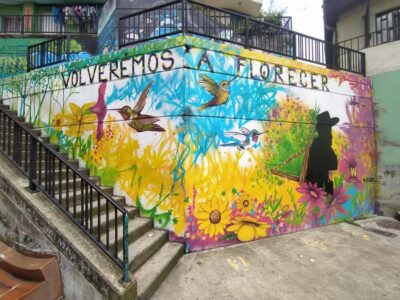
Browse the lists this tour appears in