
Reviewed · MEDELLÍN TOURS
Shared Tour Medellin’s Violence & Post-conflict after Pablo
Medellín’s story is far bigger than Pablo Escobar. This walking tour follows the city’s conflict from Parque San Antonio through the center to Museo Casa de la Memoria, explaining how drug traffic, guerrillas, paramilitary groups, government action, and ordinary communities shaped modern Medellín. I like that it treats the cartel years as one part of a longer story, and I like the focus on people who pushed the city toward dialogue and social change. The main drawback is the subject matter: this is serious, sometimes painful history, not a light sightseeing stroll.
I also like the low $13 price, which makes a specialist history tour easy to add to your plans. Guides Miguel and Sebastian have both been praised for clear, engaging explanations, with Miguel noted for being especially thorough. You should allow closer to three hours, wear good shoes, carry water, and keep your belongings close in crowded parts of central Medellín.
Key points
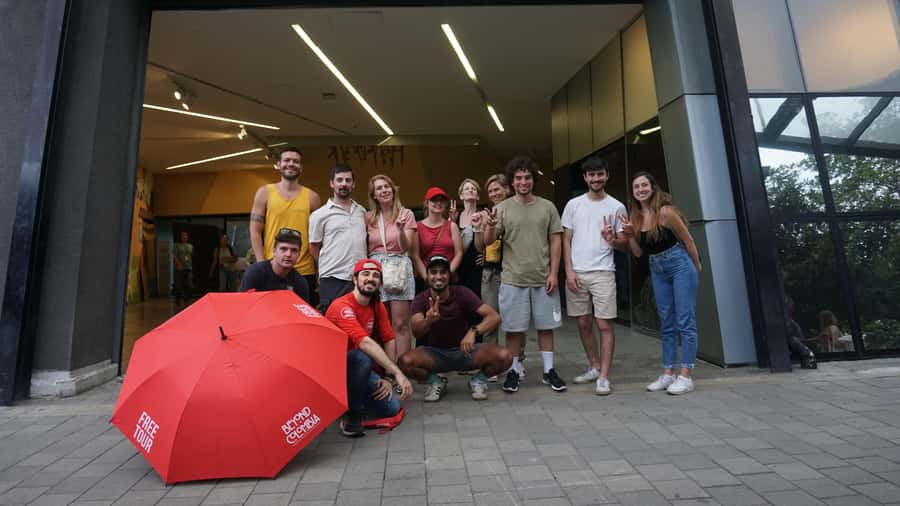
- Starts at Parque San Antonio: Meet beside Botero’s bird sculptures under Beyond Colombia’s red umbrellas.
- Goes beyond Pablo Escobar: The tour explains the wider conflict, including guerrillas, paramilitarism, drug traffic, and the period after the cartel.
- Covers 1982 to 2015: You follow the city’s changing violence and its movement toward peace and reconciliation.
- Ends at Casa de la Memoria: The final stop connects public memory with Medellín’s ongoing effort to face its past.
- About 5 kilometers on foot: Rest stops help, but comfortable shoes, water, sunblock, and rain protection matter.
- Designed for adults: The tour is not suitable for children under 18, people over 70, or wheelchair users.
Why this is not another Pablo Escobar tour
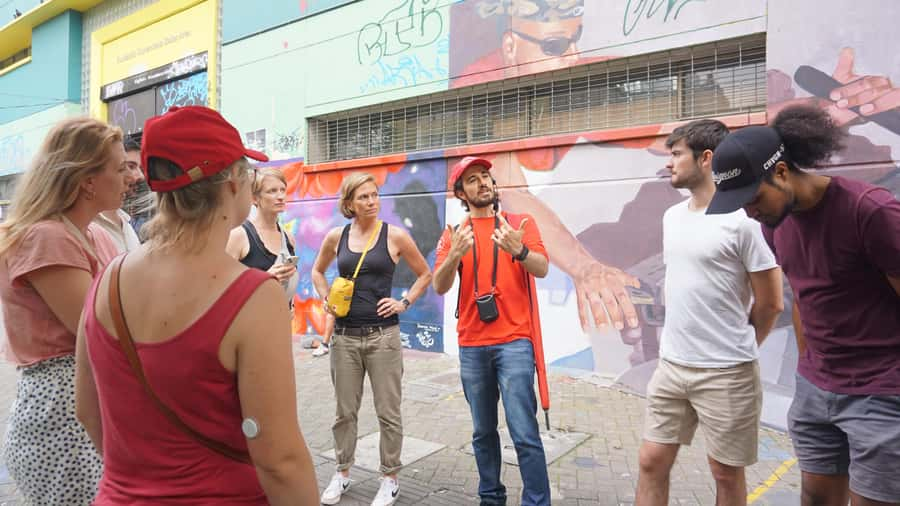
The most useful thing about this experience is its frame. You are not being led from one cartel anecdote to another. Instead, you are shown how violence became part of city life and how Medellín’s people tried to push back.
The tour covers the conditions that allowed the Medellín Cartel to grow, including its cultural, social, and economic effects. It then widens the view to include guerrilla movements, paramilitary groups, drug networks, and the way the national conflict entered an urban setting.
That distinction matters. If you want a sensational crime tour, this is not the right choice. If you want to understand why Medellín became a symbol of both extreme violence and determined recovery, this is a far better use of your time.
The focus runs from 1982 to 2015. That period includes the cartel years, the changes that followed its decline, and the later period known as Donbernabilidad. The tour also asks how the past remains present in the city today. You get a more useful picture when the story does not stop with Escobar’s death or the end of the cartel era.
A few more trips around Medellín worth a look
- Medellin: Comuna 13 Graffiti Tour, Cable Car & Street Food
★ 4.8 · 9,046 reviews - Medellín: The Real Pablo Escobar Tour
★ 4.8 · 3,205 reviews - Medellín: Comuna 13 True Story and Street Food Tour
★ 4.9 · 1,779 reviews
Beginning beside Botero’s birds at Parque San Antonio
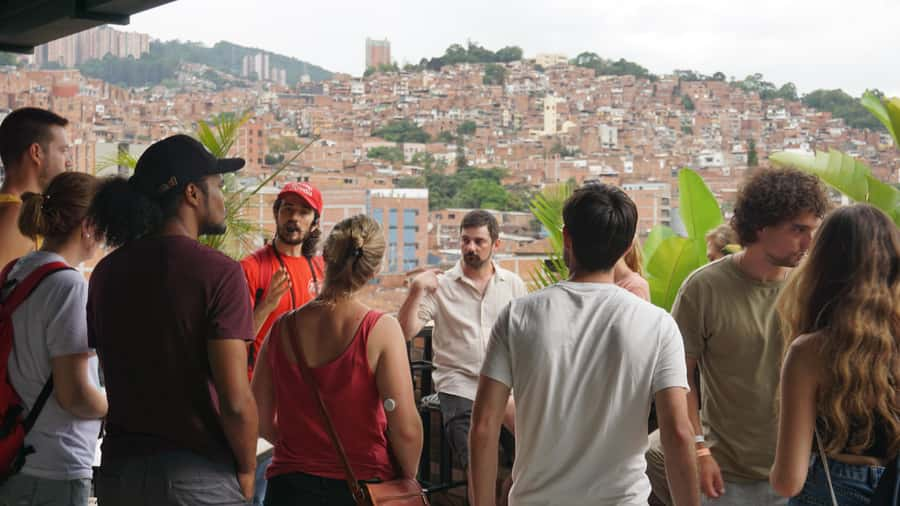
The meeting point is Parque San Antonio, beside Fernando Botero’s famous bird sculptures. Look for the red umbrellas used by Beyond Colombia. This is a central, public meeting spot, but you should arrive with enough time to find the group and settle in before the discussion begins.
The location is more than a convenient starting point. Parque San Antonio introduces the contrast at the heart of the tour: public art, ordinary city life, and memories of violence occupying the same streets.
From here, the guide begins setting out the basic timeline. You will learn how Medellín’s location, inequality, political tensions, and expanding illegal economies helped create the conditions for conflict. The point is not to reduce the city to one cause. It is to show how different forces fed one another.
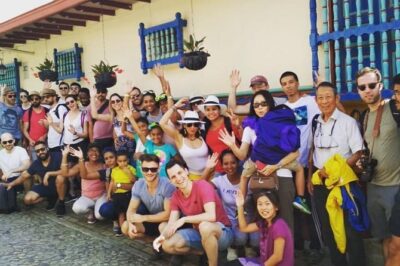
Because this is a shared tour, you will not have a private guide setting the pace just for you. That keeps the cost low, but it also means you should expect a group format and shared questions. The advantage is that the discussion can develop from the concerns of people in the group.
Walking through the urbanization of war
As you move through downtown, the subject shifts from the rise of the cartel to the way the wider Colombian conflict entered Medellín. This is where the experience earns its name.
You hear about guerrillas, paramilitary organizations, and drug trafficking as separate forces with different aims and methods. You also examine how those groups affected neighborhoods, public life, and the choices available to residents. The phrase urbanization of war becomes more understandable when connected to actual streets and public spaces rather than presented as a distant national problem.
The tour is not simply a list of armed groups. It considers institutions and individuals who acted within this difficult setting, along with their motives, practices, and changes over time. That gives you room to ask how power worked and why certain strategies succeeded or failed.
The walking route is part of the lesson, but it is not a museum circuit with a ticketed attraction at every stop. Sightseeing is framed by the story of conflict and reconciliation. You will pause to listen, then continue on foot through central Medellín.
Plan on walking about 5 kilometers. There are resting stops, but this is still a demanding city walk if you are not used to covering that distance. Medellín’s weather can change, so bring a rainproof coat or umbrella, plus water and sunblock. Mosquito repellent may help during the rainy season from March through June.
From cartel power to Donbernabilidad
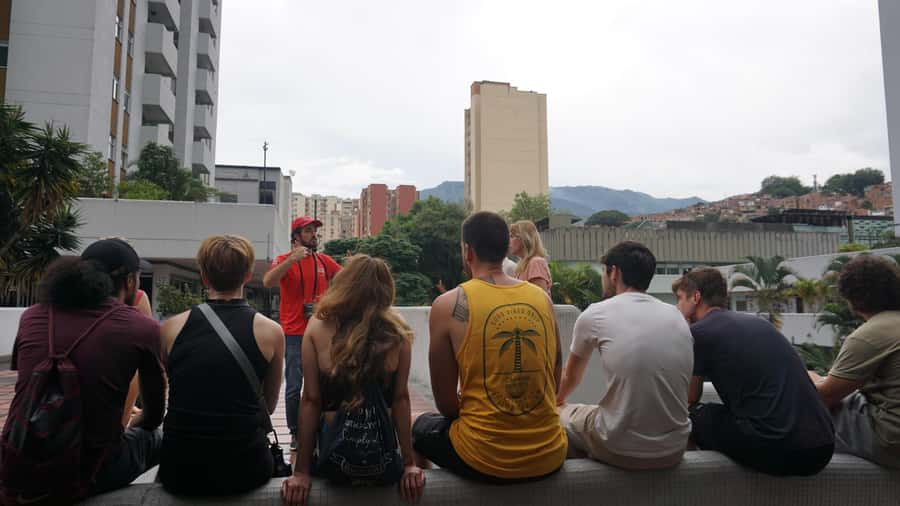
One of the strongest parts of the discussion is what happened after the Medellín Cartel. Many crime tours end when the famous cartel story does. This one continues into the less familiar and more complicated period that followed.
You learn about Donbernabilidad and how the past remained tied to the city’s present. The subject helps explain why the end of one criminal organization did not automatically create peace. Power can shift, networks can change, and communities can continue dealing with the effects of earlier violence.
This section also keeps the focus on consequences. The cartel period affected more than security. It shaped social relations, the economy, public trust, and the cultural image of Medellín. The tour connects those effects to later attempts at reform and reconciliation.
You should be ready for a discussion that avoids simple heroes and villains. The provider promises an objective approach that does not take sides. That does not mean the material will feel emotionally neutral. The stories concern real suffering, forced choices, and long struggles, so an open mind is essential.
Same city, a different sort of day:
- Medellín: Comuna 13 District Tour with Cable Car Ride
★ 4.8 · 1,467 reviews - Medellin: Coffee Tour with Transport, Snacks and Tastings
★ 4.7 · 1,357 reviews - From Medellín: Paragliding Tour with GoPro Photos & Videos
★ 4.9 · 1,210 reviews - Tour Guatapé
★ 5.0 · 865 reviews
Stories of resistance, peacemaking, and community action
The tour’s hopeful side comes from its attention to community action. Medellín is presented not only as an epicenter of violence, but also as a city where people created ways to survive, organize, resist, and seek peace.
You hear about strategies and people involved in peacemaking and social struggle. The exact balance of locations and stories may depend on the guide and the group’s questions, but the central theme remains clear: change did not come only from official institutions. Communities also helped push the city in a new direction.
This is where the experience moves beyond crime history. You begin to consider what it means to replace bullets with words and ideas. That phrase captures the tour’s interest in education, dialogue, reconciliation, and civic action.
I would especially value this part if you have already seen Medellín’s newer public projects or cultural spaces and want to understand the pressures behind them. The tour does not present transformation as finished. It connects progress with resistance and memory while recognizing that conflict continues to shape life in the city.
Connecting the city to twenty-first-century peace efforts
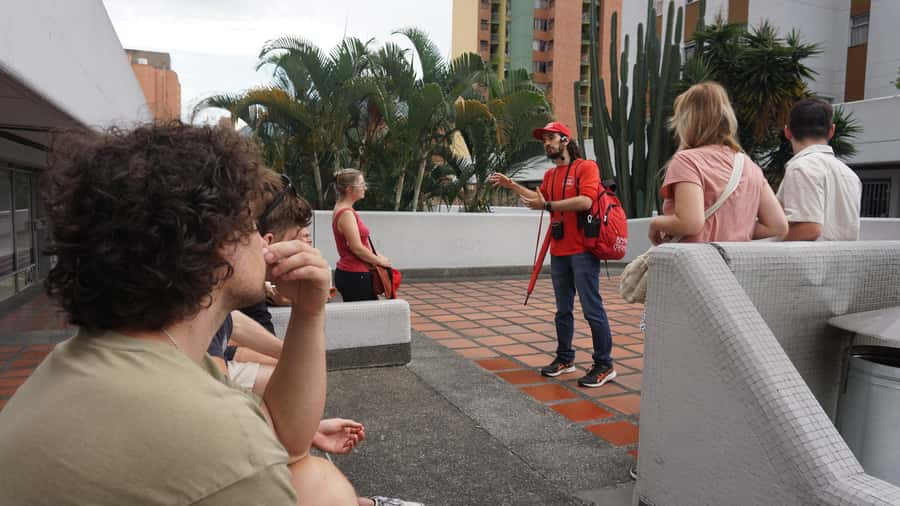
The final period covers peace agreements and reconciliation in an urban context. That is important because national peace efforts do not affect cities in exactly the same way they affect rural areas.
In Medellín, the conflict had its own urban patterns. Neighborhoods, streets, public institutions, and criminal networks all played a role. The tour asks how peace can be built in a place where memories are close, power structures have shifted, and the effects of violence remain visible.
You also look at the transformation of Medellín through the idea of resistance and memory. The city’s story is not presented as a neat before-and-after tale. Instead, you are encouraged to see improvement alongside unresolved questions.
This is one reason the route ends at Museo Casa de la Memoria. The destination gives the discussion a natural closing point. Rather than finishing with a dramatic cartel landmark, the tour ends with remembrance, reflection, and the effort to record experiences that might otherwise be forgotten.
Finishing at Museo Casa de la Memoria
Museo Casa de la Memoria is the tour’s endpoint and its most meaningful one. The museum is tied to Medellín’s effort to confront violence and honor those affected by it.
The tour information does not include an entrance ticket, and no sudden extra charges are part of the walking route. You should not assume that museum access is included. The guide uses the museum as the endpoint for the story, so check current conditions if you plan to spend more time inside afterward.
Finishing here also changes the tone of the experience. The earlier stops explain how conflict developed and spread. The final stop asks how a city remembers, who gets heard, and how memory can support a different future.
If you prefer tours that end with a clear historical takeaway, this works well. If you need a lighter activity after lunch, choose something else. The subject remains serious to the last stop.
What the $13 price really gets you
At $13 per person, this is strong value for a focused English-language history walk. You receive a live guide, roughly 150 minutes of touring, central Medellín sightseeing, and an organized explanation of a complex subject that would be hard to piece together on your own.
The written description also says the tour lasts approximately three hours. Since the stated duration is 150 minutes, I would plan for about two and a half to three hours. The difference may come from group size, questions, walking speed, and stops.
The price does not include food, drinks, souvenirs, transport to or from your hotel, or a private guide. That is fair for a shared tour, but you should budget for your own water and any later museum costs. There are no planned surprise entrance fees along the route.
You can reserve and pay later, and cancellation is free up to 24 hours in advance. Those terms are useful if your Medellín schedule is still shifting. The real value, though, is the guide’s interpretation. The positive booking feedback highlights Miguel’s thorough explanation and Sebastian’s engaging, friendly style, which suggests that guide quality is central to the experience.
Practical advice for a difficult walking tour
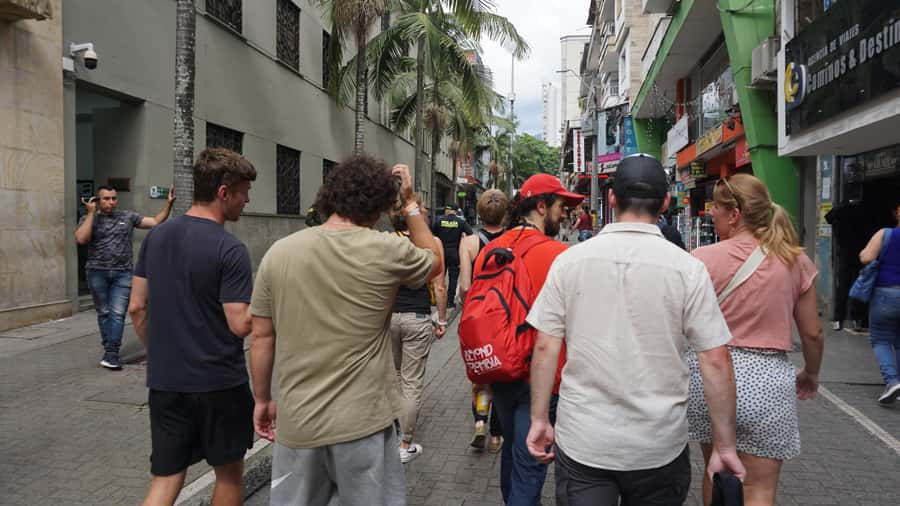
Wear comfortable shoes. You will walk around 5 kilometers, with stops to listen and discuss. Comfortable clothes matter more than dressing up, and sunblock is sensible even when the day begins cloudy.
Carry water or another preferred drink. A rainproof jacket or umbrella is also wise, especially during Medellín’s wetter periods. March through June can bring rain and mosquitoes, so repellent may be useful then.
Keep phones, wallets, and bags secure. The route passes through crowded areas, and the tour itself advises keeping your belongings close. Avoid displaying valuables unnecessarily.
The rules prohibit alcohol, drugs, video recording, and audio recording. Party groups are not allowed. Those limits fit the tone of a serious educational experience and help protect the privacy of discussions about painful events.
The tour is offered in English. It is not suitable for wheelchair users, children under 18, or people over 70. If you have mobility concerns but do not fall into those categories, the 5-kilometer walking distance is still worth considering before booking.
Who will get the most from this experience
I would choose this tour if you want context before visiting other Medellín neighborhoods, museums, or public spaces. It is also a good fit if you have watched crime dramas or documentaries and want a less sensational account of the forces behind the headlines.
You will get more from it if you ask questions. The organizers specifically encourage discussion, and the subject covers several decades, institutions, and armed groups. Bring curiosity, but also patience. A single walk cannot explain every part of Colombian history.
This is less suitable if you want a quick introduction to Medellín’s food, architecture, nightlife, or art. Those subjects may appear only when they connect to conflict and recovery. It is also not a good pick for children, party groups, or anyone uncomfortable with direct discussion of violence.
The current rating is 4.1 from three reviews, with especially strong praise for Miguel and Sebastian. That is a small sample, so I would treat it as a useful sign rather than a guarantee. The main strength to look for is clear guiding, and the available feedback points to detailed explanations and an engaging teaching style.
Should you book it?
Book this tour if you want to understand Medellín beyond the Pablo Escobar story. For $13, you get a serious, carefully framed walk through the city’s conflict, the period after the cartel, community resistance, peace efforts, and the role of memory.
Skip it if you want a relaxed sightseeing outing or if 5 kilometers of walking and difficult subjects sound tiring. For everyone else, this is one of the more useful ways to spend a few hours in central Medellín. Arrive ready to listen, ask questions, and accept that the city’s recovery is still a work in progress.
FAQ
How long does the Violence & Post-conflict tour last?
The stated duration is 150 minutes, or about two and a half hours. The tour description also says to expect approximately three hours, so allow some extra time for walking, stops, and questions.
Where does the tour begin?
It begins at Parque San Antonio, beside Botero’s bird sculptures. Look for the Beyond Colombia guides with red umbrellas.
Where does the tour finish?
The walking route finishes at Museo Casa de la Memoria.
Is this a Pablo Escobar tour?
No. The experience covers the Medellín Cartel as part of a wider history, but it focuses on violence, urban conflict, the post-cartel period, peace efforts, resistance, and reconciliation.
What language is the tour offered in?
The tour is offered in English with a live English-speaking guide.
What should I bring?
Bring comfortable shoes, comfortable clothes, water, sunblock, and rain protection such as an umbrella or rainproof coat. Mosquito repellent may be useful from March through June. You should also keep your belongings secure in crowded areas.
Just added in Medellín
- City tour, Commune 13, Metro Cable, Botero Park and more. Private★ 5.0 · 34 reviews
- Aerial Hammocks, Zip and Waterfall Trek on Medellin Private Tour★ 5.0 · 39 reviews
- Commune 13, Graffitour street food. History.All inclusive★ 5.0 · 35 reviews
- Barrio transformation and urban escalator of Comuna 13★ 5.0 · 47 reviews
- Walking tour downtown Medellín★ 5.0 · 39 reviews
- Tour to the Hacienda Nápoles Theme Park★ 4.0 · 22 reviews
- Hiking Mountains and Magical Forests★ 5.0 · 27 reviews
- Tour Santa Fe de Antioquia★ 5.0 · 46 reviews
Medellín Tours, compared.
Comuna 13 Graffiti Tour, Cable Car & Street Food
Read our review →
Coffee Tour with Transport, Snacks and Tastings
Read our review →
Browse the lists this tour appears in