
Reviewed · COLOMBIA
Amazon Unveiled: Private Ancestral Immersion & Conscious Luxury
The most memorable part of this five-day private Amazon trip is the way it connects river life, forest, and local communities. You travel from Leticia to Puerto Nariño by boat, sleep in a jungle cabin run by a Ticuna family, cross into Peru, and spend time in places where the Amazon is not a backdrop but the center of daily life.
I like the strong mix of wildlife and community visits, from pirarucú and Victoria Regia to the primate rescue center at Maikuchiga. I also like the care with which the local team handles the details, including airport transfers, meals, rubber boots, guides, and English translation. The main consideration is physical: muddy trails, steep creek banks, slippery boards, small boats, heat, humidity, and long periods outdoors are part of the deal.
Key points to know before you book
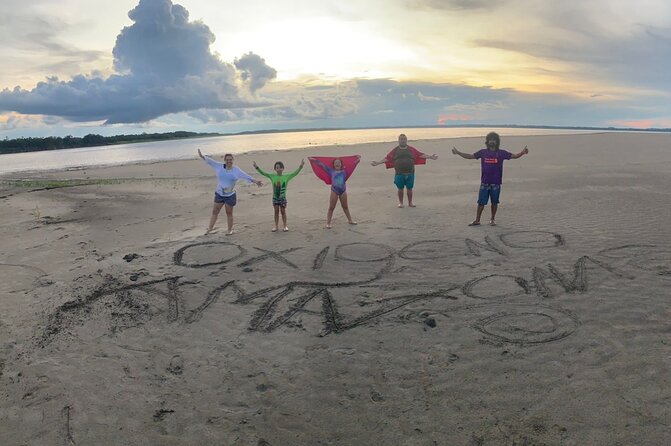
- Private travel from Leticia to Puerto Nariño: Your group has its own arrangements rather than joining a large scheduled tour.
- A real mix of habitats: Expect mainland forest, flooded jungle, rivers, lakes, and the small town of Puerto Nariño.
- Cross-border Amazon experience: Day three takes you by private boat to Cacao Island and San Antonio del Cacao in Peru.
- Wildlife is a central theme: Look for pirarucú, Victoria Regia, sloths, monkeys, black caimans, piranhas, and pink and grey river dolphins.
- Local guides matter here: The program has included guides such as Pedro, Gato, Carlos, and Brandon, with translators including Runa.
- Pack for wet conditions: Bring a raincoat, flashlight, long sleeves, thick socks, insect repellent, sunscreen, and a swimsuit.
From Leticia to a Ticuna jungle cabin
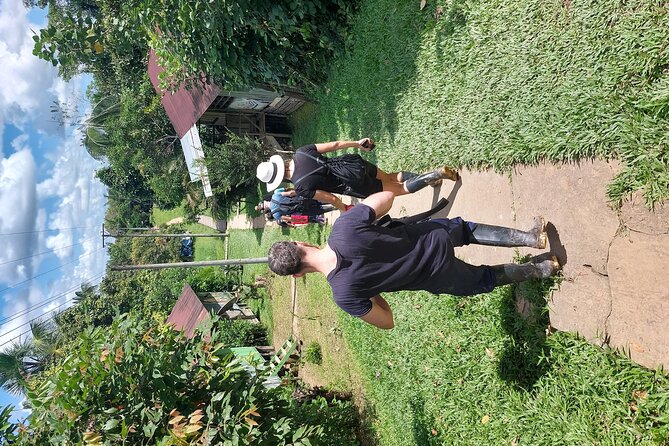
Your first day begins with a private greeting at the port in Leticia. From there, you travel about 70 kilometers by boat along the Amazon River toward Puerto Nariño. That transfer is not just a way to reach your hotel. It gives you an early sense of the river’s scale and its role as the region’s main road.
Puerto Nariño is a car-free town with a strong focus on sustainable tourism. After a guided walk through its wooden streets, you continue on foot for about two kilometers into the forest. The path leads to a private jungle cabin managed by a local Ticuna family.
That first night is one of the tour’s best ideas. You eat dinner cooked over a wood fire, then head out to look for nocturnal life. A flashlight is essential. The forest sounds change after dark, and the night walk offers a different experience from the daytime hikes.
The accommodation is intentionally simple and close to the forest. You should not expect a polished city hotel in the jungle, although one account describes the rooms used during the wider trip as clean, comfortable, and air-conditioned. The program also includes time at Hotel Wikungo in Puerto Nariño, where Wi-Fi is available in the lobby. Hot water may not always be available, so bring a flexible attitude and enjoy the cool shower.
A few more trips around Colombia worth a look
- Bogotá: Private City Tour, Monserrate, Emerald and Botero
★ 4.9 · 798 reviews - Medellín: Private City Tour with Metrocable and Comuna 13
★ 4.9 · 330 reviews - Bogota: Salt Cathedral of Zipaquira Private daily Trip
★ 4.8 · 262 reviews
Sunrise, pirarucú, and Victoria Regia
Day two starts early, with a misty sunrise and the sound of the forest waking up. You walk to the Wochine reserve for a traditional breakfast. The setting is as important as the meal. You are eating in a working local area, surrounded by giant trees and the possibility of wildlife appearing nearby.
The visit includes the pirarucú, one of the Amazon’s most impressive fish. It is known for its prehistoric appearance and large scales, and it can grow to an exceptional size. You also see Victoria Regia, the giant water lily famous for its broad floating leaves. These encounters help turn a general jungle outing into something more specific and memorable.
The morning has a fairly active rhythm. You will be walking in tropical conditions, and the ground can be wet or uneven. Rubber boots are provided, but you need to bring thick, long socks to avoid discomfort. Light-colored, long-sleeved clothing is a practical choice for sun and insect protection.
In the afternoon, you return to Puerto Nariño for a closer look at the town. This is not simply a short orientation walk. You visit local artisans, see colorful wooden houses, and stop at the Natütama Museum, which explains the river’s underwater world.
That museum visit adds useful context before the boat outings that follow. You begin to understand how fish, river levels, flooded forest, and seasonal changes shape local life. Dinner is traditional, and meals throughout the tour focus on local Colombian food. Four breakfasts, four lunches, and four dinners are included, although alcoholic drinks are not.
A boat across the border to Peru
Day three broadens the trip beyond Colombia. After breakfast, a private boat takes you across the Amazon River to Cacao Island in Peru. The change is more than a line on a map. You visit the community of San Antonio del Cacao and learn about local mythology, traditional natural medicine, and everyday life.
The forest walk focuses on the sloth sometimes described in the program as the Sloth Bear, as well as the Yarumo trees that form part of its habitat. Wildlife sightings can never be guaranteed, so you should value the walk itself as much as the animal search. A good guide can point out signs, plants, and small changes in the forest that are easy to miss on your own.
The community visit is a strong feature because it gives you time with local people rather than keeping you inside a boat or lodge. You also have an authentic Peruvian lunch, adding another regional angle to a trip that already crosses three national cultures around Leticia, Colombia, Peru, and Brazil.
Guide quality is especially important on this part of the itinerary. Pedro has been praised for explaining animals, plants, and local places in a calm and clear way. Gato has also led this type of program, bringing enthusiasm to wildlife and community visits. The exact guide team can vary, but the experience depends heavily on their ability to explain what you are seeing.
Sunset and night wildlife at Tarapoto Lakes
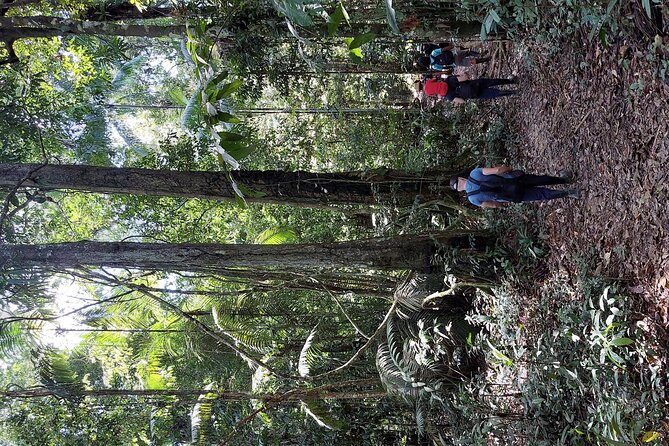
Later on day three, you sail to the Tarapoto Lakes, a Ramsar protected site. These lakes are a highlight because the setting changes again. You move from forest paths to broad, reflective water, with sunset views that are best enjoyed slowly rather than rushed.
The activities here include piranha fishing and a private swim. You may also see pink and grey river dolphins in the lake. Swimming beside dolphins sounds dramatic, but keep your expectations realistic. Wildlife moves on its own schedule, and sightings are not guaranteed. The value lies in being on the water in a protected area where the forest and river systems remain closely linked.
Piranha fishing adds a hands-on element. It is simple, local, and a little more exciting than another sightseeing stop. After dark, a night safari looks for black caimans and other nocturnal animals.
Bring a flashlight and secure your belongings in the boat. Small boats, low light, and wet conditions require attention. You should also be comfortable getting in and out of a boat several times during the day.
Same city, a different sort of day:
- Medellin: Comuna 13 Graffiti Tour, Cable Car & Street Food
★ 4.8 · 9,046 reviews - Medellín: The Real Pablo Escobar Tour
★ 4.8 · 3,205 reviews - Cartagena: Historic Center and Getsemaní Shared Walking Tour
★ 4.9 · 2,716 reviews - Cartagena: Rosario Islands Catamaran with Lunch and Snorkel
★ 4.5 · 2,479 reviews
Mocagua and the Maikuchiga primate center
Day four takes you to the indigenous community of Mocagua. You see traditional homes and crops before walking through a mixture of mainland forest and flooded forest. That change in terrain is one reason the trip feels varied despite staying within the same Amazon region.
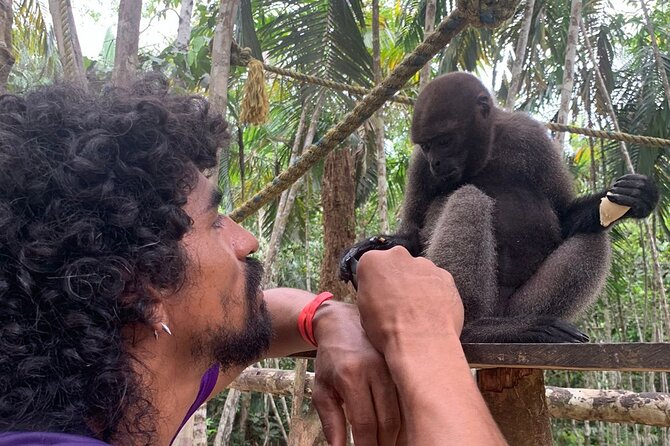
The destination is Maikuchiga, a primate rehabilitation center. Here, you can learn about rescued woolly monkeys, capuchins, and squirrel monkeys. The visit adds a conservation layer to the trip without turning it into a lecture. You see how rescued animals are cared for and gain a clearer sense of the pressures facing Amazon wildlife.
The forest walk to the center can be demanding. Expect mud, slippery sections, steep creek banks, streams crossed on boards, and hot, humid conditions. One of the most useful pieces of practical advice from the program is to judge your fitness honestly. You do not need to be an athlete, but you should be comfortable walking for several hours on uneven ground.
The itinerary also highlights ethnobotany, or the way local communities use and understand plants. This is where a local guide can make a major difference. Carlos, who has led night walks, has been described as exceptionally well informed about plants and animals. Guides such as Pedro and Gato have also been praised for connecting natural history with local culture.
More river time and a final sunset
After Mocagua, you return to the water in search of pink river dolphins. You may fish in an artisanal way or swim in quiet, reflective water. The sunset is another chance to pause and watch the forest from a different angle.
The program uses the river well. You are not seeing the Amazon only from trails or from a lodge window. You are repeatedly on the water, which reflects how people in this region move, work, visit family, and reach nearby communities.
Photography is a good fit for this tour, but you should protect your equipment from rain and spray. A photographer who wants longer stops or more flexibility should discuss that before departure. The private format makes adjustments more realistic, and Brandon has been noted for responding well to photography needs and personal preferences.
Still, private does not mean leisurely at every moment. The five days cover a lot of ground, and some mornings start early. You will get more from the trip if you are willing to follow the natural rhythm of the forest rather than expecting every activity to run like a city excursion.
Returning to Leticia through the triple border
On the final day, you visit an observation tower for a last panoramic view. The stop includes local exotic fruit ice cream, which is a pleasant way to end the forest portion of the journey.
You then take a scenic two-hour boat ride back to Leticia. If your flight schedule allows, the company also offers a private city tour of Leticia and Tabatinga in Brazil. This gives you a look at the triple-border culture around Colombia, Peru, and Brazil. If you arrive early on day one, that city tour may be arranged then instead.
Airport transfers are included, and the final transfer is made to Leticia airport. Your flight is not included, and there is also a departure tax of COP 50,000 per person. Confirm your flight timing carefully before booking, since the city tour depends on your arrival or departure schedule.
What the $1,103.90 price covers
At $1,103.90 per person, this is not a budget jungle outing. The price makes more sense when you look at what is bundled together: airport transfers, private boat travel, a five-day program, accommodation, four breakfasts, four lunches, four dinners, local guides, an English translator in Puerto Nariño, community visits, and access to several different wildlife areas.
The private format is the key value. You are not paying only for transport and sightseeing. You are paying for a local team to coordinate boats, forest walks, meals, border-area visits, guides, and changing weather conditions.
The cost is easier to justify if you want a full Amazon program rather than a short day trip from Leticia. It is less appealing if you prefer independent travel, have limited time, or mainly want one boat ride and a quick wildlife outing.
The included meals also help control costs in a remote region. You still need money for alcoholic drinks, personal purchases, and the departure tax. Flights to Leticia are extra.
Guides, language, and the human side
The strongest part of this program is its personal handling. Karla and Darwis coordinate the operation, and several named guides have been associated with the tours. Pedro has guided visitors for the full five days, while Runa has worked as an English translator. Brandon has been praised for adapting the schedule for photographers, and Gato for his enthusiasm about animals, plants, and local life.
Cielo and Carmen have also been part of the wider guide team. Carlos has led a night walk and is especially strong on forest details. You should confirm the exact guide and language arrangements at booking, but English translation is available in Puerto Nariño for the five days.
The warm, family-style welcome is not a minor detail. In a remote area, clear communication and reliable transfers reduce stress. One small boat pickup problem was resolved quickly during a previous trip, which is a useful reminder that Amazon logistics can shift. A responsive local operator matters.
What to pack for five wet days
Pack light, but pack for rain and mud. You should bring:
- A poncho or raincoat
- A flashlight with spare batteries
- Light-colored, long-sleeved shirts
- Long trousers
- Thick, long socks
- Mosquito repellent
- Sunscreen and sunglasses
- A swimsuit
- A camera protected from rain and spray
Rubber boots are provided. Your own walking shoes are still useful for town, travel days, and dry surfaces.
The program is open to most people and service animals are allowed, but the physical demands remain real. If you have trouble with slippery trails, steep banks, small boats, or hot weather, ask detailed questions before paying.
Should you book Amazon Unveiled?
Book this tour if you want a full, private Amazon experience with serious time on the river, local community visits, wildlife outings, and a chance to cross into Peru. It is especially well suited to photographers, couples, families with active older children, and anyone who prefers personal guiding over a large group.
Think twice if you want polished hotel comfort, predictable dry paths, or a relaxed schedule. This is a humid, muddy, sometimes uncomfortable trip, and that is part of its appeal.
For the right person, the value comes from the range: Ticuna hospitality, Puerto Nariño, flooded forest, Tarapoto Lakes, rescued monkeys, piranha fishing, caimans, dolphins, and the triple-border region. You get a much fuller sense of Amazon life than a short excursion can provide.
FAQ
Where does the Amazon Unveiled tour begin?
The experience begins in Leticia, Colombia, with a private greeting at the Leticia port. Airport transfers are included.
How long does the tour last?
The tour lasts approximately five days, with four nights of accommodation and four included breakfasts, lunches, and dinners.
Does the tour visit Peru?
Yes. On day three, a private boat crosses the Amazon River to Cacao Island in Peru, followed by a visit to San Antonio del Cacao.
Is this a private tour?
Yes. Only your group participates in the private activity.
Is an English translator available?
Yes. An English translator is available in Puerto Nariño for the five days of the tour.
What meals are included?
Four breakfasts, four lunches, and four dinners are included. Alcoholic drinks are not included.
Do I need to bring rubber boots?
No. Rubber boots are provided. You should bring thick, long socks for comfort.
What happens if bad weather cancels the tour?
If the experience is canceled because of poor weather, you will be offered another date or a full refund. Free cancellation is also available up to 24 hours before the start time.
Just added in Colombia
- Zipaquira: 5 hrs Salt Cathedral Tour★ 4.4 · 9 reviews
- Exotic Yacht – Tour through the bay of Cartagena★ 3.7 · 4 reviews
- Zipaquirá: Private Salt Cathedral Mine and Walking Tour★ 4.8 · 3 reviews
- Zipaquirá: Private tour to the Salt Cathedral, Colombia’s first wonder★ 4.9 · 33 reviews
- Wonders of Salt: Colombia’s Underground Cathedral★ 5.0 · 18 reviews
- Zipaquirá Salt Cathedral & Andrés Carne de Res (Chía)★ 4.6 · 30 reviews
- Villavieja: Tatacoa Desert Horseback Riding Tour★ 5.0 · 3 reviews
- Volcan del Totumo + Playa + Piscina★ 4.7 · 4 reviews