
Reviewed · MEDELLÍN TOURS
Anti tour Medellin
Medellín’s Anti Tour asks you to look at the city through what progress removed. You begin at the Monumento a la Raza and move through train-era landmarks, modern plazas, crowded shopping streets, and surviving colonial buildings. The tour’s strongest feature is its honest look at demolition, violence, and memory, rather than the usual success story about Medellín’s transformation.
I especially like the viche tasting at La Alpujarra and the visit to Casa de la Memoria, where the city’s armed conflict is treated as something to face, not hide. You should also like the route through everyday central Medellín, including El Hueco and Junín Street, rather than a parade of polished attractions. The main consideration is safety: some streets feel rough and crowded, and one review specifically wished visitors had been warned more clearly.
Key points to know before you go
- Medellín’s erased past is the main subject: The tour explores demolished markets, altered plazas, lost colonial buildings, and the city’s push toward modernity.
- The route includes real city life: El Hueco brings informal commerce, crowds, music, and ordinary street activity into the experience.
- The conflict story is personal and difficult: You meet ex-combatants and victims, then visit Casa de la Memoria Museum.
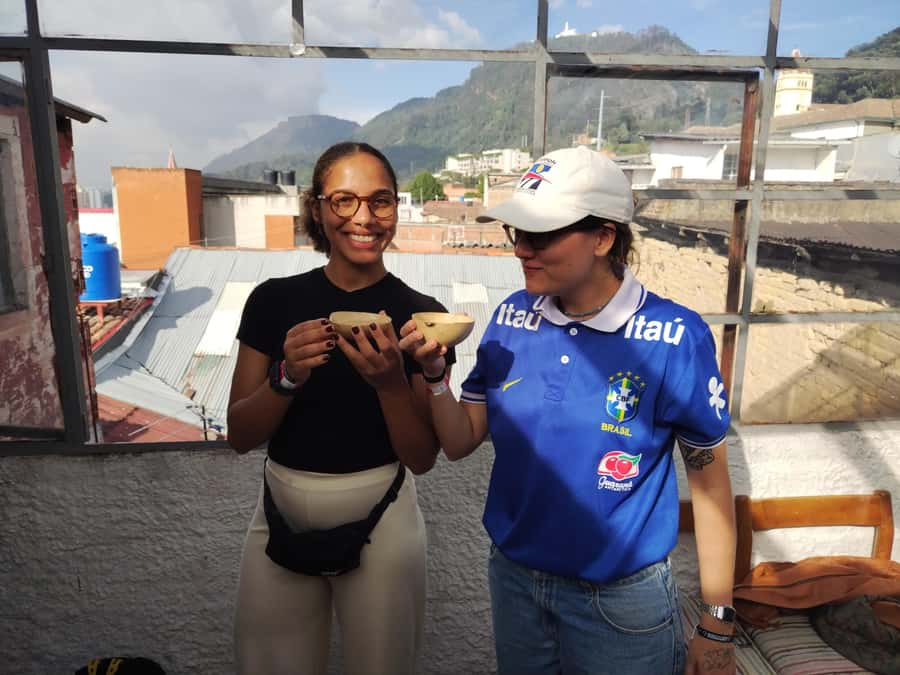
- Viche adds a local taste: The traditional liquor tasting takes place during a 40-minute stop at La Alpujarra.
- Expect three hours on foot: Wear good shoes, carry water, and prepare for sun or changing weather.
- This is not a postcard tour: It suits curious visitors who want context and hard questions more than a simple list of sights.
A different way to read Medellín
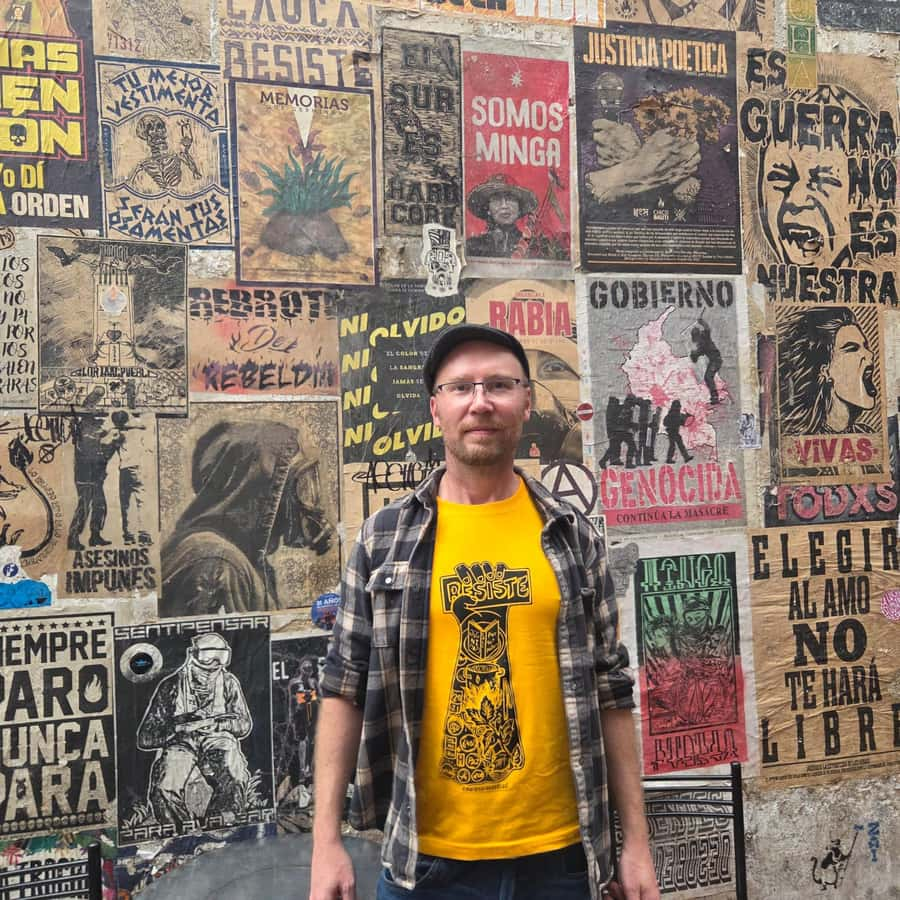
Many city tours begin with Medellín’s renewal. They point to public art, modern buildings, improved transport, and the city’s reputation for change. This Anti Tour begins somewhere less comfortable: with the places and people left behind by that change.
The central question is simple. What did Medellín lose while trying to become modern?
That question gives the walk a clear purpose. You are not simply moving from one attraction to the next. You are comparing old and new versions of the city. A former railway site may suggest industry and growth. A modern plaza may cover the memory of a market. A shopping center may occupy a building once tied to the courts. A colonial church may be one of the few survivors around it.
I like this approach because it gives you something to watch for after the tour ends. Medellín’s buildings are not just scenery. Their uses reveal who had power, what the city valued, and which parts of its past were allowed to remain visible.
The English-speaking guide leads the three-hour experience. Manuel is one guide associated with the tour, and the route depends heavily on explanation, discussion, and a willingness to ask questions. This is not the sort of outing where you can keep your attention on photographs alone.
A few more trips around Medellín worth a look
- Medellin: Comuna 13 Graffiti Tour, Cable Car & Street Food
★ 4.8 · 9,046 reviews - Medellín: The Real Pablo Escobar Tour
★ 4.8 · 3,205 reviews - Medellín: Comuna 13 True Story and Street Food Tour
★ 4.9 · 1,779 reviews
Starting at the Monumento a la Raza
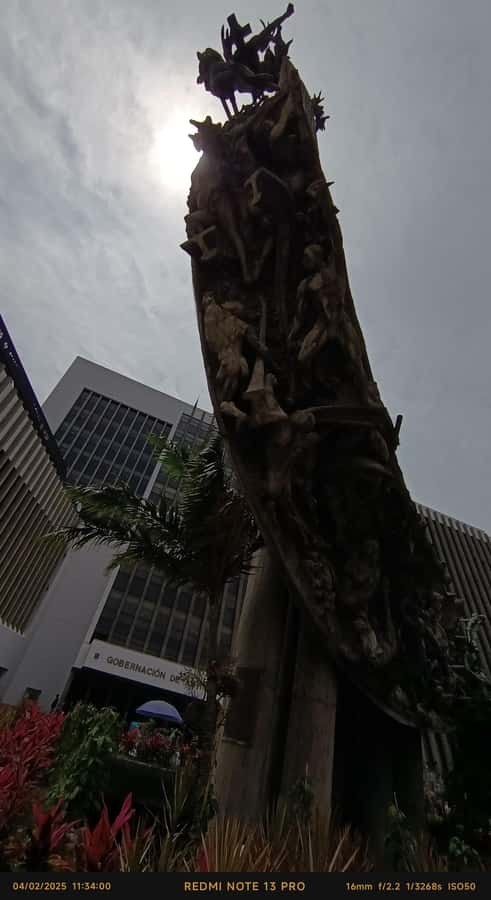
Meet in front of the Monumento a la Raza, in La Alpujarra, the political and administrative center of Medellín. It is a useful starting point because the area brings together symbols of government, identity, and public power.
The monument itself is not just a meeting marker. It introduces the tour’s concern with how Colombia tells its own story. From here, you begin looking at official versions of progress alongside the less visible stories of displacement, conflict, and demolition.
The route includes about 15 minutes on foot at the beginning. Expect city streets, public buildings, and changing views rather than a quiet museum setting. Bring water, a hat, and sunscreen. Medellín’s weather can shift, and the tour asks you to remain outdoors for much of the time.
La Alpujarra also connects the modern administrative city with the older industrial one. The nearby former train station recalls the period when railways and factories helped shape Medellín’s growth. That industrial ambition later helped justify major changes to the historic center.
From the old station to Parque de las Luces
Parque de las Luces is one of the most telling stops. Today, its tall light poles create a modern public space. Before redevelopment, the area functioned as a market square with a different rhythm and purpose.
The point is not that the current plaza has no value. The point is that a new design can make an earlier city hard to picture. The tour helps you imagine what occupied the space before the poles, modern buildings, and open walkways arrived.
Nearby structures, including the Carré and Vásquez buildings and the EPM Library, add to the contrast. Old commercial architecture, new civic construction, and traces of the former market all sit within a short walk. You will see how Medellín repeatedly remade its center instead of preserving it as a single historic district.
This is one place where the Anti Tour earns its name. A standard sightseeing walk might photograph the light poles and move on. Here, you pause to ask what the new plaza replaced, and why that replacement mattered.
Reading El Hueco beyond the shopping
The route continues into El Hueco, a central commercial district known for informal trade, heavy foot traffic, music, and crowds. It is not arranged for easy sightseeing. That is precisely why it belongs on this tour.
You see a working part of Medellín rather than a district polished for visitors. Anonymous modern buildings sit beside fragments of older structures. Street commerce fills gaps left by formal planning. The area can feel crowded and disordered, but it also shows how people use the city in practical ways.
This stop has a clear drawback. You need to stay alert to your surroundings and keep your belongings secure. One piece of feedback about the tour specifically called for stronger warnings about potentially unsafe areas. The route is not presented as dangerous, but you should understand that this is a central commercial zone with a rougher feel than a controlled museum or plaza.
That tension is valuable if you are prepared for it. El Hueco helps explain why a city cannot be understood only through its official buildings. The daily economy, street movement, and informal trade are part of Medellín’s story too.
Same city, a different sort of day:
- Medellín: Comuna 13 District Tour with Cable Car Ride
★ 4.8 · 1,467 reviews - Medellin: Coffee Tour with Transport, Snacks and Tastings
★ 4.7 · 1,357 reviews - From Medellín: Paragliding Tour with GoPro Photos & Videos
★ 4.9 · 1,210 reviews - Tour Guatapé
★ 5.0 · 865 reviews
The Palacio Nacional and La Veracruz
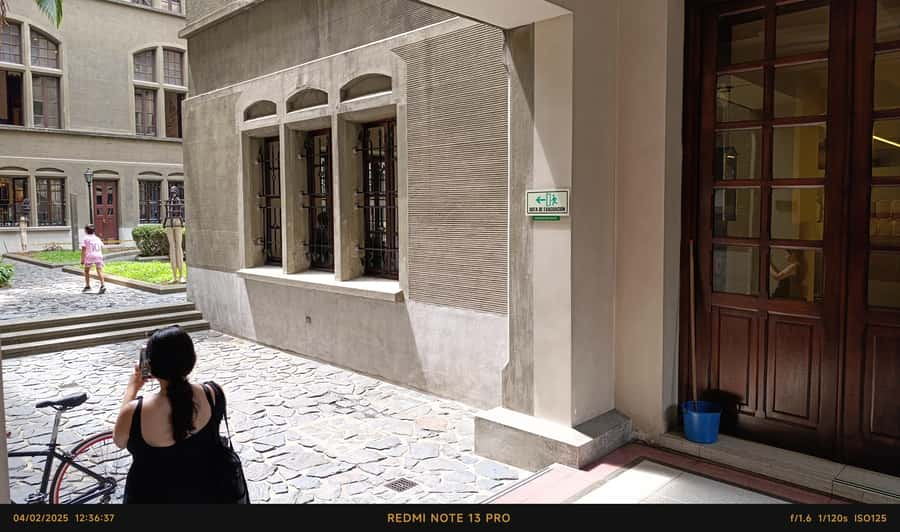
At the Palacio Nacional, a former judicial palace now used as a shopping center, the tour looks at the changing meaning of buildings. A place once linked to law and authority now serves commercial purposes. The change is physical, but it is also symbolic.
The guided visit lasts about 15 minutes and gives you time to consider how public power can be replaced by private commerce. You may find the building’s current use more revealing than a preserved courtroom would be. Medellín’s past is not always kept behind glass. Sometimes it is hidden in plain sight under a new function.
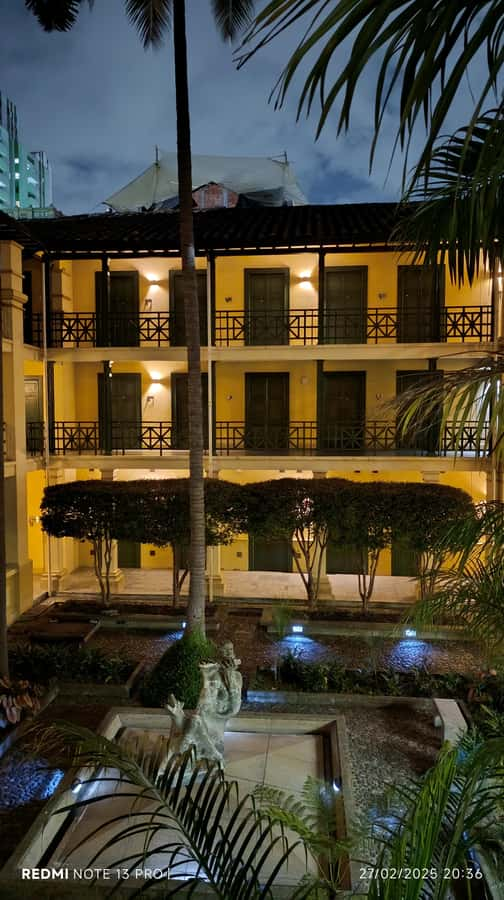
A short distance away, the Church of La Veracruz offers a sharp contrast. It is one of the city’s last colonial survivors, surrounded by a center that has been repeatedly rebuilt. The visit lasts about 10 minutes.
I like this pairing. The Palacio Nacional shows how a historic place can be repurposed, while La Veracruz shows what can remain when surrounding structures disappear. The church is not presented as an isolated old building. It becomes evidence of how much has changed around it.
Plaza Botero and the politics of public art
Plaza Botero brings a more recognizable Medellín image into the walk. Fernando Botero’s large sculptures attract attention, but the tour treats public art as more than decoration.
The plaza helped redefine the city’s public image. Art, architecture, and redevelopment work together here. The nearby Palacio de la Cultura Rafael Uribe Uribe adds a grand civic presence, while Botero’s sculptures draw people into an area that carries layers of social and political meaning.
You will likely take photographs here, and that is fine. The Anti Tour simply asks you not to stop at the photograph. Consider how culture can be used to present a new identity for a city, especially one trying to move beyond violence and industrial decline.
This part may appeal to you if you want a familiar Medellín sight with more context. It also provides a visual change after the crowded streets of El Hueco. Still, the tour does not spend all its time on art. The sculptures are a doorway into the larger question of who gets to define Medellín.
Coltejer, Junín Street, and the city that changed direction
The Coltejer Building represents Medellín’s industrial ambition. Its presence points back to the city’s manufacturing and business growth, while the route toward Junín Street recalls an older style of urban life.
Junín was once associated with elegant city living, shops, theaters, and formal public life. As economic priorities shifted, that shared memory became less central. The street remains, but its role has changed.
I find this section useful because it connects grand symbols with ordinary movement. The Coltejer Building tells you about industry and ambition. Junín tells you how those forces affected social life. Together, they show that urban change is not just a matter of replacing one building with another. It can alter where people meet, how they spend time, and what they consider the center of town.
The tour also helps you see that Medellín’s transformation was not one clean turn from old to new. Older uses survive beside modern ones. Some buildings remain but serve different purposes. Others vanish so completely that only a guide’s story brings them back.
A 40-minute stop at La Alpujarra
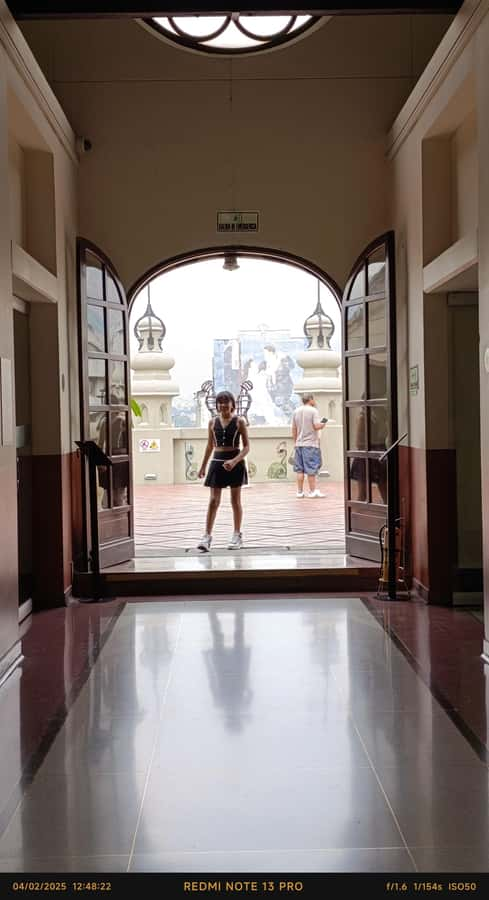
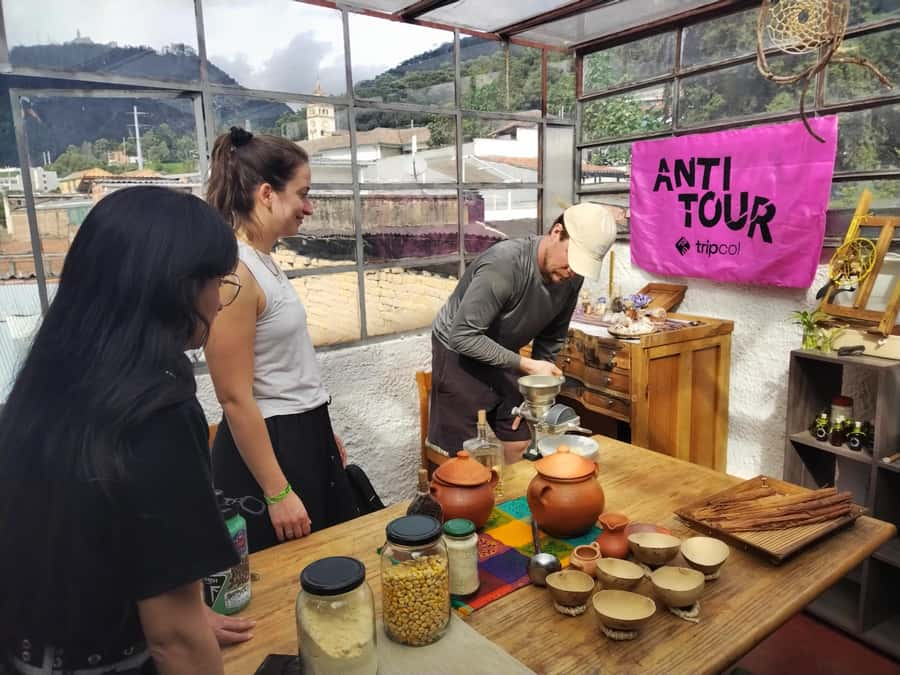
The itinerary includes a 40-minute stop at La Alpujarra for a traditional liquor tasting and workshop. The drink is viche, a liquor with strong cultural ties to Colombia’s Pacific region.
This break adds a social and sensory part to a tour that could otherwise feel heavy. You are not simply listening to dates and political events. You get a chance to discuss local traditions while tasting something connected to Colombian culture.
The tasting should not be mistaken for a party stop. The broader subject remains the city’s transformation and the country’s conflict. It works best as a moment of connection within a serious walk.
The 40-minute length matters. It is long enough for more than a quick sample, but it also means the tour spends a substantial part of its three hours here. If you prefer a fast sightseeing circuit, this may feel slow. If you like time for conversation, it gives the guide room to explain rather than rush.
Meeting people connected to the armed conflict
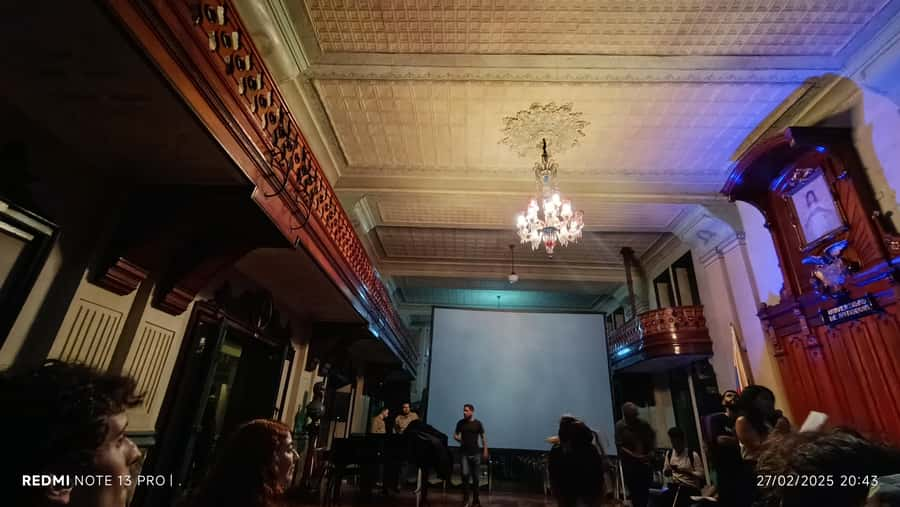
One of the most unusual elements is the chance to meet ex-combatants and victims of Colombia’s armed conflict. This gives the subject a human scale that buildings alone cannot provide.
You should approach this part with care. The experience is designed for reflection, not entertainment. It may challenge the neat version of Medellín’s past that appears in promotional stories about renewal and success.
The city’s violence is not treated as a separate chapter that ended long ago. It remains connected to neighborhoods, institutions, families, and public memory. Hearing from people linked directly to the conflict can help you understand why monuments, museums, and redevelopment choices carry emotional weight.
This is also where the Anti Tour may be too intense for some people. If you want a light introduction to Medellín, choose a standard city walk instead. If you want to understand how violence and rebuilding overlap, this is a major reason to book.
Casa de la Memoria Museum and the final reflection
The tour visits Casa de la Memoria Museum for about 30 minutes. Admission is included, which is important because the museum gives the walk a proper place for reflection.
After moving through streets and buildings, you enter a setting focused directly on violence, loss, and resilience. The museum helps connect the personal stories from the tour with the wider record of Colombia’s armed conflict.
Thirty minutes is enough for a meaningful introduction, though not enough to absorb every part of a museum devoted to such a large subject. You may want to return independently if the exhibits leave you with unanswered questions, but the tour’s schedule does not promise a longer museum visit.
The walk ends at the Church of San Ignacio de Loyola. Ending there keeps the final mood thoughtful rather than celebratory. You finish with another religious and historic place in view, after seeing how much of Medellín’s older center has been altered or removed.
Is the 33 dollar price good value?
At 33 dollars per person, I consider this a fair price if you value interpretation, local context, and the museum visit. You are paying for a three-hour English-language guided walk, a viche tasting, access to Casa de la Memoria Museum, and a route through several important central areas.
The value is less obvious if you judge tours by the number of famous sights photographed. You will see Plaza Botero, La Alpujarra, Parque de las Luces, and historic churches, but the main product is the guide’s explanation of what those places mean.
Transportation to and from the activity is not included. Plan your own way to the Monumento a la Raza and from the Church of San Ignacio de Loyola at the end. The tour does not provide a private vehicle, and the experience is primarily on foot.
You can cancel up to 24 hours before the start for a full refund, and the reserve-now, pay-later option can help if your schedule is still changing. These terms are useful, but the real decision is whether the subject matches your interests.
Who should book this Anti Tour?
I would choose this tour if you want to understand Medellín beyond its polished redevelopment story. It suits you if you enjoy urban history, public memory, architecture, politics, and direct discussion of difficult subjects.
It also works well if you want to see ordinary central Medellín rather than spend the day in visitor-focused areas. El Hueco, Junín Street, former civic buildings, and surviving colonial structures give you a broader picture of city life.
You should be comfortable walking for three hours and navigating crowded streets. Wear sturdy walking shoes, use sunscreen, bring a hat, and carry water. Snacks are also suggested, especially because the tour includes several stops and outdoor sections.
This experience is not suitable for wheelchair users. The route also may not suit anyone looking for a calm, easy stroll. It deals with armed conflict and visits places that can feel crowded or unsafe. Keep your belongings secure and listen carefully to the guide’s directions.
My recommendation
Book the Anti Tour Medellín if you want a serious, unusual look at how the city was rebuilt on top of older spaces and painful memories. Its best moments come from the connections between places: the old train station and industrial growth, Parque de las Luces and the vanished market, the Palacio Nacional and changing power, La Veracruz and the few colonial survivors, then Casa de la Memoria and the human cost of conflict.
Skip it if you want only cheerful sightseeing, easy photography, or a relaxed introduction with little walking. For the right audience, the 33 dollar price buys something more useful than a collection of landmarks: it gives you a sharper way to read Medellín.
FAQ
How long does the Anti Tour Medellín last?
The tour lasts three hours. It includes walking through central Medellín, a visit to Casa de la Memoria Museum, and a 40-minute stop at La Alpujarra for a viche tasting and workshop.
Where does the tour begin?
The meeting point is in front of the Monumento a la Raza in La Alpujarra.
Where does the tour finish?
The tour finishes at the Parroquia de San Ignacio de Loyola.
Is the tour conducted in English?
Yes. The activity includes a live English-speaking guide.
Is transportation included?
No. Transportation to and from the activity is not included. The experience itself is primarily a guided walking tour.
What should I bring?
Wear comfortable walking shoes and bring a hat, sunscreen, water, and possibly snacks. You should also prepare for changing weather and may want to bring a camera.
Just added in Medellín
- City tour, Commune 13, Metro Cable, Botero Park and more. Private★ 5.0 · 34 reviews
- Aerial Hammocks, Zip and Waterfall Trek on Medellin Private Tour★ 5.0 · 39 reviews
- Commune 13, Graffitour street food. History.All inclusive★ 5.0 · 35 reviews
- Barrio transformation and urban escalator of Comuna 13★ 5.0 · 47 reviews
- Walking tour downtown Medellín★ 5.0 · 39 reviews
- Tour to the Hacienda Nápoles Theme Park★ 4.0 · 22 reviews
- Hiking Mountains and Magical Forests★ 5.0 · 27 reviews
- Tour Santa Fe de Antioquia★ 5.0 · 46 reviews
Medellín Tours, compared.

Comuna 13 Graffiti Tour, Cable Car & Street Food
Read our review →

Coffee Tour with Transport, Snacks and Tastings
Read our review →
Browse the lists this tour appears in