
Reviewed · COFFEE FARM TOURS
Explore the Coffee Process_From Tree to Cup & Fun by Jeep
The most interesting part of this Pereira experience is that coffee is only the beginning. Arvey and Elizabeth show you how coffee grows, gets picked, fermented, washed, dried, roasted, and brewed, then connect that process to fruit trees, birds, composting, farm animals, and daily life in Colombia’s coffee region. I especially like the traditional Jeep ride into the Andes and the chance to make your own coffee instead of simply watching a demonstration. The tour is also limited to 10 people, which keeps the visit personal.
I like the clear focus on sustainable farming and the easy hotel pickup and drop-off. The main consideration is that this is a working mountain farm, not a polished coffee museum: expect insects, uneven outdoor areas, and a four-hour schedule that leaves little time for a slow, extended farm visit.
Key Points to Know Before You Go
- Follow coffee from tree to cup: Learn about planting, picking, fermenting, washing, drying, roasting, and brewing.
- Meet the farming couple: Arvey and Elizabeth personally lead the visit and explain how they run their sustainable farm.
- Ride in a classic coffee-country Jeep: The drive from Pereira into the Andes is part of the experience.
- Taste more than coffee: Depending on the season, you may see or sample bananas, cocoa, avocado, citrus, guava, papaya, mango, guanabana, and other crops.
- Small, personal group: The maximum is 10 people, with private transportation and hotel pickup included.
- Bring mosquito repellent: This is a real farm with outdoor paths, plants, animals, and insects.
A Coffee Tour That Starts Before the First Cup
This experience offers a useful answer to a common question: how does Colombian coffee get from a mountain farm into your mug? You do not simply walk past a few coffee bushes and receive a souvenir drink. The visit explains the full chain, from the coffee tree to the final brewing method.
The farm is run by Arvey and Elizabeth, who describe their work as part of a broader way of life. Their approach includes coffee production, clean agriculture, composting, vermiculture, fruit growing, and care for the surrounding natural setting. That makes the tour a good fit if you want to understand rural Colombia rather than collect another quick tasting.
The experience lasts about four hours and costs $115 per person. That is not the cheapest coffee outing in the Pereira area, but the price includes transportation from your hotel, entrance, a guide, coffee or tea, snacks, and a private vehicle. You are also paying for a small group and several hours of hands-on instruction, not just a plantation walk.
More coffee farm days from Pereira
- Coffee Tour at the Finca del Café
★ 5.0 · 213 reviews - Full-Day Private Coffee Tour in Cocora Valley and Salento
★ 5.0 · 60 reviews - Salento and Cócora Tour plus Coffee Farm from Pereira or Armenia
★ 5.0 · 40 reviews
The Jeep Ride From Pereira Into the Andes
Pickup begins at your Pereira hotel, which removes one of the more awkward parts of visiting a rural farm. You do not need to arrange a taxi, find a meeting point, or work out how to reach the property on your own. Arvey collects you in a traditional Jeep, a vehicle closely tied to Colombia’s coffee culture.
The drive takes you away from the city and toward the Andean mountains. One of the pleasures of this part of the outing is hearing about the region and the farm while someone else handles the road. The ride is not just a transfer. It gives you a sense of how coffee farms relate to the cities and towns of the coffee region.
The itinerary names Andes and Pereira as its two stops. In practical terms, Pereira is your pickup and return point, while the farm visit takes place in the mountain area above or around the city. Exact driving time can vary, but one account describes roughly 40 minutes before reaching the farm.
If you are prone to motion sickness, keep the mountain drive in mind. The route is described as a winding mountainside road, so the Jeep ride may be less comfortable for some people than a short city transfer. Still, the traditional vehicle adds character and saves you from arranging rural transport yourself.
Walking Through Coffee From Seed to Harvest
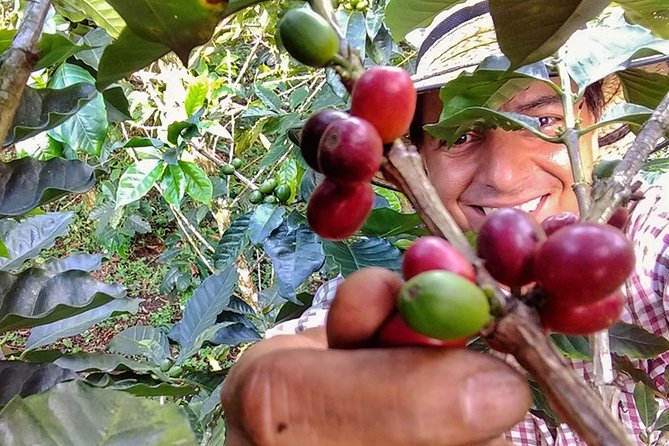
At the farm, the visit begins with the coffee plants themselves. You learn about the life cycle of the tree and how ripe coffee cherries are selected and picked. This is the part that helps correct a common misunderstanding: coffee does not grow as a dry bean. The bean begins inside a colorful fruit, and several stages are needed before it can be roasted.
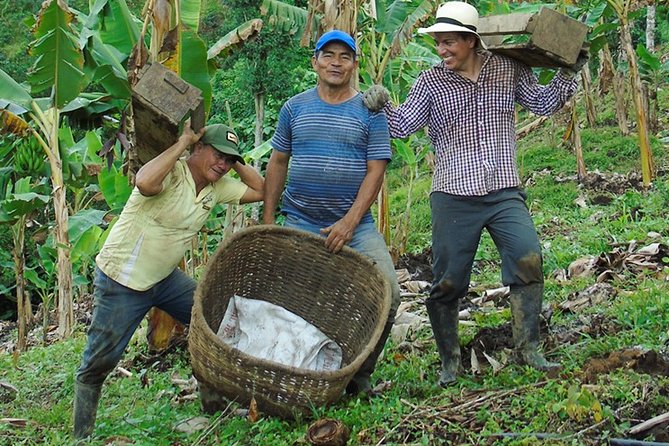
Arvey explains the agricultural side of the process as you move through the plantation. You learn how the coffee is harvested and what happens after the cherries leave the tree. The pace appears to be conversational rather than rushed, with time for questions and explanations about the farm’s methods.
The farm also grows bananas and a long list of other plants. These include cocoa, avocado, oranges, lemons, tangerines, guava, papaya, mango, and guanabana. Other descriptions add pineapples, plantains, citronella, cotton, and several varieties of avocado.
This variety matters because the farm is not a single-purpose plantation. It gives you a wider look at small-scale agriculture in Colombia. Some plants provide food, some have medicinal or practical uses, and some help support birds and other animals. Depending on the season, you may see fruit on the trees or taste something picked on the property.
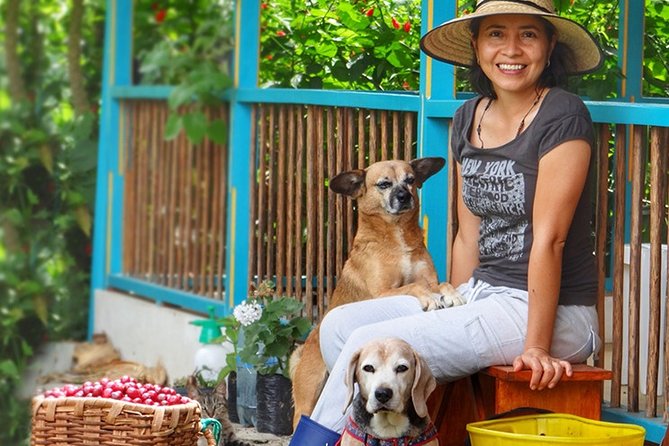
The farm also has chickens, ducks, cats, and dogs. Toby and Lola, the resident dogs, are part of the welcoming atmosphere, while the birds provide another reminder that this is a living farm rather than a stage set for visitors.
Fermentation, Washing, Drying, and Coffee Quality
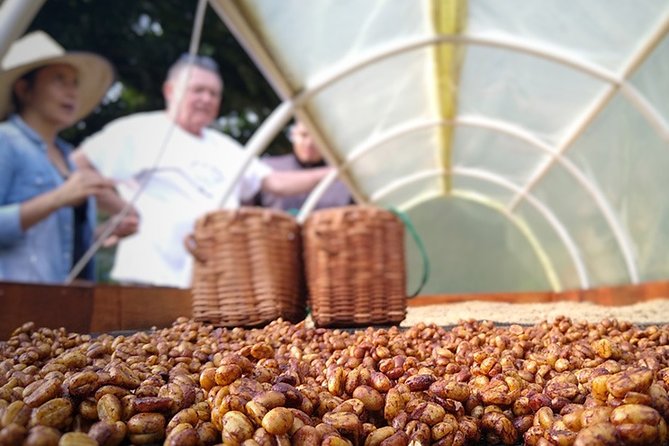
After the coffee cherries are picked, the tour moves into the less familiar part of production. You learn how the beans are fermented, washed, and dried before roasting. These steps have a major effect on the taste in your cup, yet they are often skipped on shorter plantation visits.
The farm produces coffee using washed, honey, and natural methods. The names refer to how much of the fruit remains around the bean during drying and how the coffee is processed. You do not need technical coffee knowledge to follow the explanation. The practical value is that you can later taste differences and understand why two coffees from the same region may not taste alike.
Quality control is also part of the visit. You see how the farm handles the beans after harvest and how decisions at each stage influence the final product. This turns the tasting at the end into something more useful than simply being handed a cup and asked if you like it.
The farm’s organic waste area, composting system, vermiculture setup, and nursery add another layer. Vermiculture uses worms to help turn organic material into useful soil amendments. It is a simple idea, but seeing it connected to coffee production shows how a small farm can reuse materials instead of treating all waste as something to remove.
A few more trips around Pereira worth a look
- Coffee Farm and Salento Walking Tour
★ 5.0 · 3 reviews - Medellin: Coffee Tour with Transport, Snacks and Tastings
★ 4.7 · 1,357 reviews - Medellín Coffee Farm Tour with Trolley and Cable Car Ride
★ 4.9 · 277 reviews - Medellin: Coffee Tour and Wellness Spa
★ 4.8 · 209 reviews
Making Your Own Colombian Coffee
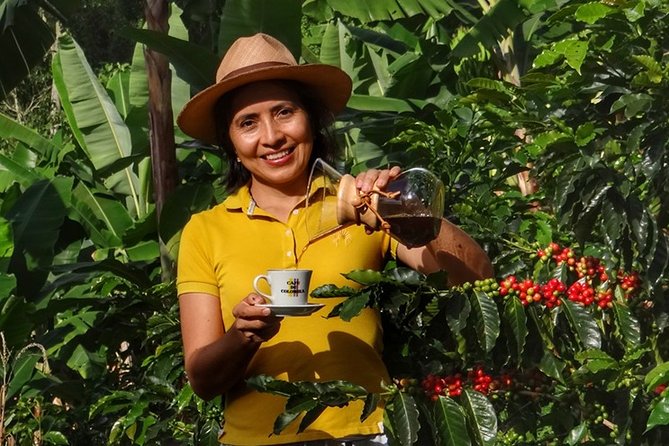
The hands-on brewing session is one of the strongest parts of the experience. Elizabeth guides you through preparing coffee, and you make more than one cup using different brewing methods. The point is not to watch a professional prepare a perfect drink. You get to handle the process and learn a method you can repeat at home.
The visit may include an initial cup when you arrive, followed by additional preparations later in the tour. You can taste coffee brewed in different ways and compare the results. The final part includes an explanation of the roasting curve, which shows how roasting time and temperature affect the coffee’s character.
This is particularly useful for people who enjoy coffee but have never understood the work behind it. You do not have to be a serious coffee enthusiast to appreciate the session. The instruction is practical, and the process is simple enough to take home.
The refreshments add a pleasant farm-to-table touch. Coffee or tea and snacks are included, with food described in different visits as empanadas, patacones, or other fresh farm refreshments. A lemonade made with lemons from the property has also been served. Since crops fruit at different times of year, the exact food and plants you encounter can vary.
Sustainability, Birds, and Daily Farm Life
The environmental message here feels connected to the farm’s daily work rather than added as a separate lecture. Arvey and Elizabeth discuss clean agriculture and their lives as neo-peasants, a term they use to describe their modern rural life and farming identity.
The property’s compost and vermiculture areas show how organic material can return to the soil. The nursery demonstrates how new plants are raised. Fruit trees and other crops make the land productive in several ways, while cotton and other plants can support birds and insects.
Birdwatching is an unexpected bonus. The farm has recorded a large increase in bird species over the years, from about 30 types to roughly 120. That figure comes from the hosts’ observations, and it helps explain why the farm’s mixed planting matters. You may not see every species on a short visit, but the range of plants creates more habitats than a coffee field alone.
There are also farm animals, including ducks and chickens. The combination of birds, pets, fruit trees, and coffee plants gives the visit a relaxed, domestic quality. You are seeing the place where the hosts live and work, not touring an anonymous commercial operation.
Accessibility, Weather, and What to Wear
A good portion of the farm is described as accessible for wheelchair users and people who are blind, and the tour has been designed with accessible paths and demonstrations in mind. Still, the property is in the mountains and includes outdoor farm areas, so you should ask for current route details if you need full access throughout the visit.
Service animals are allowed. The experience includes walking through the plantation, so sensible outdoor clothing and shoes are important. Mosquito repellent is strongly recommended because this is a working farm with plants, animals, and insects.
The weather in the Andes can change, and the tour takes place partly outdoors. A light rain layer is sensible, though the supplied details do not specify particular weather arrangements. You should also allow for a winding drive and wear clothing suitable for a relaxed farm visit rather than a formal city excursion.
Is $115 a Fair Price?
At $115 per person, this tour costs more than a basic plantation walk. The value comes from what is bundled into the half-day: hotel pickup and return, private transportation, a small group of no more than 10, entrance, guidance from the farm owners, tastings, snacks, and hands-on coffee preparation.
You also get several kinds of experience in one outing. There is the Jeep ride, the agricultural tour, the coffee processing lesson, the sustainability discussion, the fruit and animal life, and the brewing session. If you only want to stand among coffee plants and take photos, you can find simpler options for less money.
I think the price makes more sense if you value personal contact and practical learning. Arvey and Elizabeth lead the visit themselves, and the small group lets you ask questions without competing with a large busload of people. The experience also supports a small sustainable farming project rather than focusing only on a commercial tasting room.
Transportation from other cities costs an additional $25. The included pickup and drop-off apply to the stated Pereira arrangement, so confirm the extra charge if you are staying elsewhere in the region.
Who Will Enjoy This Farm Visit Most?
I would recommend this tour to coffee drinkers who want to understand production from beginning to end. It also suits people who are interested in Colombian food, rural culture, sustainable agriculture, birds, fruit trees, and small farms.
It works well for visitors who prefer a personal experience to a large organized excursion. The group limit of 10 keeps the day manageable, and the owners’ direct involvement gives the visit a more local feel.
You do not need to be a coffee expert. In fact, the tour may be most useful if you like coffee but know little about growing, fermentation, roasting, or brewing. The hosts explain the process in a way that connects each step to the drink you eventually taste.
I would be more cautious if you dislike outdoor conditions, winding roads, insects, or walking around a working farm. The accessible areas are a plus, but the entire property should not be assumed to have the same level of access. If your main aim is a long, slow day in the countryside, four hours may feel brief.
Should You Book It?
Book this experience if you want more than a quick coffee tasting in Pereira. The mix of Jeep transport, owner-led instruction, sustainable farming, fresh fruit, farm animals, and hands-on brewing gives you a useful picture of coffee culture in the Andean region.
Skip it if you want a polished attraction with a tightly staged presentation or if coffee production is not of interest. For most people who want an authentic, small-scale farm visit, the combination of personal attention and practical detail makes the $115 price reasonable.
Free cancellation is available up to 24 hours before the start time. Changes or cancellations made later are not refunded, and the experience requires a minimum number of participants. If that minimum is not met, you are offered another date or experience, or a full refund.
FAQ
Where does the coffee tour take place?
The experience begins and ends in Pereira, with the farm visit in the Andean mountain area around the city. Hotel pickup and drop-off are included for the stated Pereira service.
How long does the experience last?
The tour lasts approximately four hours.
How large is the group?
The activity accepts a maximum of 10 participants.
Is transportation included?
Yes. Private transportation in a traditional Jeep, along with hotel pickup and drop-off, is included. Transportation from other cities costs an additional $25.
What is included in the price?
The $115 price includes coffee or tea, snacks, private transportation, entrance, and a guide.
Can I cancel for a full refund?
Yes. You can cancel at least 24 hours before the experience starts for a full refund. Cancellations or changes made less than 24 hours before the start time are not refunded or accepted.
Just added in Pereira
- One way transfer from Pereira to Salento AND/OR Salento to Pereira★ 5.0 · 31 reviews
- Salento, Cocora+Filand PREMIUM PLAN. exit: Pereira/Armenia.★ 5.0 · 47 reviews
- Salento and Cócora Tour plus Coffee Farm from Pereira or Armenia★ 5.0 · 40 reviews
- Tour Santa Rosa hot springs from Pereira, Armenia or Salento★ 4.5 · 8 reviews
- Salento, Cocora and Filandia Tour from Pereira or Armenia★ 5.0 · 24 reviews
- PEREIRA: PRIVATE TOUR OF MAIN SQUARES, HISTORICAL SITES + LOOKOUT POINT★ 3.6 · 3 reviews
- Coffee Farm and Salento Walking Tour★ 5.0 · 3 reviews
- Antioquia’s Villages: El Retiro, La Ceja, and More★ 4.1 · 4 reviews
Coffee Farm Tours, compared.
Coffee Tour with Transport, Snacks and Tastings
Read our review →
Medellín Coffee Farm Tour with Trolley and Cable Car Ride
Read our review →
Private Cocora Valley, Salento & Coffee Farm Tour
Read our review →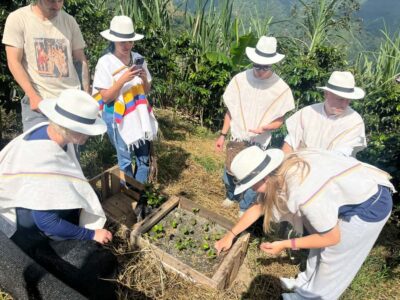
Horseback Riding Coffee Farm Tour with Coffee Spa
Read our review →
Browse the lists this tour appears in