
Reviewed · MEDELLÍN TOURS
Medellin downtown: History and culture through fun stories
Medellín’s downtown tells a surprising story in a short walk. With guide Sebastian Santamaria, you move from the old train station and government buildings to Botero’s oversized bronze figures, two grand palaces, and a terrace with broad city views. The tour uses curious local stories to explain how the city changed.
I like the small group of no more than 10 people, which makes it easier to hear Sebastian and ask questions. I also like the chance to sample everyday Antioquian food, such as empanadas, buñuelos, and arepas, if you choose that option. The main consideration is timing: the tour usually runs in the morning, and three hours of walking in the sun calls for a hat, sunscreen, and comfortable shoes.
Key points to know before you go
- Start at Alpujarra Metro Station: Meet Sebastian by the turnstiles at the north exit, then begin among Medellín’s civic buildings and old rail history.
- See two downtown palaces: The route includes the former Palace of Justice and the Palace of Culture Rafael Uribe Uribe.
- Stand beside Botero’s famous figures: Plaza Botero is an open-air display of large sculptures by Colombia’s best-known artist.
- Choose culture or local food: After the Palace of Culture, you may continue toward Junín Street or stop for traditional snacks and dishes.
- Finish near a useful Metro stop: The walk ends at Parque Berrío Station, a practical place to continue exploring.
- Bring sun protection: Morning conditions can be bright, and sunscreen is specifically recommended.
Medellín’s past begins at Alpujarra
This tour starts at Alpujarra Metro Station, at the north exit near the turnstiles. That makes the meeting point fairly easy to locate if you are using Medellín’s Metro system, though you should pay attention to the exit direction rather than simply arriving at the station and waiting anywhere.
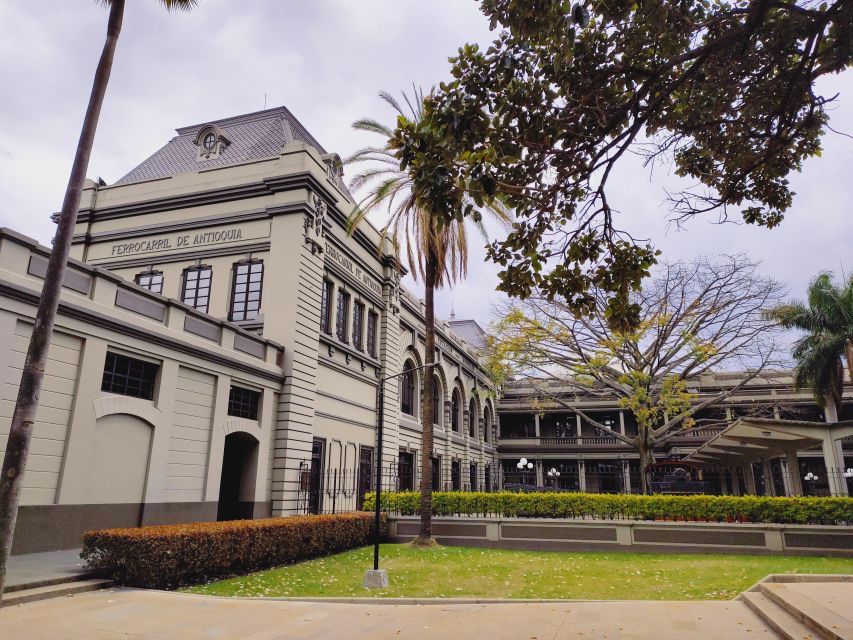
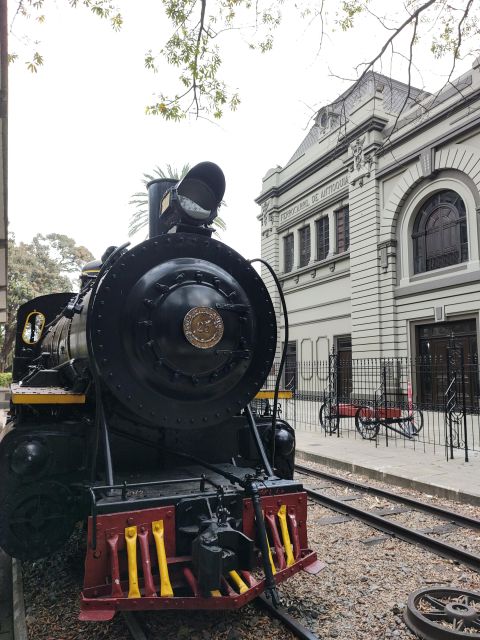
The first part centers on Alpujarra’s civic district. You see the old Train Station, City Hall, and the Administrative Center. These buildings provide a useful opening because the tour is not only about famous statues and photo stops. It begins with the institutions and transport links that helped shape the city.
The former train station is especially interesting. One of the strongest parts of the experience is the attention to the curious details of Medellín’s rail past. If you enjoy places that reveal how a city once moved, traded, and grew, this opening gives the walk more substance than a quick circuit of monuments.
The stop lasts about 45 minutes, so you should expect explanation and sightseeing rather than a brief photo pause. Sebastian’s approach, based on the available details, leans toward stories and unusual facts instead of a dry list of dates. That is a good fit if you want context but do not enjoy formal lectures.
A few more trips around Medellín worth a look
- Medellin: Comuna 13 Graffiti Tour, Cable Car & Street Food
★ 4.8 · 9,046 reviews - Medellín: The Real Pablo Escobar Tour
★ 4.8 · 3,205 reviews - Medellín: Comuna 13 True Story and Street Food Tour
★ 4.9 · 1,779 reviews
Parque de las Luces and the city’s public spaces
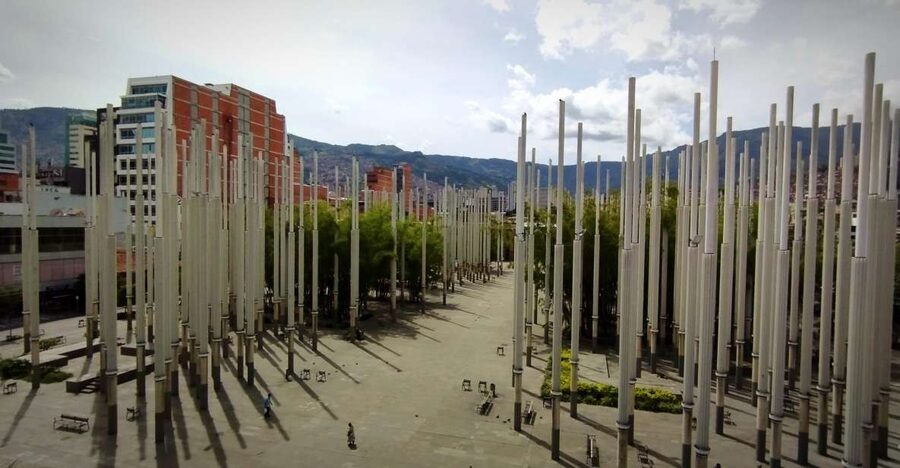
From Alpujarra, the route moves toward Parque de las Luces, also known as Cisneros Square. The square is one of the main public spaces on the walk, and the surrounding activity gives you a feel for central Medellín as a working part of the city, not just a sightseeing zone.
This is a useful place to watch how the downtown route functions. You are walking through an area where transport, government, commerce, and public art meet. Sebastian’s local perspective matters here because a square can look simple until someone explains why it matters to residents and how it fits into the city’s changes.
The downtown streets can be active, so stay close enough to hear the guide. A small group helps, but the walk still takes place in the middle of an operating city. Wear shoes that can handle several hours on pavement, and keep your belongings secure in the ordinary way you would in any busy urban center.
The tour is listed at three hours, with this portion taking roughly 45 minutes. That pace gives you time to ask questions, take photographs, and listen without racing from one site to another.
Carabobo Street and the former Palace of Justice
The route continues along Carabobo Street, a traditional downtown corridor, before reaching the former Palace of Justice. This section adds a more street-level feel to the walk. Instead of moving only between formal plazas, you pass through one of the central routes where Medellín’s daily life is on display.
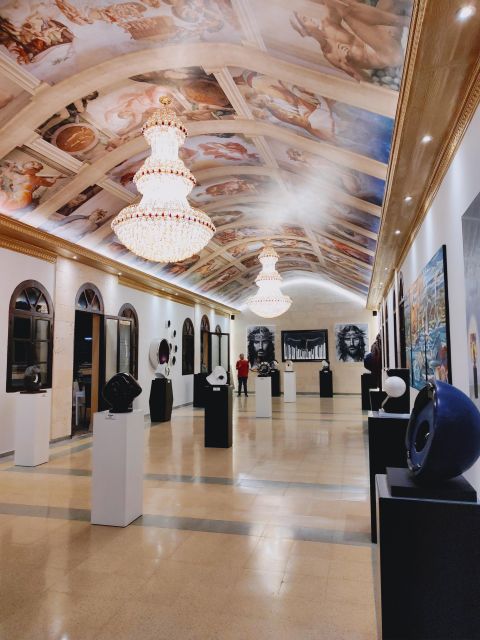
The former Palace of Justice gives the tour one of its two major palace visits. The included entry is a useful value point, since you are not limited to viewing the building from the street. The information provided does not specify how much time is spent inside, so expect the guide to shape the visit according to the group and the day’s conditions.
I like this part because it connects architecture with the city’s civic story. A courthouse is not simply an attractive façade. It reflects how a city presents its institutions and how public buildings become part of local memory.
Still, this is a walking tour, not a specialist architecture tour. If you want floor plans, restoration details, or a long technical discussion of design, you may find the treatment fairly light. The strength here is the connection between the building, the street, and Medellín’s broader story.
Botero Square and Medellín’s most recognizable art
The next major stop is Plaza Botero, home to the largest gallery created by Fernando Botero, Colombia’s most famous artist. The sculptures are displayed outdoors, making this one of the easiest places on the route to appreciate Botero’s playful, exaggerated forms without committing to a long museum visit.
You have about 30 minutes for sightseeing here. That is enough to see the main pieces, take photographs, and hear why Botero’s work matters in Colombia. The open setting also changes the mood of the tour. After civic buildings and legal history, the route becomes more visual and immediately accessible.
If you want to visit the Museum of Antioquia nearby, admission is not included and costs about $6. The museum gives you a chance to spend more time with Botero and other works, but adding it will affect the pace of a three-hour walk. I would ask Sebastian how the group is timing the stop before deciding.
Plaza Botero can be a busy public place. Keep your attention on the guide and your belongings, especially while taking photographs. The tour’s small size helps, but it does not turn downtown into a private museum.
Same city, a different sort of day:
- Medellín: Comuna 13 District Tour with Cable Car Ride
★ 4.8 · 1,467 reviews - Medellin: Coffee Tour with Transport, Snacks and Tastings
★ 4.7 · 1,357 reviews - From Medellín: Paragliding Tour with GoPro Photos & Videos
★ 4.9 · 1,210 reviews - Tour Guatapé
★ 5.0 · 865 reviews
The Palace of Culture and its rooftop views
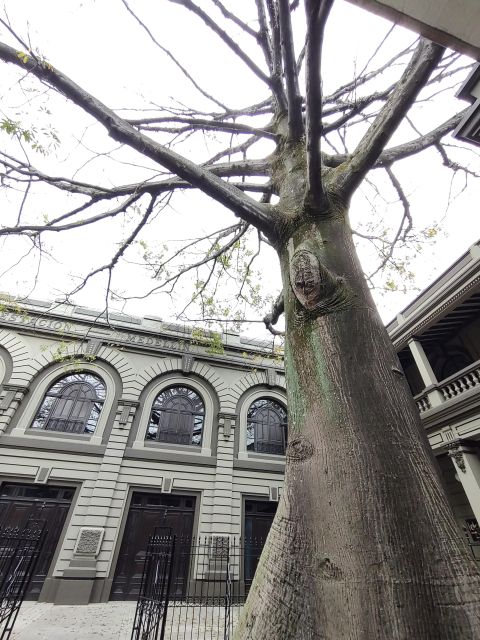
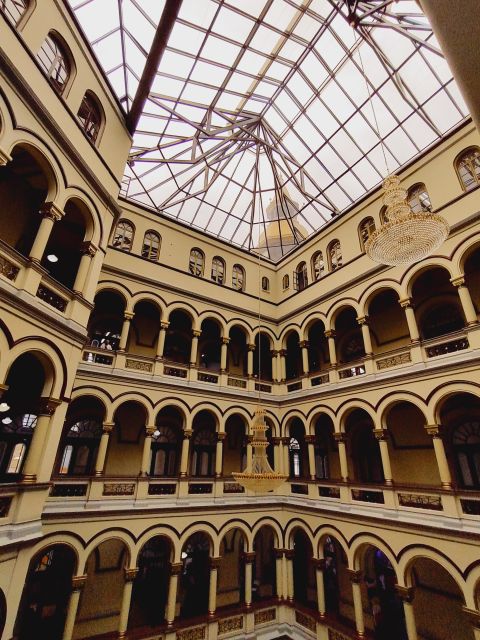
From Plaza Botero, you visit the Palace of Culture Rafael Uribe Uribe. This is the second palace on the route and one of the tour’s strongest photo stops. The building adds a grand architectural note, while the terrace gives you a chance to look across Medellín from above.
The terrace matters because it changes your sense of the city. At street level, the tour focuses on squares, sidewalks, buildings, and people. From the terrace, you can take photographs and see how the central area fits together. The view is not treated as a separate lookout excursion, but it gives the walk a welcome change of scale.
Entry to the palaces is included, which improves the value of a tour priced at $0 per person. You are getting more than a guide-led stroll past locked doors. At the same time, food, metro tickets, and admission to the Museum of Antioquia are separate expenses, so the walk is free rather than an all-inclusive day out.
The no-cost format also calls for a little common sense. One person on the tour chose to share a local lunch with Sebastian and then gave him a tip. That is not presented as a required fee, but it does show how this kind of experience can become more personal when you choose to support the guide or continue the conversation over food.
Junín Street or an Antioquian snack stop
After the Palace of Culture, you have two possible ways to continue. You may walk toward Junín Street, described as the most traditional market street, or stop at traditional restaurants and try local foods.
That choice is one of the most appealing parts of the experience because it lets you match the final section to your interests. Junín Street suits you if you want more urban history, shopping, and street activity. Food suits you if you would rather end with something you can taste and remember.
The foods mentioned include empanadas, buñuelos, and arepas. These are everyday Colombian staples rather than formal restaurant specialties, which makes the stop practical for anyone who wants to understand what people eat during an ordinary day. Food is not included in the price, so bring Colombian pesos or another accepted payment method if you plan to buy something. The exact restaurant and cost are not specified.
Because this choice can affect the route, the final portion may feel less fixed than the named sightseeing stops. That is not necessarily a problem. It gives Sebastian room to respond to the group, but you should ask what is planned if you have a strong preference for Junín Street or food.
A three-hour walk that keeps the group small
The experience lasts three hours and is limited to 10 participants. That is a good middle ground. You get more attention than on a large city tour, but you also have the energy of a small group rather than a private guide.
Sebastian leads in English or Spanish. One English-speaking participant praised his command of English and his ability to make downtown history entertaining. That matters if you want stories rather than a memorized speech, especially during the longer opening stop at Alpujarra.
The walk is generally held in the morning. Medellín’s climate can make sun protection important, so bring sunscreen and a hat. The supplied information also asks you to bring a passport-sized photo. That is an unusual request, so keep one with your travel documents if you book, even though no further reason is given.
Metro tickets are not included. You meet at Alpujarra Station and finish at Parque Berrío Station, so you should budget for your own transit. Ending at a Metro station is convenient because you can continue around Medellín, return to your lodging, or connect with another part of Antioquia.
The activity permits free cancellation up to 24 hours before the start time, and you can reserve now and pay later. Those terms are helpful if your Medellín plans are still shifting, but check the available start times before booking because the schedule is not fixed in the information provided.
How much value does a free walking tour offer?
At $0 per person, the price is easy to like. You receive a bilingual guide, entry to the Train Station and palaces, a planned route through several central landmarks, and a small group. You also get local food suggestions and the chance to ask questions along the way.
The value comes from the guide’s storytelling. Downtown Medellín has plenty of buildings and public art, but without context they can blur into one another. Sebastian’s focus on curious facts, local viewpoints, and the city’s transformation gives the route a clear purpose.
There are still costs to plan for. Metro tickets are extra. The Museum of Antioquia costs about $6 if you add it. Food is separate, and tipping is not stated as mandatory, though you may choose to tip if Sebastian’s time and guidance are useful to you.
The tour is best judged as an introduction, not a complete study of Medellín. It covers several central landmarks in one morning, but it cannot provide long museum visits or detailed coverage of every district. That is a fair trade for a free, compact experience.
Who should book this downtown walk?
I would choose this tour if you are new to Medellín and want a structured first look at the center. It is also a good choice if you prefer local stories to a long lecture, want to see Botero’s public sculptures, and like the idea of finishing with a snack or a traditional street.
It suits solo visitors, couples, and families who can manage three hours on foot. A parent traveling with an older child may find the unusual facts and public art easier to enjoy than a formal museum-heavy tour. One family described the experience as a memorable way to spend time with Sebastian, including a local lunch afterward.
You may want another option if you dislike walking in active downtown areas, need a fully fixed schedule, or want extensive time inside museums. The route is practical and varied, but it is still a city walk under the morning sun.
Should you book it?
Book it if you want an inexpensive, human introduction to Medellín’s center, especially one that combines the old train station, civic buildings, two palaces, Botero Square, and a useful Metro finish. The strongest reasons are Sebastian’s storytelling, the small group, and the chance to add local food or Junín Street at the end.
Skip it if your main goal is a long museum visit, a private itinerary, or a slower architecture study. For most first-time visitors who want to understand how Medellín changed while seeing its central landmarks, this is a smart three-hour starting point. Bring sunscreen, a hat, water, and an open mind about where the final part of the walk may lead.
FAQ
Where does the tour start?
The tour starts at Alpujarra Metro Station. Meet at the north exit, by the turnstiles.
Where does the tour finish?
The activity finishes at Parque Berrío Metro Station.
How long does the experience last?
The walking tour lasts three hours.
What languages does Sebastian speak during the tour?
The live guide offers the experience in English or Spanish.
How large is the group?
The group is limited to 10 participants.
Are metro tickets included?
No. Metro tickets are not included in the activity price.
Is admission to the Museum of Antioquia included?
No. Entry to the Museum of Antioquia costs about $6.
Is food included?
No. Food is not included. You may have the option to try foods such as empanadas, buñuelos, and arepas during the tour.
What should I bring?
Bring sunscreen, a hat, and a passport-sized photo. The tour usually takes place in the morning, and you should also wear comfortable walking shoes.
Just added in Medellín
- City tour, Commune 13, Metro Cable, Botero Park and more. Private★ 5.0 · 34 reviews
- Commune 13, Graffitour street food. History.All inclusive★ 5.0 · 35 reviews
- Aerial Hammocks, Zip and Waterfall Trek on Medellin Private Tour★ 5.0 · 39 reviews
- Barrio transformation and urban escalator of Comuna 13★ 5.0 · 47 reviews
- Walking tour downtown Medellín★ 5.0 · 39 reviews
- Tour to the Hacienda Nápoles Theme Park★ 4.0 · 22 reviews
- Hiking Mountains and Magical Forests★ 5.0 · 27 reviews
- Tour Santa Fe de Antioquia★ 5.0 · 46 reviews
Medellín Tours, compared.
Comuna 13 Graffiti Tour, Cable Car & Street Food
Read our review →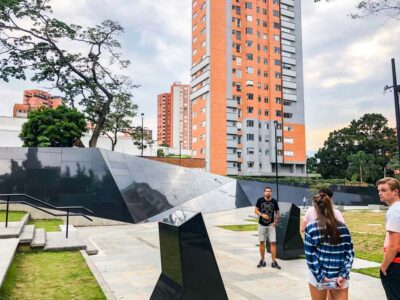
Coffee Tour with Transport, Snacks and Tastings
Read our review →
Browse the lists this tour appears in