
Reviewed · COLOMBIAN CITY TOURS
The “not polite to use his name” City Tour
Medellín’s past is hard to understand without facing the damage caused by Pablo Escobar. This small-group tour takes you to four places tied to his rise and fall, including the site of his former home, the prison he had built for himself, and the cemetery where he is buried. The focus is not hero worship. It is on how violence changed Colombia and the lives of ordinary people.
I like the way the tour connects famous Escobar sites with the wider story of Medellín. I also like the small group, capped at 10 people, and the fact that Daniel brings strong subject knowledge, patience, and an open attitude to questions. The main drawback is that the subject is grim, and some stops are brief, so you should not expect a broad tour of Medellín beyond the Escobar story.
Key points at a glance
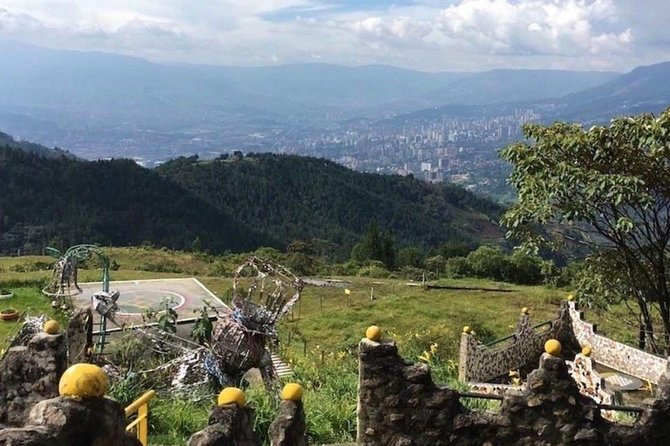
- A memorial replaces Escobar’s former home: Parque Memorial Inflexión uses a place linked to violence to remember the people affected by Colombia’s drug war.
- La Catedral was a prison built to Escobar’s terms: You visit the unusual monastery site for about 45 minutes, with the new entrance fee included.
- Daniel leads in English or Spanish: His clear explanations and friendly manner suit visitors who want to ask direct questions.
- The group stays small: A maximum of 10 people makes it easier to hear the guide and discuss difficult topics.
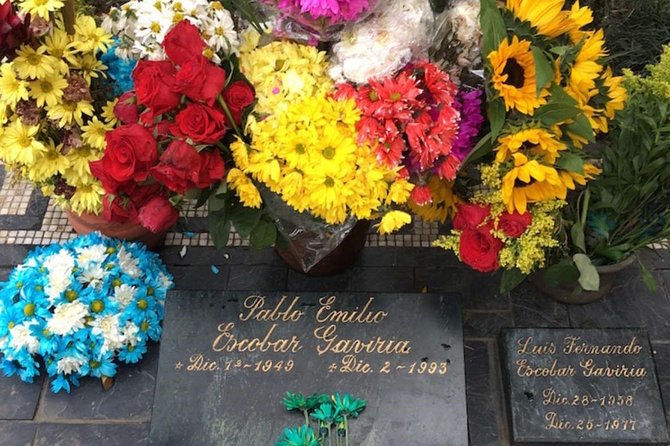
- The cemetery visit adds a personal dimension: Escobar’s grave sits near family members and other gang figures, including Griselda Blanco.
- The $44.99 price covers useful basics: Roundtrip transport from Lleras Park, insurance, and listed entrance fees are included.
A sober look at Medellín’s most difficult chapter
This is not a general city tour with a quick photo stop at a famous name. It is a focused half-day outing about Escobar’s power, public image, private security, and eventual collapse. The four stops work best when taken together.
At the first stop, you see the former location of Escobar’s home and learn how the site was tied to threats against him and his family. Later, you visit the prison he arranged for himself, the soccer field he used for public visibility, and his final resting place. The route moves from fear and political ambition to memory and accountability.
I appreciate that the tour presents Escobar as a destructive force rather than a folk hero. His money built projects and won loyalty in some neighborhoods, but the larger result was violence, intimidation, corruption, and lasting grief. That balance matters in Medellín, where the subject can easily become a glossy crime-show story.
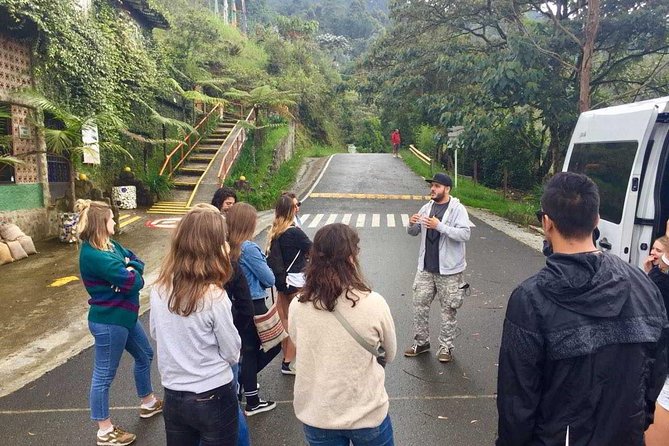
Guide Daniel is an important part of the experience. He leads in English and Spanish, explains the subject with energy, and welcomes questions without making you feel foolish for asking them. For a complicated topic, that friendly approach is useful. You can ask for clarification when names, dates, or events begin to blur together.
More City Tours in Medellín
- Medellín: Private City Tour with Metrocable and Comuna 13
★ 4.9 · 330 reviews - City Tour + Commune 13 Medellin
★ 4.5 · 295 reviews - Medellín City Tour and Comuna 13 Experience
★ 4.4 · 216 reviews
Parque Memorial Inflexión and a changed address
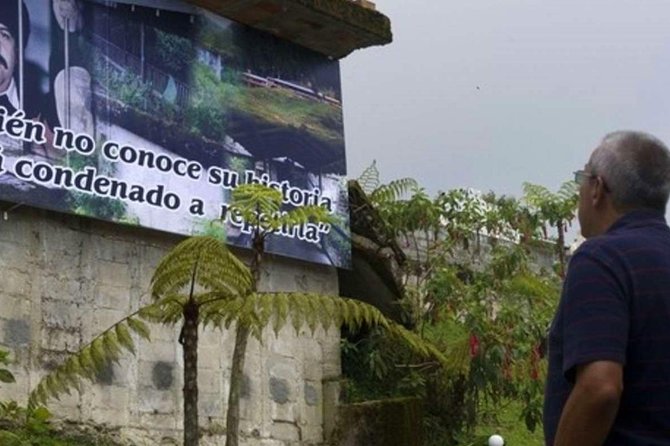
The tour begins at Parque Memorial Inflexión, on the site of Escobar’s former home. The property was associated with the period when he hid his family and feared attacks from enemies. A bomb plot connected to the location helps explain the danger surrounding him, his family, and the people caught in the conflict.
You spend about 20 minutes here, and there is no separate admission charge. The visit is short, but its meaning is large. This is not simply a place where a notorious figure once lived. It has been changed into a memorial park for people affected by Colombia’s drug war.
That change in purpose is one of the tour’s strongest ideas. Instead of preserving a luxury residence as a shrine to criminal wealth, the site points toward public memory. You are asked to think about victims, not just the man whose name drew international attention.
The stop may feel too brief if you want a long discussion of the neighborhood or the architecture. Still, the limited time helps keep the tour moving. You get the setting and the moral frame before heading to the most unusual stop of the day.
La Catedral, a prison designed for its owner
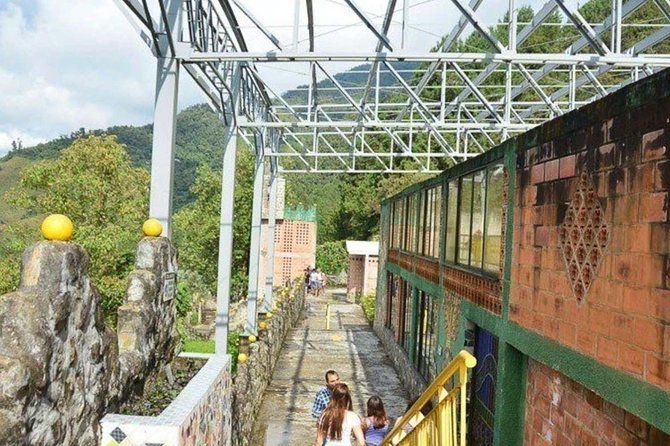
The next visit is to Monasterio Santa Gertrudis La Magna, commonly known as La Catedral in connection with Escobar’s imprisonment. The arrangement was extraordinary: Escobar agreed to surrender under terms that allowed him to stay in a prison built to his own specifications.
You spend about 45 minutes here, the longest stop on the route. The new entrance fee is included, so you do not need to budget an extra admission charge at the site.
La Catedral matters because it shows how money and political influence could bend official systems. A prison is meant to restrict a person’s power. This one became part of Escobar’s power structure. His escape later exposed how weak that arrangement was and helped turn the site into one of the clearest symbols of his reach.
The setting also makes the story easier to grasp than a simple timeline would. You are standing at the place where imprisonment, privilege, and political compromise collided. Daniel’s explanations are especially useful here because the details can sound unbelievable when presented without context.
This stop may be less comfortable than a standard sightseeing visit. The subject includes corruption, violence, and an escape from custody. If you want only beautiful churches or easygoing city views, this is not that kind of outing. If you want to understand how Escobar maintained influence even while supposedly imprisoned, it is central to the tour.
Cancha El Dorado and the public image of power
At Cancha El Dorado, the subject shifts from private security to public performance. Escobar built this soccer field and used it as a place to address local people while trying to move toward Colombian politics.
The visit lasts about 15 minutes, and there is no separate admission fee. That makes it a quick stop, but it adds an important layer to the story. Escobar did not rely only on fear. He also used public works, speeches, and visible generosity to build support and present himself as a man who could help communities.
Soccer carries real social weight in Colombia, so a field was more than a piece of construction. It could serve as a gathering place and a political stage. Seeing the location helps you consider how public goodwill can be built through projects that appear helpful while serving a much larger personal strategy.
The limitation is clear: 15 minutes does not leave much time to explore the site in detail. Treat it as a stop that supports the broader story, not as a major attraction on its own. The value comes from the explanation and the connection to Escobar’s political ambitions.
More sightseeing days in Medellín
- Medellin: Full Day Guided City Highlights Tour
★ 4.8 · 204 reviews - City Tour Medellin with a Chiva or a thematic van
★ 4.5 · 155 reviews - Best Full Day Private Medellin City Tour and Botero´s Plaza
★ 5.0 · 76 reviews - E-Bike City Tour Medellin with Local beer and Snacks
★ 4.9 · 55 reviews
Jardines Montesacro and the end of the route
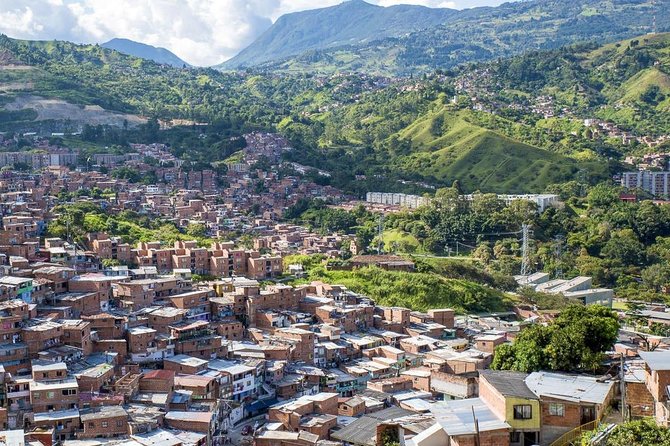
The final stop is Cementerio Jardines Montesacro, where Escobar is buried with members of his family and other people connected to his criminal organization. Griselda Blanco is also buried there.
You spend about 30 minutes at the cemetery, and admission is included. The stop gives the tour a quiet ending after the political and violent events discussed earlier. A grave can reduce a larger-than-life public figure to a name, a date, and a physical place, but the nearby burials also show how family and criminal networks overlap.
I find this part useful because it moves the subject away from legend. Escobar’s name is known worldwide, but a cemetery visit brings the story back to individual lives and consequences. You leave with a clearer sense that the violence affected families, communities, and people who had no role in the drug trade.
The cemetery is also where you may feel the strongest difference between fascination and understanding. A famous grave can attract attention, but the point of this tour is not to celebrate the person buried there. The final message is about the damage his actions caused across Colombia.
What the $44.99 price really covers
The tour costs $44.99 per person. For a 3 to 4 hour experience, that is a reasonable price if you value transport, a bilingual guide, and access to the paid sites without arranging the route yourself.
The included items are practical:
- Roundtrip transportation from Lleras Park
- An English and Spanish-speaking guide
- Entrance to the cemetery
- The new entrance fee at La Catedral
- Insurance
Personal expenses are not included, so plan to pay for anything you choose to buy separately. No other extra costs are specified, which makes the basic price fairly easy to understand.
The value is strongest for someone who wants a focused experience rather than a do-it-yourself route. You could spend time arranging transport between sites and sorting out admissions, but the tour gives you a set route and a guide who can explain why each place matters.
The price does not include a full introduction to Medellín’s neighborhoods, food, museums, or modern urban life. If you want a broad city overview, book a separate city tour. This experience is narrower and more serious by design.
Why the small group and Daniel matter
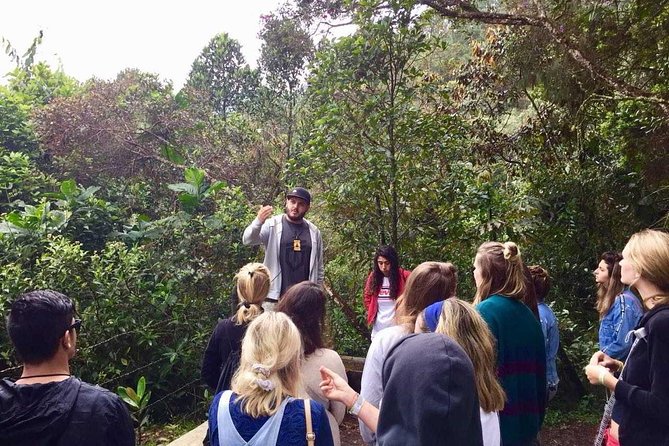
A group limit of 10 people is a real advantage here. The subject brings up questions about politics, violence, public memory, and Escobar’s reputation. A large bus group would make those conversations harder and could turn the experience into a one-way lecture.
Daniel receives especially strong praise for his passion, clear explanations, friendliness, and willingness to handle questions. I would choose this tour in part for that personal element. On a subject filled with names and competing claims, a guide who explains patiently can make the difference between a meaningful visit and a string of confusing stops.
The tour is offered in English or Spanish. That gives you a choice of language when booking, though the supplied details do not specify whether every departure has both languages at once. The important point is that you can receive the tour in either language through the guide service.
The tone also matters. Daniel’s approach is described as realistic and direct, rather than casual or sensational. That fits the subject. You should expect serious storytelling, but you can still ask ordinary questions and seek clarification.
Timing, meeting point, and practical planning
The tour begins and ends at Cl. 9A #37-16 in El Poblado, near Lleras Park. Roundtrip transport from Lleras Park is included, and the experience returns to the same meeting point.
Allow 3 to 4 hours from start to finish. The listed stop times add up to about 110 minutes, with the remaining time used for transport and moving between locations. That is helpful to know if you are planning lunch, a museum visit, or an airport transfer afterward.
The experience is often reserved well ahead of time, with an average booking lead of 33 days. You may not need to book that far out for every date, but the figure suggests that advance planning is sensible, especially if your time in Medellín is limited.
Confirmation arrives when you book. Service animals are allowed, and the tour is near public transportation. Most people can participate, but the information provided does not give detailed notes about walking surfaces, stairs, or restroom access, so ask the provider if you have specific mobility concerns.
Good weather is required. If poor weather cancels the tour, you can receive another date or a full refund. The experience also requires a minimum number of participants, with a different date, another experience, or a full refund offered if that minimum is not met.
Free cancellation is available up to 24 hours before the start time. Inside that window, refunds are not provided and changes are not accepted. I would avoid scheduling this close to a flight or an important connection because the tour can last up to four hours.
Who will get the most from this experience
I would recommend this tour to you if you want a serious look at one of the forces that shaped modern Medellín. It suits first-time visitors who know Escobar mainly from television, history-minded visitors who want specific locations, and anyone who prefers a guide-led route over piecing together transport alone.
It is also a good fit if you want a small group and the option to ask questions. Daniel’s friendly style should help you get more from the complicated parts of the story.
I would be more cautious if your main goal is a relaxed introduction to Medellín. You will not spend the morning sampling food, visiting art spaces, or learning about the city’s present-day neighborhoods. The tour stays close to Escobar and the consequences of his criminal career.
You should also consider how you feel about crime-focused tourism. The memorial and cemetery give the experience a respectful purpose, but the subject remains difficult. Go ready to listen, not simply to collect photographs connected to a famous criminal.
Should you book the not polite to use his name City Tour?
Book it if you want a compact, well-organized account of Escobar’s Medellín, with meaningful sites and a guide who can explain the wider consequences. At $44.99, the included transport, insurance, cemetery admission, and La Catedral entrance fee make the cost fair, especially with a group limited to 10.
Skip it if you want a broad city tour or a light afternoon outing. The subject is dark, some stops are short, and the experience does not pretend that Escobar’s story is harmless entertainment.
For the right audience, this is a useful way to replace television mythology with places, context, and the voices of a city still living with the results.
FAQ
How long does the City Tour take?
The experience lasts approximately 3 to 4 hours.
Where does the tour start and finish?
It starts at Cl. 9A #37-16 in El Poblado, Medellín, near Lleras Park, and ends back at the same meeting point.
Is transportation included?
Yes. Roundtrip transportation from Lleras Park is included.
Is the tour available in English?
Yes. The guide service is available in English and Spanish.
What is included in the tour price?
The price includes roundtrip transportation, the guide, insurance, entrance to the cemetery, and the new entrance fee for La Catedral.
Can I cancel for a refund?
Yes. You can cancel up to 24 hours before the start time for a full refund. Cancellations or changes made less than 24 hours before the tour are not refunded or accepted.
Just added in Medellín
- City tour, Commune 13, Metro Cable, Botero Park and more. Private★ 5.0 · 34 reviews
- Aerial Hammocks, Zip and Waterfall Trek on Medellin Private Tour★ 5.0 · 39 reviews
- Commune 13, Graffitour street food. History.All inclusive★ 5.0 · 35 reviews
- Barrio transformation and urban escalator of Comuna 13★ 5.0 · 47 reviews
- Walking tour downtown Medellín★ 5.0 · 39 reviews
- Tour to the Hacienda Nápoles Theme Park★ 4.0 · 22 reviews
- Hiking Mountains and Magical Forests★ 5.0 · 27 reviews
- Tour Santa Fe de Antioquia★ 5.0 · 46 reviews
Colombian City Tours, compared.
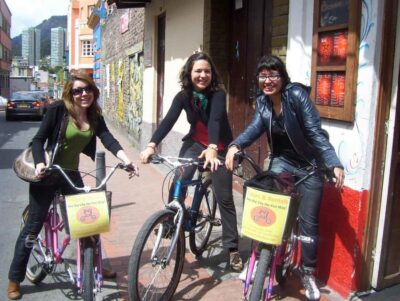
Private City Tour, Monserrate, Emerald and Botero
Read our review →
Bogotá City Tour with Monserrate, Gold and Botero Museums
Read our review →
Private City Tour with Metrocable and Comuna 13
Read our review →
3-in-1 Panoramic city tour Bogotá-beyond the traditional
Read our review →
Browse the lists this tour appears in