
Reviewed · SAN FELIPE CASTLE & WALLED CITY TOURS
Tour Compartido al Castillo San Felipe de Barajas Cartagena
Cartagena’s story comes into sharp focus when you walk from rebellious Getsemaní to the massive San Felipe de Barajas fortress. The route links street politics, Afro-Colombian culture, military strategy, and one of the city’s best views. At the castle, its narrow tunnels show how sound itself became a weapon.
I like the people-to-fortress route, which gives San Felipe a human setting instead of treating it as an isolated pile of stone. I also like the Spanish guides, especially the strong reports about Ronaldo, Luis Carlos, Luis Fernando, and John Serrato. Their storytelling and historical detail are a big part of the value.
The main consideration is physical: this is a roughly 7-kilometer walk in Cartagena’s heat, with the castle entrance costing an extra 33,000 COP. Children under 10, wheelchair users, and people over 70 may find the tour unsuitable.
Key points at a glance
- Plaza de la Trinidad: Begin in the social heart of Getsemaní, where local life, music, murals, and independence stories meet.
- A walk with a clear purpose: Follow the route from the neighborhood associated with rebellion to the fortress that guarded Cartagena.
- San Felipe’s acoustic tunnels: Learn how soldiers used hidden passages to hear movement above them without being heard.
- A useful chocolate stop: Visit the Chocolate Museum for photos and a tasting during the walk.
- Spanish-speaking guides: Ronaldo, Luis Carlos, Luis Fernando, and John Serrato are among the guides praised for clear explanations and warm personalities.
- Extra costs and effort: The tour costs $12 per person, but the castle ticket is separate, and you should expect heat, stairs, and several hours on foot.
Why the Getsemaní to San Felipe route works
Many Cartagena tours treat the old city and San Felipe Castle as separate sights. This one makes a stronger connection. You begin in Getsemaní, the neighborhood outside the old walls, and finish at the hilltop fortress that helped protect the city from attack.
That route gives you a useful question to carry through the morning: who had power in Cartagena, and who had to fight for it? In Getsemaní, the focus is on sailors, artisans, freed Afro-descendants, and rebels. At San Felipe, the focus shifts to soldiers, walls, cannons, tunnels, and the Spanish defense of a valuable port.
I like that change of scale. You start with streets and people, then move toward military engineering. By the time you reach the fortress, its thick walls mean more than they did at the beginning of the walk.
The tour lasts 150 minutes, but the advertised walk is about 7 km. That means the pace includes several pauses for explanation, photos, and rest. You are not simply marching from one sight to the next, but you should still wear proper walking shoes and bring water.
More walled city and castle tours in Cartagena
- Cartagena: Historic Center and Getsemaní Shared Walking Tour
★ 4.9 · 2,716 reviews - Cartagena: Guided Tour, with La Popa Convent, and San Felipe
★ 4.4 · 599 reviews - Cartagena: BILINGUAL CITYTOUR + SAN FELIPE CASTLE & Old city
★ 4.2 · 387 reviews
Starting at Plaza de la Trinidad
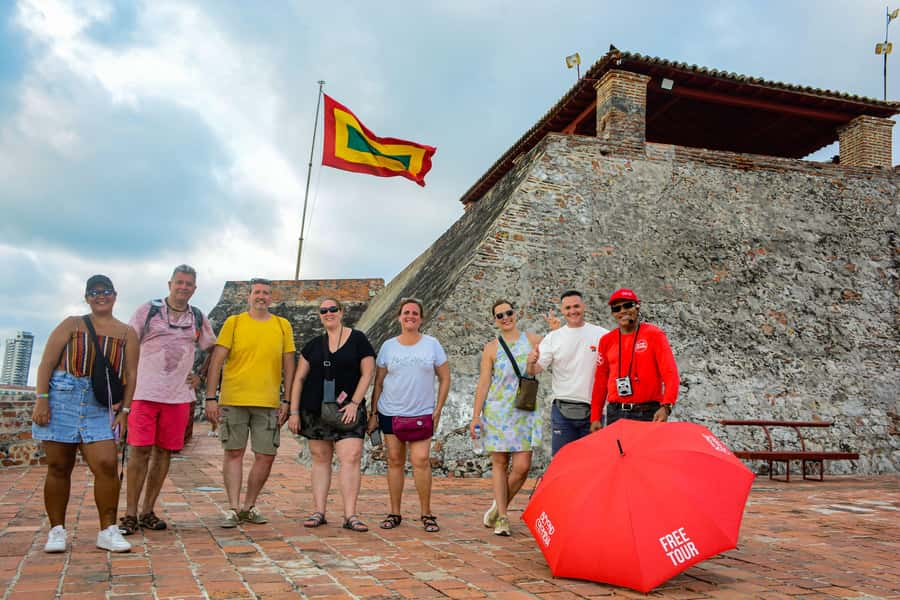
Meet the guides beneath their red umbrellas at Plaza de la Trinidad in Getsemaní. This is an easy place to recognize, and it gives you an immediate sense of the neighborhood’s public life.
The square is more than a starting point. It is presented as the social center of Getsemaní, a place where local activity, music, and street culture help explain the area’s identity. The guide uses the plaza to explain how Getsemaní became a center of resistance while Spanish elites lived within the safer protection of Cartagena’s walls.
This is where the tour’s social history begins. You learn why inequality helped fuel rebellion and how the neighborhood became linked to the independence movement. The focus is not only on famous military figures. It is also on ordinary residents and communities whose work and resistance changed the city.
Look closely at the murals and cultural symbols as you walk. The tour connects these modern public expressions with older stories of freedom, struggle, and community. I find this part especially useful because it keeps the history from becoming a list of dates and battles.
Guides can make a real difference here. Ronaldo has been praised for combining solid historical information with humor and anecdotes. Luis Carlos is noted for clear explanations, while Luis Fernando has impressed visitors with his command of Cartagena’s story. John Serrato is described as warm and helpful. Since this is a shared tour, your exact guide will vary, but these names give you an idea of the experience the company aims to provide.
Walking through Getsemaní’s stories of resistance
From Plaza de la Trinidad, you continue through Getsemaní toward the castle. This section is not just a transfer between attractions. It explains why the neighborhood matters to the identity of Cartagena.
You will hear about the area’s sailors, artisans, freed Afro-descendants, and rebels. The guide also links music and street life to resistance. That approach gives you a better sense of how independence was shaped outside official buildings and military headquarters.
The neighborhood’s story is tied to the tension between the protected colonial center and the communities living beyond it. Getsemaní was close to the walls but socially distinct. Its residents helped turn that position into a source of influence.
The walking route also gives you a chance to notice Cartagena as a living city. You are not only looking at preserved monuments. You are passing through streets where local culture remains visible in public art, neighborhood life, and gathering places.
The drawback is that Cartagena’s heat can make even a moderate route feel demanding. The tour includes rest stops, but do not treat the 7 km estimate casually. Wear light clothing, carry water, and keep your belongings close in crowded areas. The tour specifically warns you to watch your friends and possessions, a sensible point in any busy urban setting.
The chocolate museum stop
The Chocolate Museum provides a short break along the route. You can stop for photos and a tasting, adding a small food experience to a tour otherwise focused on politics, architecture, and warfare.
This is a useful pause because it breaks up the walk and gives you something sensory to remember. It also offers a chance to rest before the longer approach to San Felipe. The supplied information does not specify the tasting menu or how long the stop lasts, so think of it as a brief included visit rather than a full food tour.
If you want a substantial snack, bring one. One person specifically advised carrying an extra bite to help get through the tour. That is practical advice, especially if you are walking in the midday heat or have not eaten before meeting the group.
A few more trips around Cartagena worth a look
- Cartagena: Rosario Islands Catamaran with Lunch and Snorkel
★ 4.5 · 2,479 reviews - Full-Day Rosario Islands Including Barú, Bocachica & Playa Blanca
★ 4.0 · 1,729 reviews - Cartagena de Indias: 2-Hour Sunset Cruise
★ 4.7 · 1,105 reviews - 2-hour tour in Cartagena Sunset View in party boat
★ 4.6 · 899 reviews
Crossing toward San Felipe de Barajas
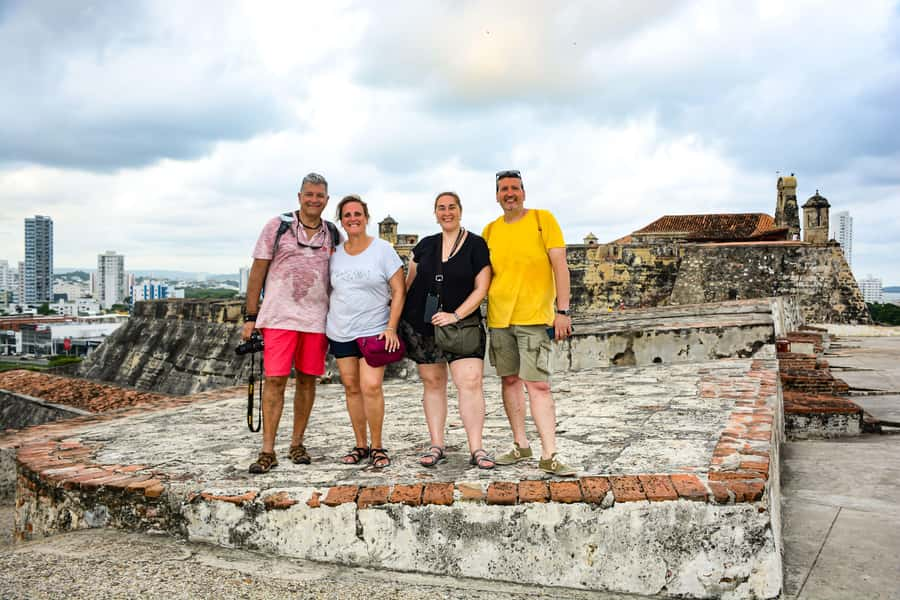
The route continues toward the fortress, including the Pedro Heredia Bridge. This part of the walk helps you understand the castle’s position in relation to the city.
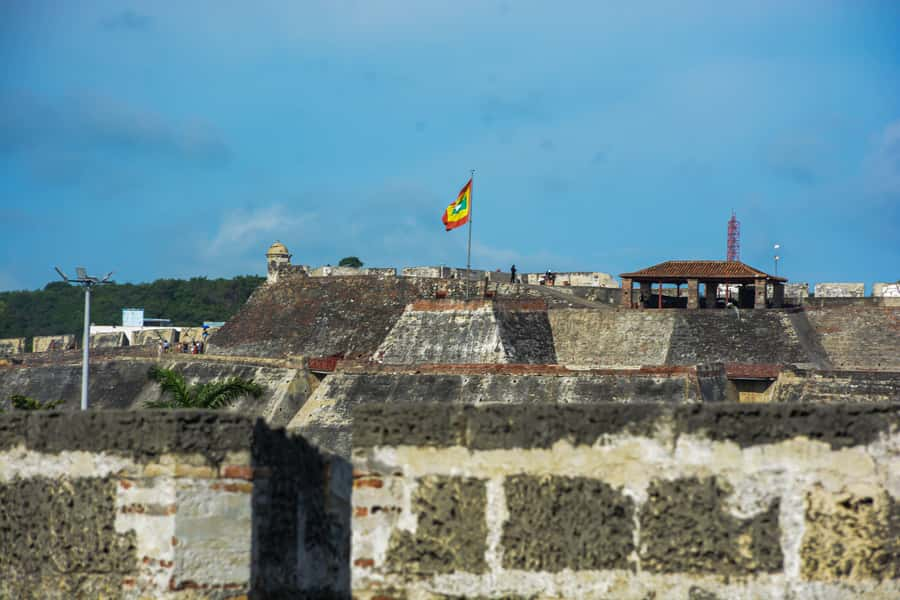
San Felipe was built on the Hill of San Lázaro, a key vantage point for controlling Cartagena. From this height, the fortress could help protect the city and watch approaches from outside the old walls. The location was not chosen for appearance. It was chosen because control of the hill mattered.
The guide connects the hill to the larger question of why Cartagena was so heavily defended. The city was one of the most desired ports in the New World, making it a target for pirates and foreign empires. Its wealth and position demanded a serious military response.
I like this part because you approach the castle with a reason for its location. The fortress is not simply an impressive structure placed on a hill. Its position explains much of its power.
You should also keep your expectations clear about transport. This is a walking tour. There is no hotel pickup, no vehicle during the route, and no ride back after the visit. You finish at the castle, so plan your next movement from there.
Entering the fortress on San Lázaro Hill
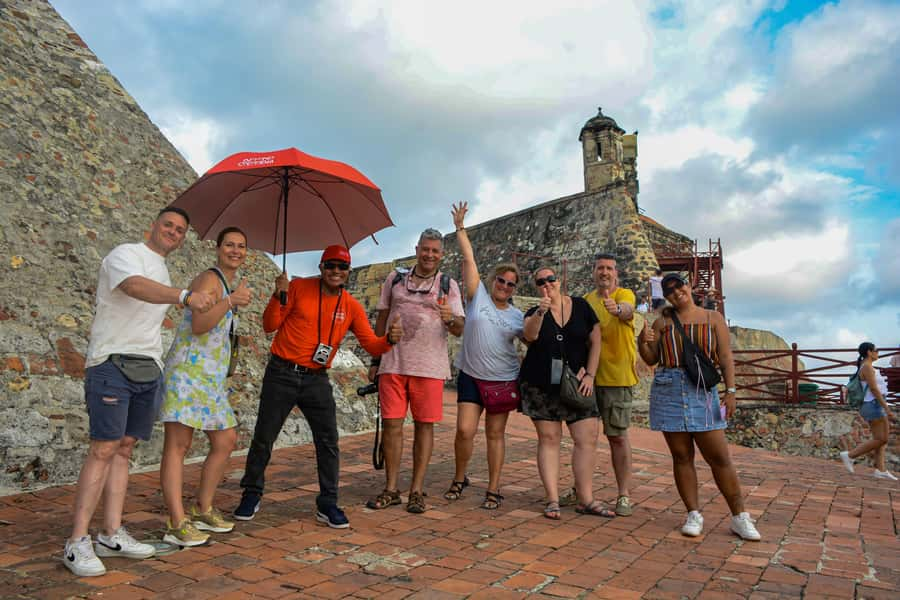
At the castle entrance, each person buys an admission ticket independently at the official booth or online. The separate admission costs 33,000 COP per person. This is important when comparing the $12 tour price with the actual cost of the morning.
The tour fee covers the Spanish guide, the organized walk, the chocolate museum stop, and local recommendations. It does not cover the fortress itself, food, drinks, souvenirs, or hotel transport. Even with the added ticket, the price is reasonable if you want context rather than only access to the monument.
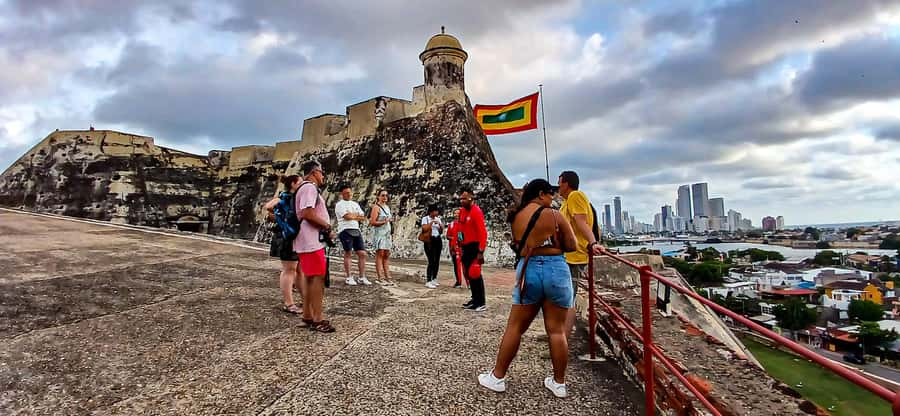
San Felipe de Barajas is Cartagena’s largest fortress and its main military stronghold. Its scale becomes easier to appreciate as you approach on foot. You have just heard how the neighborhood outside the walls contributed to rebellion, and now you arrive at the structure built to hold back armies.
The guide explains why the fortress was considered extremely difficult to capture. The tour includes the famous 1741 battle in which a Spanish force of about 3,000 defeated more than 25,000 British soldiers. That episode gives the fortification a clear historical test: these defenses were not only impressive on paper. They helped Cartagena survive a major attack.
The story also includes Blas de Lezo, the Spanish commander whose courage became part of Cartagena’s identity as La Heroica. The tour uses his role to connect individual leadership with the fortress’s larger military system.
Hearing the enemy in the fortress tunnels
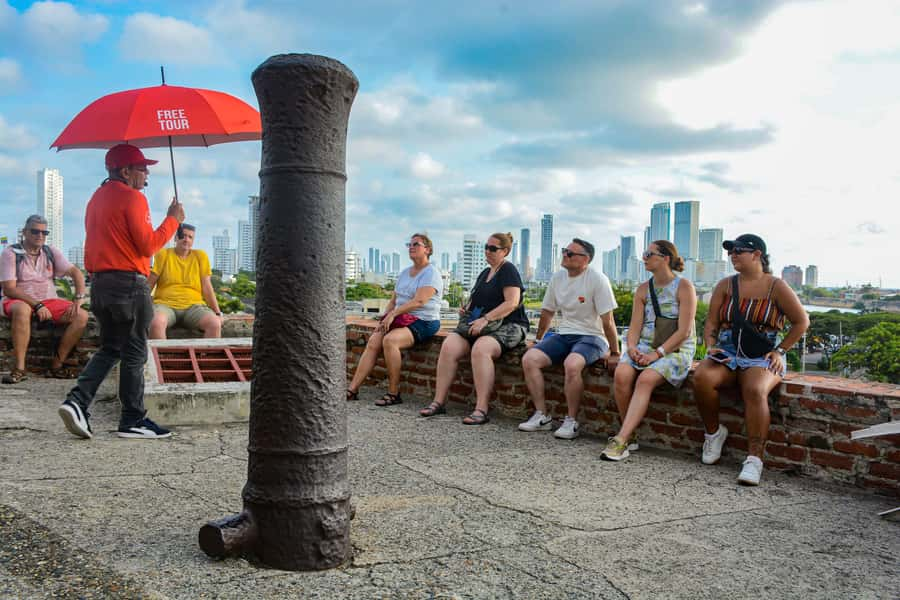
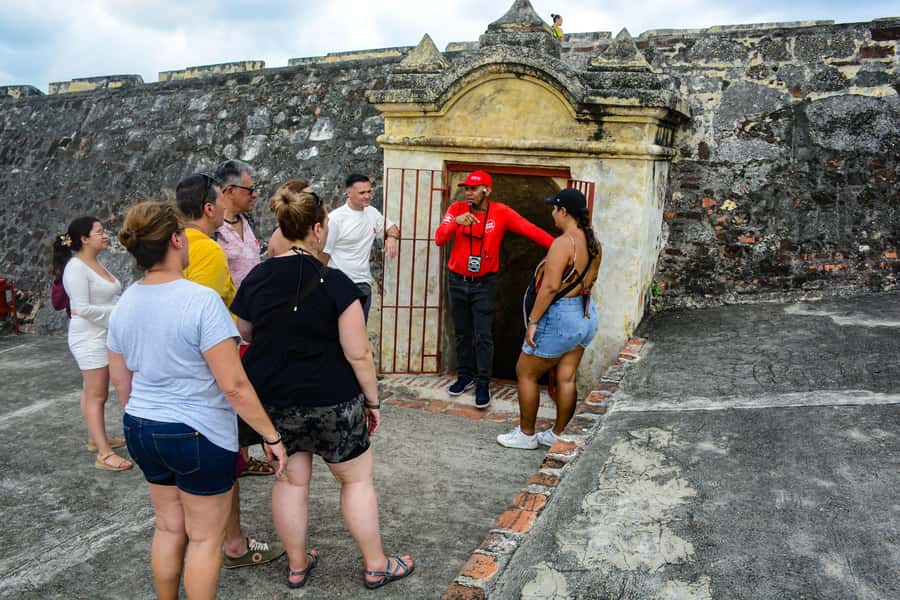
The tunnels are one of the most memorable parts of the visit. San Felipe contains a system of acoustic passages designed to help soldiers detect movement above them. Defenders could hear enemies walking overhead, while those enemies could not easily hear what waited inside.
That detail turns the fortress into more than a wall with a view. Its designers used darkness, sound, space, and confusion as tools. You can better understand the pressure of an attack when you imagine soldiers moving through passages without knowing who was listening.
The tunnels also show why a guided visit is useful. Without explanation, a passage may look like a narrow corridor. With the military purpose explained, the same corridor becomes part of a carefully planned defense system.
Bring comfortable shoes. The tour information does not promise a flat route, and a fortress built on a hill naturally involves walking and changes in level. The group takes rest stops, but you should still be ready for a physical visit rather than a quick photo stop.
Audio recording is not allowed, and alcohol and drugs are prohibited. A notebook or your own attention will have to do the work. That is not a bad trade here, since the sound-based design is best understood while you are standing in the actual passages.
The view from Cartagena’s strongest defense
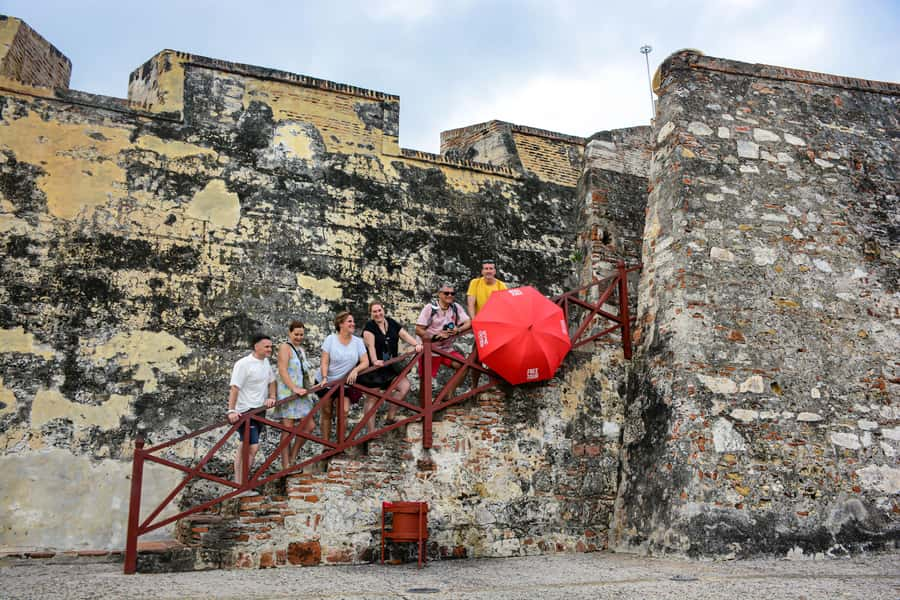
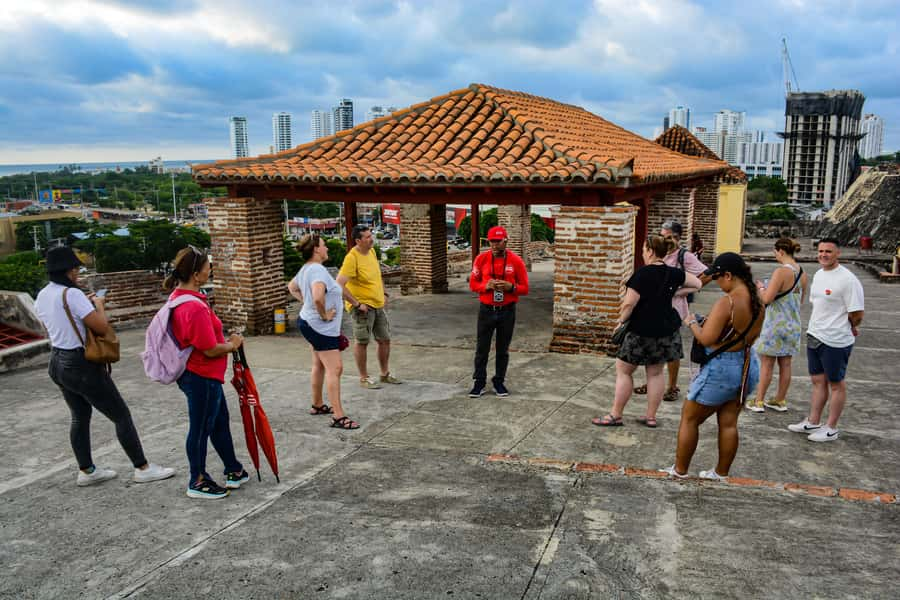
The Hill of San Lázaro provides one of the tour’s best views. From the fortress, you can look across Cartagena and see why the height mattered to the city’s defenders.
The view also gives the tour a calm finish after the darker stories of attack and resistance. You have moved from the tight social space of Plaza de la Trinidad, through Getsemaní’s streets, and into a fortress designed to control the city. The panorama lets you connect those places at a glance.
This is a good time for photographs, but remember that the visit is still part of a guided group. The exact amount of free time is not specified, so listen for the guide’s instructions and avoid wandering away from the group.
The castle’s large walls and elevated position can make the final stop feel grand. Yet the most useful lesson is not simply that Cartagena had a big fortress. It is that the city’s defense depended on geography, engineering, troops, local communities, and political will working together.
What the $12 price really includes
At $12 per person, this is a low-cost way to combine two major parts of Cartagena: Getsemaní and San Felipe. The value is strongest if you want a Spanish-speaking guide to explain the link between them.
You are paying for more than a route map. The guide provides historical interpretation, a safe walk from Getsemaní to the castle, a chocolate museum stop, and local suggestions for lunch, coffee, souvenirs, and other places. Participants also receive a Free Tour Map Cartagena with possible discounts from recommended local partners.
The separate 33,000 COP entrance fee keeps the advertised price low, but you need to add it to your budget. Food, drinks, and transport are also extra. If you want a private guide, this is not the right product. It is a shared group walk, which can be a good way to meet people but gives you less control over pace and questions.
The rating of 4.3 from 18 ratings suggests a generally positive experience with some room for variation. The strongest pattern is the praise for the guides’ clarity, historical detail, and friendly manner. That is the feature I would place most weight on when deciding.
Who should book this walk
I would recommend it to you if you want a first look at Cartagena’s history through both community life and military architecture. It suits adults and older children who can manage a long walk, warm weather, and the physical demands of a hilltop fortress.
It is especially useful if you have limited time and want Getsemaní plus San Felipe in one outing. The route has a clear story, so you do not need to know much about Cartagena before arriving.
You may prefer a different plan if you want a relaxed castle visit, a private guide, English commentary, or hotel transportation. This tour is Spanish only, shared with other people, and ends at the castle. It also excludes the admission fee.
Bring:
- Comfortable walking shoes
- Water or another preferred drink
- Light, comfortable clothing
- A small snack if you need food between meals
- Close attention to your belongings in crowded areas
Children under 10 are not accepted. The experience is also not suitable for wheelchair users or people over 70, according to the tour conditions.
Cancellation is free up to 24 hours before the start, and you can reserve now and pay later. Starting times vary, so check availability when choosing your date.
Should you book the Getsemaní to San Felipe tour?
Book it if you want history with a route behind it. The best feature is the connection between Getsemaní’s resistance and San Felipe’s defense. You will not only see a famous fortress. You will understand why it was built where it was and how the city’s social and military stories fit together.
The strongest guides appear to be the ones who explain clearly and add personal warmth, with Ronaldo, Luis Carlos, Luis Fernando, and John Serrato receiving particularly strong praise. Your guide may be someone else, but Spanish fluency and local historical detail are central to the experience.
Skip it if you need an easy outing, wheelchair access, English, or private pacing. Also remember the extra castle fee and the 7 km walk. For a fit visitor who wants an affordable, story-driven introduction to Cartagena, this is a sensible choice.
FAQ
How long does the tour last?
The tour lasts 150 minutes, or two and a half hours.
Where does the tour begin?
It begins at Plaza de la Trinidad in Getsemaní. Look for the guides with red umbrellas.
Where does the tour finish?
The tour finishes at Castillo San Felipe de Barajas.
Is the castle entrance included?
No. You buy the castle ticket separately at the official ticket booth or online. The stated price is 33,000 COP per person.
What language is the tour in?
The live tour guide speaks Spanish.
How far do you walk?
The tour information says you will walk about 7 km, with several stops to listen to the guide and rest.
Is transportation included?
No. The tour is on foot. Hotel transport and transport during the tour are not included.
Who is the tour not suitable for?
It is not suitable for children under 10, wheelchair users, or people over 70.
Just added in Cartagena
- Exotic Yacht – Tour through the bay of Cartagena★ 3.7 · 4 reviews
- Volcan del Totumo + Playa + Piscina★ 4.7 · 4 reviews
- White Night Boat Party: Dinner Buffet, Dancing and Open Bar★ 4.6 · 3 reviews
- Enjoy the totumo volcano from cartagena + snack★ 4.0 · 11 reviews
- 5 islands tour to rosario Islands with snorkeling activity!★ 4.5 · 36 reviews
- Totumo volcano tour + snack★ 4.5 · 44 reviews
- Rosario Islands Trip visiting Cholon, Playa Blanca and Snorkel★ 4.5 · 33 reviews
- Romantic Date Night in the Bay of Cartagena★ 5.0 · 47 reviews
San Felipe Castle & Walled City Tours, compared.
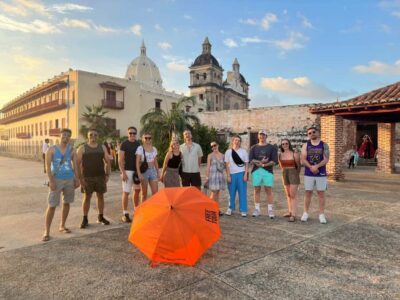
Historic Center and Getsemaní Shared Walking Tour
Read our review →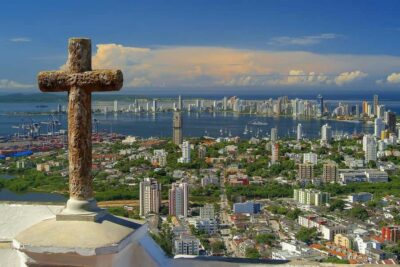
Guided Tour, with La Popa Convent, and San Felipe
Read our review →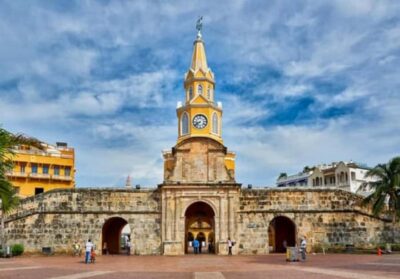
BILINGUAL CITYTOUR + SAN FELIPE CASTLE & Old city
Read our review →
Walled City, Getsemani San Felipe Castle Cartagena City Tour
Read our review →
Cartagena Highlights: San Felipe, Popa & Coffee Experience
Read our review →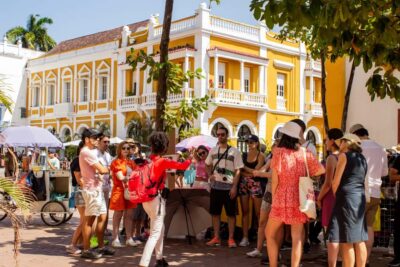
Shared Cartagena Old City Tour with Wireless Audio System
Read our review →Browse the lists this tour appears in