
Reviewed · COLOMBIA
TOUR DE 2 DIAS AL CABO DE LA VELA, LA GUAJIRA
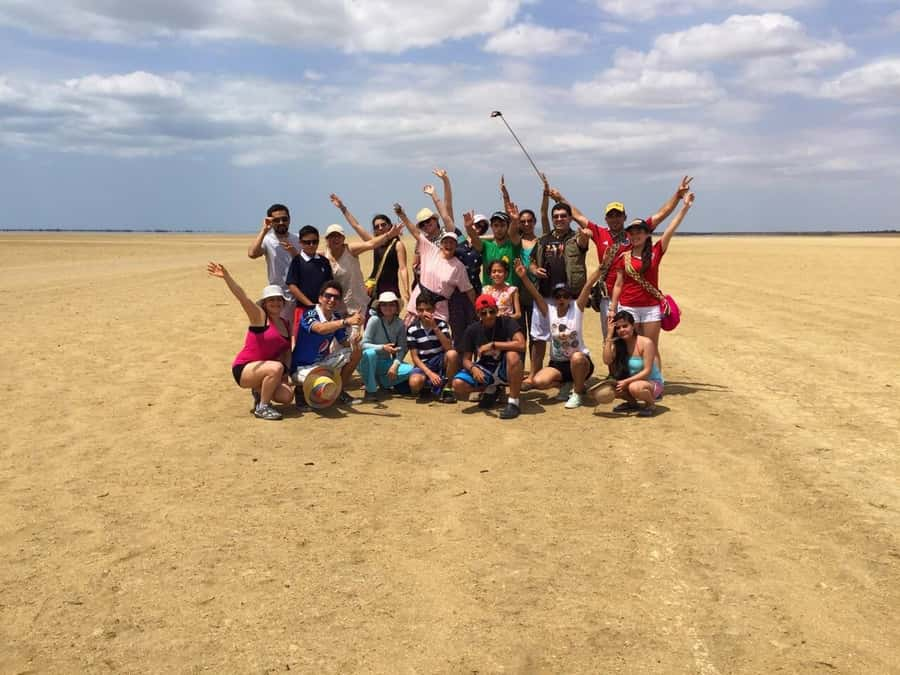
Cabo de la Vela is where the Guajira desert meets the Caribbean Sea, and getting there is part of the story. This 36-hour trip takes you from Santa Marta through Palomino, Riohacha, and Uribia to a remote Wayuu ranchería, with sandy tracks, broad desert views, and a night beside the water.
I like two things right away: the direct contact with Wayuu culture and the fact that the trip includes transport, meals, accommodation, insurance, and a guide. I also like the route’s wild character. This is not a quick beach excursion from Santa Marta.
The trade-off is the road and the operating standards. A long stretch runs on sandy tracks, and one account describes a private car, unsafe driving, and pressure to pay for an extra stop. I would confirm the vehicle, guide, and operator details before paying.
Key points at a glance
- Remote Cabo de la Vela: Reach a desert and sea setting far from the main tourist circuit.
- Wayuu ranchería stay: Spend one night in indigenous accommodation facing the Caribbean.
- Two-day route: Travel through Palomino, Riohacha, Uribia, Cabo de la Vela, and Manaure.
- Meals and insurance included: The price covers two days of food, transport, one night, and travel insurance.
- Spanish-speaking private tour: Pickup is available from hotels in Santa Marta, Rodadero, and Bello Horizonte.
- Basic, demanding travel: Expect a long ride, sandy roads, heat, dust, and the need for cash and spare clothes.
From Santa Marta toward La Guajira
Pickup begins at your hotel in Santa Marta, Rodadero, or Bello Horizonte. You need to wait in the lobby 10 minutes before departure, since the guide will call you or ask for you at reception.
The first part heads east toward Palomino. If the sky is clear, you may see the Colón and Bolívar peaks of the Sierra Nevada de Santa Marta. These are striking mountains rising behind the Caribbean coast, and they give you an early sense of how quickly the region changes from tropical shoreline to dry desert.
A typical coastal breakfast is offered along the way. The information does not specify the exact menu, so do not assume a particular dish. The useful point is that food begins early, which matters on a long road day with several hours ahead.
From Palomino, the route continues toward Riohacha. You are not simply being driven to one attraction. The trip links several parts of northern Colombia, and the changing scenery is one of its better features. Still, this is a long transfer, not a relaxed morning outing. If you dislike extended car rides, the 36-hour schedule may feel demanding.
A few more trips around Colombia worth a look
- Medellin: Comuna 13 Graffiti Tour, Cable Car & Street Food
★ 4.8 · 9,046 reviews - Medellín: The Real Pablo Escobar Tour
★ 4.8 · 3,205 reviews - Cartagena: Historic Center and Getsemaní Shared Walking Tour
★ 4.9 · 2,716 reviews
Riohacha and Uribia, the gateway to the desert
Riohacha marks the end of the first coastal stretch before the route turns farther into La Guajira. You then make a supply stop in Uribia, described as the indigenous capital of Colombia.
This stop has practical value. Cabo de la Vela is remote, and getting supplies beforehand makes sense. Bring your own cash as well, since cash is specifically recommended and the tour does not promise card payment facilities.
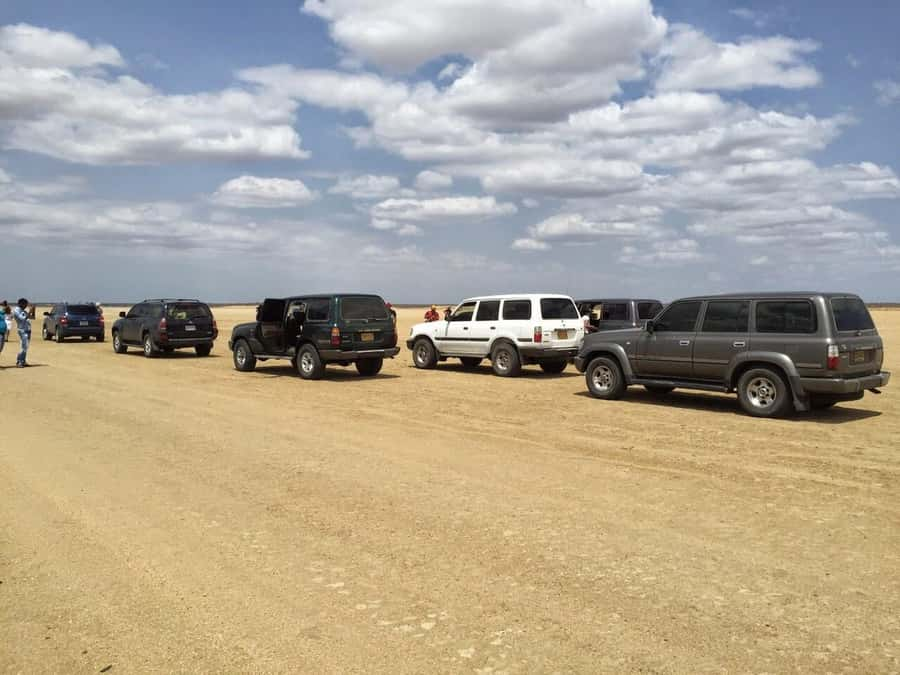
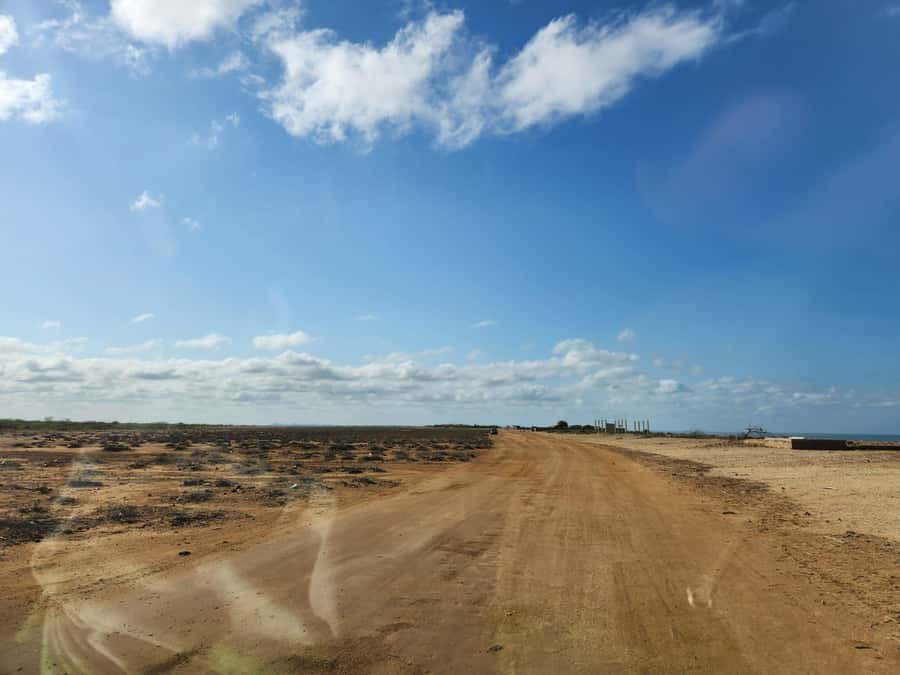
Uribia is also an important transition point. After it, the journey becomes more clearly tied to the desert and Wayuu territory. The road conditions can be rough, and the sandy track is not just a short final approach. One account describes many kilometers of sand before reaching the destination.
That detail should shape your expectations. You may get dust, bumps, heat, and a slower pace. Wear clothes that can get dirty and bring closed-toe shoes. Pack a change of clothes, especially if you want to feel comfortable at dinner or the next morning.
Lunch at a Wayuu ranchería
Around midday, lunch is planned at a selected typical Wayuu ranchería. The meal is part of the two-day food package, along with breakfast and other meals included during the trip.
The value here is not only convenience. Eating in a ranchería gives the route a cultural center rather than making it a simple list of viewpoints. You are entering a living community connected to the Wayuu people, the largest indigenous group in Colombia according to the tour information.
Keep your approach respectful. This is someone’s home and community, not a staged theme park. Ask before photographing people, pay attention to your guide, and treat the ranchería as a place to meet people and learn, not just a backdrop for desert pictures.
The description does not name the ranchería, hosts, or individual guide. The live guide language is Spanish, so basic Spanish will help you understand explanations and communicate politely. If you speak only English, confirm in advance how much interpretation will be available. One account describes a driver-guide who spoke very little English.
The Sugar Pylon and Virgin’s Beach
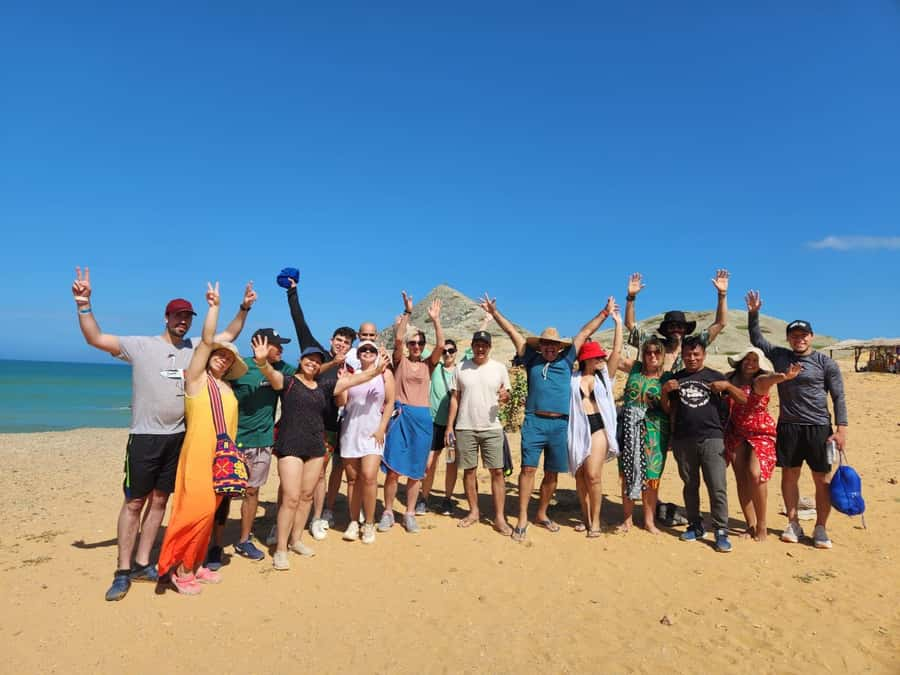
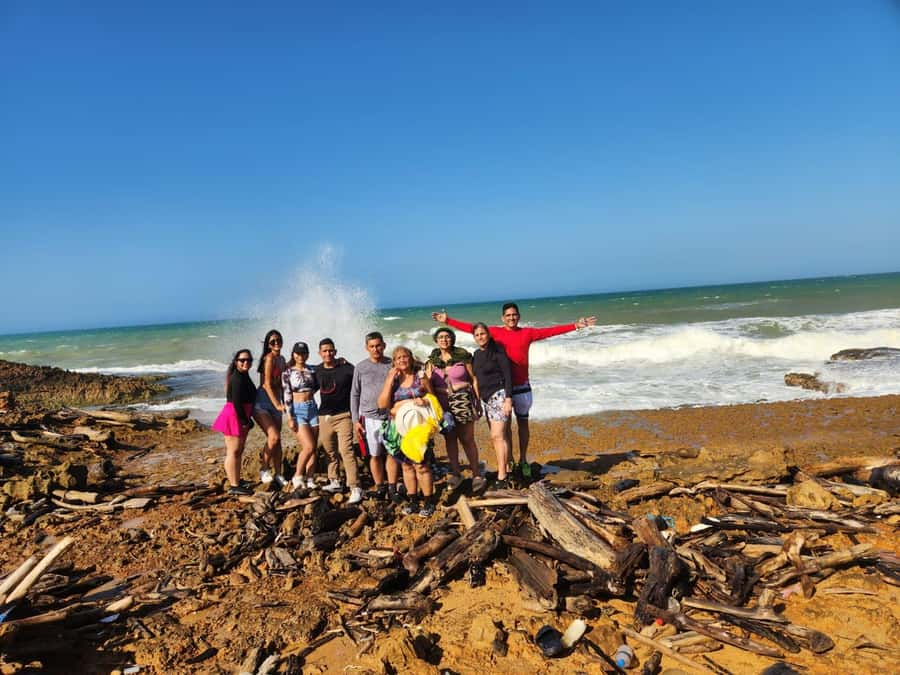
After lunch, the route visits several Cabo de la Vela attractions, including the Sugar Pylon and Virgin’s Beach. These stops show the area’s unusual mix of dry earth, open sky, and Caribbean water.
The Sugar Pylon is associated with a high coastal viewpoint, so you can expect a broad view over the desert and sea. Virgin’s Beach offers a different mood, with the water providing a cooler contrast to the dry surroundings. Exact facilities and swimming conditions are not specified, so do not plan around showers, changing rooms, or a fully equipped beach base.
This part of the trip is best for people who enjoy simple natural settings. You are not coming for polished infrastructure. The appeal is the stark combination of sand, rock, sea, and Wayuu territory. The more remote setting is also the reason the ride takes time and can feel physically tiring.
Pack lightly but sensibly. Closed-toe shoes are recommended, and clothes that can get dirty are more useful than fashionable beachwear. Cash is also on the official packing list. Sunscreen, water, and a hat would be sensible additions, although only the first four items are specifically requested in the tour information.
Same city, a different sort of day:
- Cartagena: Rosario Islands Catamaran with Lunch and Snorkel
★ 4.5 · 2,479 reviews - Bogota: Bicycle City Tour
★ 4.9 · 2,156 reviews - Medellín: Comuna 13 True Story and Street Food Tour
★ 4.9 · 1,779 reviews - Full-Day Rosario Islands Including Barú, Bocachica & Playa Blanca
★ 4.0 · 1,729 reviews
Sunset at the lighthouse and dinner by the sea
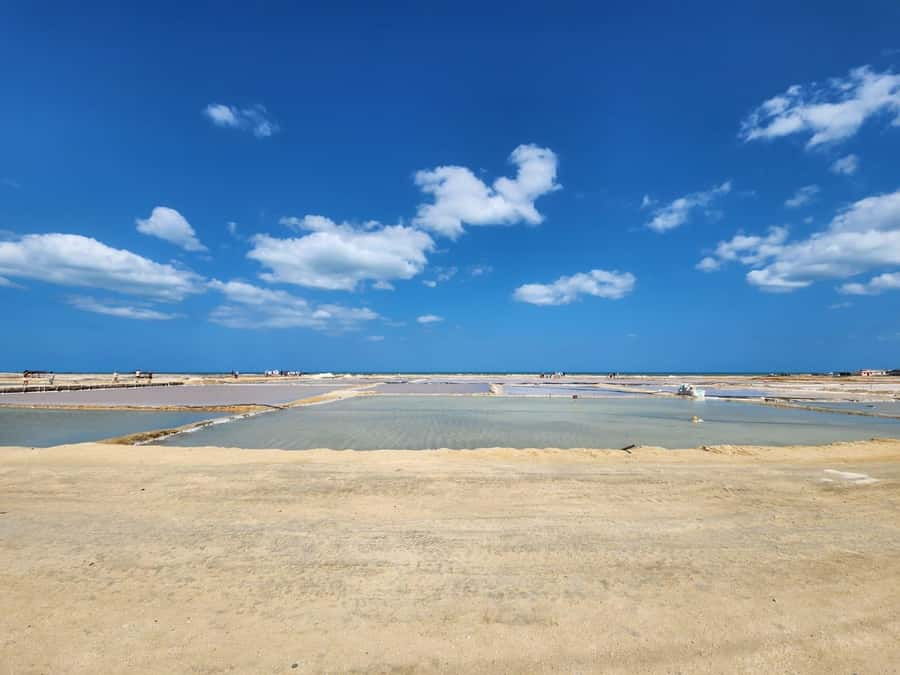
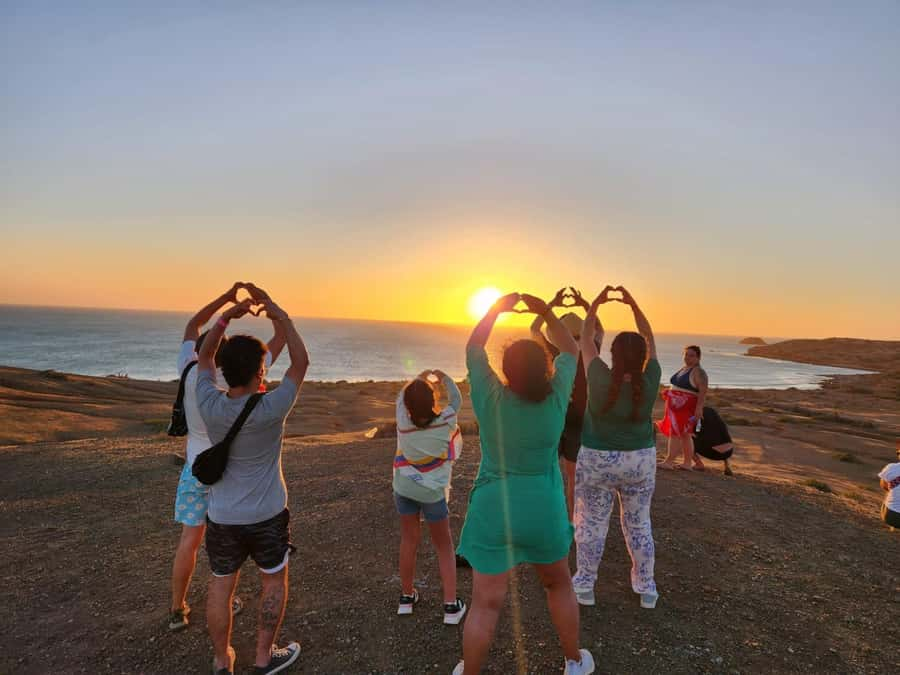
At the end of the day, the group visits the lighthouse for a Guajiro sunset. This is likely to be the visual high point of the trip. The lighthouse gives you an open setting for the sun to drop over the dry coast, with the sea and desert sharing the frame.
The timing depends on the day’s driving and stops, so the itinerary should be treated as a plan rather than a promise down to the minute. Weather matters too. Clear skies make the Sierra Nevada view possible earlier in the route and should also help at sunset.
Dinner takes place at the ranchería, where you stay overnight facing the sea. The accommodation is a major part of the experience, but the supplied details do not describe room type, bedding, private bathrooms, electricity, or air conditioning. Ask before booking if those basics matter to you.
I would think of this as cultural and practical lodging, not a conventional hotel. That can be the right choice if you want a closer connection to the Wayuu setting. It may not suit you if you need predictable hotel comforts after a rough road day.
Morning at the Manaure salt flats
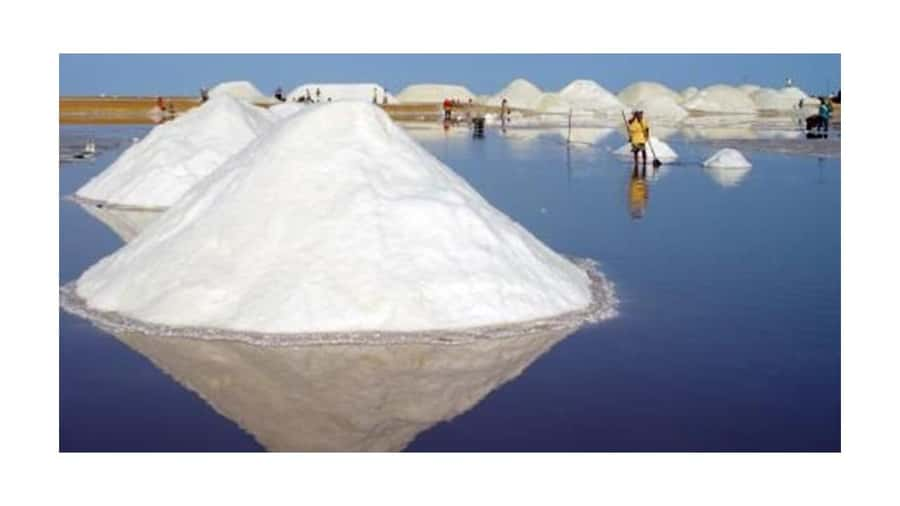
The next day continues to the Manaure salt flats before returning to Riohacha for lunch. The salt flats add another side of La Guajira, showing how local life and natural conditions are tied to salt production.
The visit is valuable because it broadens the trip beyond beaches and sunsets. You see a working region shaped by intense sun, dry ground, and the sea. The itinerary does not state how long you spend at the flats or whether a local salt worker provides an explanation, so ask the guide for timing on the day.
After Manaure, the group returns to Riohacha for lunch, then continues to Santa Marta. That final transfer makes the second day another full road day. You should not schedule a flight, appointment, or important evening commitment immediately afterward.
The tour lasts 36 hours, but the amount of time in the vehicle is a key part of that total. The route covers a large area, and the attraction stops are spread out. You get more variety than on a single-day Cabo excursion, but less free time at each stop than you might expect from the distance traveled.
What the all-inclusive price really covers
The listed price is $279 per person. It includes transport, one night in a ranchería, two days of meals, travel insurance, and a professional guide. For a private group traveling from Santa Marta into a remote part of La Guajira, that bundle can be useful and potentially fair.
The value depends on the number of people in your private group and the standard of the transport and accommodation. A private group gives you more control than a large shared bus, but the term does not explain the vehicle size or whether the car is properly arranged for tourism services.
The phrase all inclusive also needs a careful reading. Unspecified services are not included, so do not assume drinks, extra activities, upgraded accommodation, or optional stops are covered. The tour information specifically warns about unspecified services, while an account describes an additional paid stop being offered during the trip.
Before booking, ask these direct questions:
- What vehicle will be used?
- Is the vehicle authorized for tourism transport?
- Who is the guide and what language does the guide speak?
- What exactly is included in the ranchería accommodation?
- Are drinks or snacks outside the listed meals extra?
- Will any optional stop be offered, and what will it cost?
- What happens if the road or weather delays the schedule?
Those questions are not fussy. They are sensible for a remote route with long driving times.
Safety, communication, and the operator
The tour is sold by MAX TOUR OPERADOR and includes travel insurance. That is helpful, but insurance does not replace good transport practices or clear communication.
One serious account describes a private car being used, police checkpoints creating confusion about the group’s relationship, unsafe driving, and a disagreement over an extra tour. I cannot verify the full circumstances, but the concerns are specific enough that I would not ignore them.
You can reduce uncertainty before departure by asking for the operator’s tourism registration or license details, the driver’s name, the vehicle information, and written confirmation of what is included. Keep the agreed price and itinerary in writing. If the guide proposes an extra stop, you should be able to decline without pressure.
The guide language is Spanish, and the group is private. That can be a plus if you speak Spanish and want direct conversation. It is less convenient for English-only visitors, especially since the guide also handles the driving on a demanding route.
The rating shown for the activity is 4.4 from 14 reviews, but the small number of ratings does not remove the need to check the practical details. The remote setting is a genuine strength, yet remote travel makes reliable transport even more important.
Who will enjoy this Cabo de la Vela trip?
I would recommend this route to you if you want an out-of-the-way part of Colombia, enjoy long road journeys, and care more about Wayuu culture and dramatic scenery than resort comfort.
It suits travelers who want a private group, hotel pickup, included meals, and a short but full introduction to La Guajira. The one-night stay also gives you more time than a rushed day trip, especially for the lighthouse sunset and the next morning’s salt flats.
I would be cautious if you have limited Spanish, dislike bumpy roads, need strong hotel facilities, or feel uncomfortable with unclear transport arrangements. The description does not promise luxury, and the road to Cabo de la Vela is a real part of the experience.
Free cancellation up to 24 hours before departure and the option to reserve now and pay later give you some booking flexibility. Still, flexibility does not answer the important questions about the vehicle and accommodation. Get those answers first.
Should you book this tour?
Book it if your priority is a remote Wayuu and desert experience from Santa Marta, with meals, lodging, and the main Cabo de la Vela stops handled for you. The Sugar Pylon, Virgin’s Beach, lighthouse sunset, seaside ranchería, and Manaure salt flats make a strong two-day outline.
I would book only after confirming the operator’s credentials, vehicle, driver, Spanish communication, ranchería facilities, and all possible extra charges. If those details are clear, the tour offers a practical way to reach a difficult destination. If the answers are vague, choose a provider with firmer transport and safety information, even if the price is higher.
FAQ
Where does pickup take place?
Pickup is included from hotels in Santa Marta, Rodadero, and Bello Horizonte. You should wait in the hotel lobby 10 minutes before departure.
How long does the tour last?
The tour lasts 36 hours and covers two days, including one overnight stay in a Wayuu ranchería.
What language does the guide speak?
The live tour guide speaks Spanish.
Is this a private tour?
Yes. The activity is described as a private group experience.
What is included in the price?
Transport, one night of accommodation in a ranchería, two days of meals, travel insurance, and a professional guide are included.
What should I bring?
Bring a change of clothes, cash, clothes that can get dirty, and closed-toe shoes.
Can I cancel or pay later?
You can cancel up to 24 hours in advance for a full refund. You can also reserve now and pay later.
Just added in Colombia
- Zipaquira: 5 hrs Salt Cathedral Tour★ 4.4 · 9 reviews
- Exotic Yacht – Tour through the bay of Cartagena★ 3.7 · 4 reviews
- Zipaquirá: Private Salt Cathedral Mine and Walking Tour★ 4.8 · 3 reviews
- Zipaquirá: Private tour to the Salt Cathedral, Colombia’s first wonder★ 4.9 · 33 reviews
- Wonders of Salt: Colombia’s Underground Cathedral★ 5.0 · 18 reviews
- Zipaquirá Salt Cathedral & Andrés Carne de Res (Chía)★ 4.6 · 30 reviews
- Villavieja: Tatacoa Desert Horseback Riding Tour★ 5.0 · 3 reviews
- Volcan del Totumo + Playa + Piscina★ 4.7 · 4 reviews