
Reviewed · COLOMBIAN STREET FOOD TOURS
Commune 13, Graffitour street food. History.All inclusive
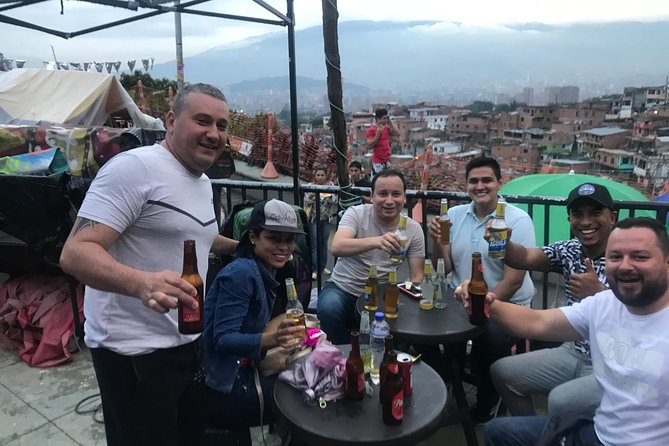
Comuna 13 is best understood from above first. This tour begins with a cable-car ride over San Javier, giving you a clear look at the steep neighborhood before you walk its streets, hear its story, and study the art that now defines it. The cable-car view and the guide’s local perspective make this more than a quick photo stop.
I like the mix of public transport and walking, which connects the tour to daily Medellín life. I also like the way the route adds street food, mango ice cream, galleries, viewpoints, and graffiti to the history lesson. Guides including Sebastián, Luis, Manuela, and Andrés have been praised for making the past easy to understand and the outing relaxed.
The main drawback is physical: expect hills, stairs, and plenty of walking in roughly three hours. The cable car can also be affected by temporary closures, so you should confirm the meeting details and arrive with some patience.
Key points to know before booking
- A cable-car start: See San Javier and Comuna 13 from above before exploring on foot.
- History with a local voice: Guides such as Sebastián and Luis have personal ties to the neighborhood and explain its changes in clear, engaging terms.
- Art with meaning: Graffiti, hip-hop, galleries, and public spaces are treated as part of the community’s story, not just decoration.
- A taste of the route: Mango ice cream is included, along with the listed admission for the activity.
- A compact three-hour outing: The tour combines cable car, public bus, walking, viewpoints, shops, and the outdoor escalators.
- Some effort required: Hills and stairs make this a poor fit for anyone with chronic knee problems.
Why Comuna 13 makes a strong first history lesson
Comuna 13 is one of Medellín’s clearest examples of a neighborhood changing its public identity. The route does not present the area as a simple tourist attraction. Instead, it connects the streets, music, murals, transport systems, and local businesses with the difficult events that shaped the community.
That context matters. If you only walk through the graffiti corridor, you may see bright walls and shops but miss why the art carries such weight. A guide helps explain the symbols, the role of hip-hop, and the hopes expressed through public art.
I especially like beginning at San Javier with the cable car. From the air, you can see how the neighborhood rises along the hills. That view gives you a useful sense of place before the walking portion begins. It also makes the transition from Medellín’s metro system to the steep streets of Comuna 13 easier to understand.
More Street Food Tours in Medellín
- Medellin: Comuna 13 Graffiti Tour, Cable Car & Street Food
★ 4.8 · 9,046 reviews - Medellín: Comuna 13 True Story and Street Food Tour
★ 4.9 · 1,779 reviews - Medellin: Street Food and Poblado Rooftop Tour with a Local
★ 4.8 · 317 reviews
Starting at San Javier Metro Station
The meeting point is Estación Metro San Javier, at Cra. 95 #96-29 in the San Javier II area of Medellín. You should allow enough time to find the guide and group, especially if this is your first morning in the city.
This is not a hotel pickup. You need to make your own way to the station. The location is near public transportation, which keeps the cost down and fits the character of the tour, but it also means you should not arrive at the last minute.
The experience is limited to a maximum of 20 people. That is small enough for questions and conversation, though the feel can vary depending on the final group size. Some departures may feel almost private if other bookings cancel, while a full group will require more patience at busy viewpoints and narrow walking areas.
Seeing San Javier from the cable car
The cable-car ride is one of the strongest parts of the experience. Rather than jumping straight into the crowded walking route, you first get an aerial introduction to the community. The guide uses the ride to discuss what life is like in Comuna 13 and to point out the setting from above.
This view is valuable because the neighborhood is built on steep ground. From street level, you see individual walls, stairs, shops, and art. From the cable car, you see how the homes and streets fit together across the hills.
The cable-car segment also gives the tour a natural rhythm. You begin quietly, looking outward, then return to the meeting area before continuing by public bus. That change of transport helps the outing feel like an exploration of Medellín rather than a bus ride directly to a prepared sightseeing zone.
There is one practical caution. The cable car has occasionally been closed temporarily. When that happens, the route may need to change, and one past departure continued by bus and on foot instead. If the cable car is important to you, check its operating status and keep an eye on messages from the provider before setting out.
Taking the public bus into the neighborhood
After the cable-car section, the group returns to the meeting point and takes a public bus toward the Independencia neighborhood. This is a useful detail, not a minor transfer. You get to see how the tour connects the transport network with the community itself.
Public transport can make the outing less polished than a private vehicle tour. You may need to stand, wait, or adjust your pace around other passengers. In return, you get a more grounded sense of how people move through Medellín.
The bus also keeps the experience affordable at $25 per person. For that price, you are paying for a guide, a structured route, the cable-car experience, the walking tour, and the included food stop rather than a private car and a large sightseeing package.
More food walks in Medellín
- Medellin: Party Bus with DJ & Street Food Tastings
★ 4.5 · 112 reviews - Street Food Tour in Medellín with Tastings
★ 5.0 · 76 reviews - Medellin: tasting Street Food with Rooftops of El Poblado
★ 4.4 · 61 reviews - Walking tour, cable car & fruit tasting
★ 5.0 · 33 reviews
Graffiti, galleries, and the meaning behind the walls
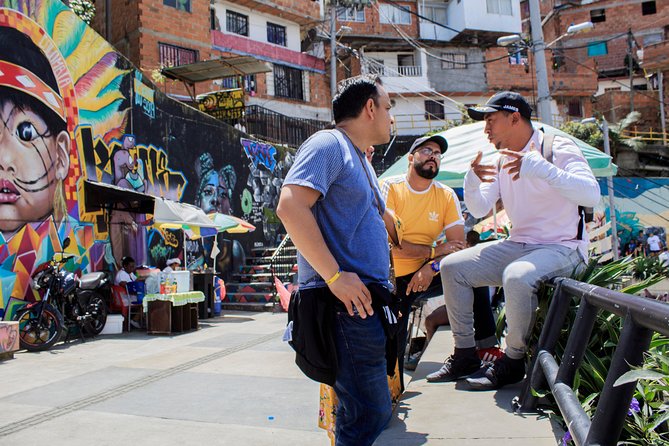
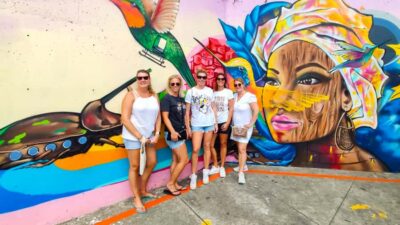
The walking section takes place in the part of Comuna 13 known for its graffiti tour. You can expect colorful walls, public art, art galleries, shops, viewpoints, and street activity. The art is not treated as background scenery. It is part of the explanation of how the neighborhood presents itself today.
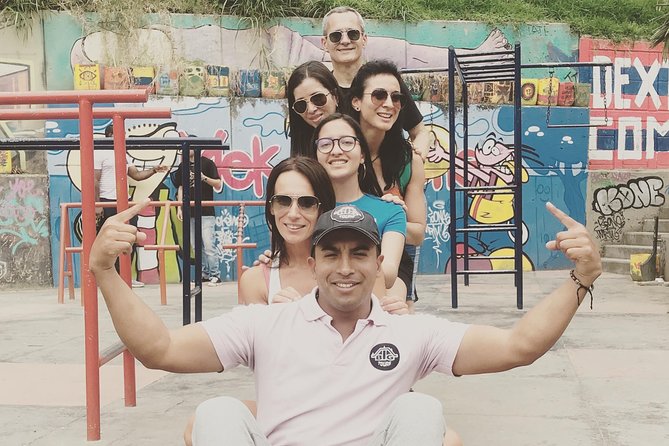
A strong guide makes a large difference here. Sebastián has been singled out for his local connection, clear English, and ability to answer questions. Luis has been praised for explaining the symbols in detail and placing them within the neighborhood’s past and future. Manuela and Andrés have also been noted for warm, personal guiding.
Because guide assignments can vary, you should not book on the assumption that one named person is guaranteed. Still, the range of guide feedback points to the experience’s main strength: the human explanation. You are not simply walking behind someone who points at murals. You are given reasons to look more closely.
Hip-hop is another important part of the story. One part of the tour focuses on the way music and street culture helped shape the community’s voice. That can make the experience particularly meaningful if you want to understand how art, identity, and local pride connect.
Riding the Comuna 13 escalators
The outdoor escalators are one of Comuna 13’s defining features. They help people move through steep sections of the neighborhood and have become a symbol of improved access and change.
For you, the escalators also make the walking route more manageable than it might otherwise be. They do not remove all exertion, though. You should still expect uphill sections, stairs, and uneven movement through busy streets and viewpoints.
The escalators are interesting because they function as both infrastructure and attraction. You use them as part of the route, but you also learn why they matter to residents. That practical connection gives the stop more substance than a quick ride followed by a photograph.
People with chronic knee problems should think carefully before booking. Even with the escalators, the day includes hills and walking. Comfortable clothing and supportive shoes are sensible choices.
Mango ice cream and street food along the route
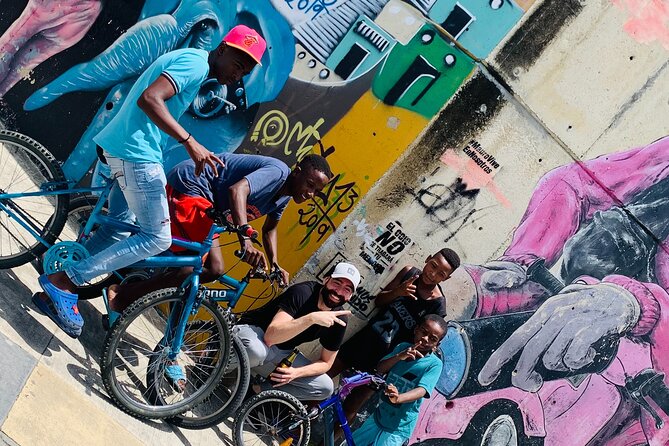
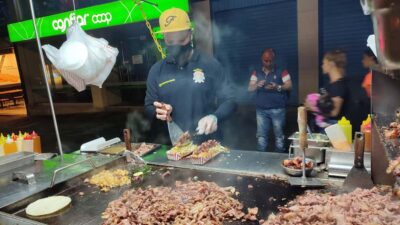
The food element is modest rather than a full meal. The tour includes a mango ice cream stop, and past departures have also included a chance to try unfamiliar local desserts. That small taste adds welcome variety after the history and walking.
Do not book this as a food tour in the usual sense. The main subject is Comuna 13’s history, art, and community life. The snack is a pleasant part of the route, but it does not replace lunch.
I like the mango ice cream because it fits the setting. You are not being taken away from the neighborhood for a formal restaurant stop. Instead, you get a simple local treat while continuing through the streets, shops, and public spaces.
If you have dietary restrictions, the available information does not specify ingredients or alternatives. Ask the provider before booking if the food stop matters to your plans.
Views, shops, and time to look around
The route includes viewpoints where you can look back across Medellín and take photographs. These stops give you a break from close-up murals and let you see the city’s scale.
Shops and galleries add another layer. You may find artwork, souvenirs, and small businesses connected to the neighborhood’s current economy. The exact selection can change, so I would treat shopping as an optional extra rather than the purpose of the tour.
You can also choose to remain in Comuna 13 after the guided portion ends. The planned activity returns to the meeting point, but you are free to stay in the area or arrange transport onward from there. That flexibility is useful if you want more time for photographs, shops, or another look at the art.
What $25 gets you
At $25 per person, this is a strong-value introduction to Comuna 13 if you want transport, context, and a guide in one short outing. The three-hour format fits well on a first day in Medellín or in a schedule that leaves room for museums and other neighborhoods.
The value comes from the combination. A cable-car ride alone would give you views but little context. A self-guided walk would show you murals but could leave gaps in the story. A guide-led route links the transport systems, neighborhood history, art, escalators, viewpoints, and a snack.
The price is less compelling if you only want to take photographs or spend several hours shopping. You can see much of the public art without paying for a formal tour. The fee makes more sense if you want explanations and prefer not to work out the route alone.
The advertised experience is all-inclusive, with listed admission included. Even so, bring money for optional purchases and any food or transport you choose after the tour ends.
How the three hours feel
The schedule is compact. You begin at San Javier, take the cable car, return to the meeting point, travel by public bus, walk through the Independencia area, visit the graffiti route and escalators, stop for mango ice cream, then return to the meeting point.
That is a lot for three hours. The advantage is efficiency: you see the main elements without giving up an entire day. The tradeoff is that you may not have long at every gallery, shop, or viewpoint.
I would book this early in your Medellín stay. The tour gives you useful background for later visits, and its compact length leaves the rest of the day open. Since it is often reserved around 17 days ahead, booking early is sensible if your dates are fixed.
Who should book this experience
You are a good match if you want history presented through art and local life rather than a standard sightseeing lecture. It also suits solo visitors who want a planned route and families who can manage hills and stairs.
The tour works well for people interested in:
- Medellín’s changing identity
- Comuna 13’s public art and hip-hop culture
- Cable-car views and public transport
- Local guides with ties to the neighborhood
- A short outing with several types of stops
I would think twice if you have chronic knee problems, dislike walking uphill, or need a slow, highly accessible route. The guide may help with pacing, but the physical nature of the neighborhood cannot be removed.
Service animals are allowed, and most people can participate. The experience requires good weather. If poor weather cancels the departure, you are offered another date or a full refund.
Booking, cancellations, and meeting advice
Confirmation is provided when you book. You should meet at Estación Metro San Javier rather than expect pickup elsewhere.
Free cancellation is available up to 24 hours before the start time for a full refund. Cancellations or changes made less than 24 hours before the start are not accepted for a refund. These cutoffs use local Medellín time.
Because one past departure involved confusion around a canceled group and a closed cable car, I would save the provider’s contact details and check your messages before leaving. Arrive early, look for the guide near the stated station meeting point, and do not rely only on a sign at the cable-car entrance.
Should you book the Comuna 13 Graffitour?
Yes, if you want a clear introduction to Comuna 13 that combines aerial views, local transport, street art, public history, and a small taste of local food. The strongest reason to book is the guide. Sebastián, Luis, Manuela, Andrés, and others associated with the experience have helped make the neighborhood’s past understandable without losing the fun of the outing.
Book it early in your Medellín visit, wear comfortable shoes, and allow for hills and stairs. If you want a full meal, a long shopping session, or a slow art-focused walk, choose something else or stay in Comuna 13 after the tour ends. For a three-hour overview with real local context, this is a well-priced and useful choice.
FAQ
Where does the tour start?
The tour starts at Estación Metro San Javier, located at Cra. 95 #96-29, San Javier II, Medellín.
Where does the tour end?
The planned activity ends back at the meeting point. You may also choose to remain in Comuna 13 or arrange transport from there after the guided route.
How long does the tour last?
The experience lasts approximately three hours.
Is the cable-car ticket included?
The activity lists admission as included and is described as all-inclusive. The planned route includes a cable-car ride, followed by public bus travel and walking.
Is the tour suitable for people with knee problems?
The tour is not recommended for people with chronic knee problems. The route includes hills, stairs, and a substantial amount of walking, even though it also uses the outdoor escalators.
What happens if bad weather cancels the tour?
The experience requires good weather. If it is canceled because of poor weather, you are offered a different date or a full refund.
More Food in Medellín
- Medellín: E-bike and Foodie Tour
★ 4.8 · 102 reviews - Comuna 13: Graffiti tour & Street Food/drink with telesferic
★ 4.4 · 19 reviews - Medellín: Street Food Tour with Local Tastings
★ 4.9 · 14 reviews - Medellín: Private Food Tour With The Best Viewpoints.
★ 4.9 · 12 reviews
More Food & Drink in Medellín
- Medellín: Pablo Escobar Tour with beer included
★ 4.7 · 612 reviews - E-Bike City Tour Medellin with Local beer and Snacks
★ 4.9 · 55 reviews - Bike Tour Medellin with Snacks and Local Beer
★ 4.7 · 49 reviews - Medellín Food Tour
★ 4.5 · 30 reviews
Just added in Medellín
- City tour, Commune 13, Metro Cable, Botero Park and more. Private★ 5.0 · 34 reviews
- Aerial Hammocks, Zip and Waterfall Trek on Medellin Private Tour★ 5.0 · 39 reviews
- Barrio transformation and urban escalator of Comuna 13★ 5.0 · 47 reviews
- Walking tour downtown Medellín★ 5.0 · 39 reviews
- Tour to the Hacienda Nápoles Theme Park★ 4.0 · 22 reviews
- Hiking Mountains and Magical Forests★ 5.0 · 27 reviews
- Tour Santa Fe de Antioquia★ 5.0 · 46 reviews
- The “not polite to use his name” City Tour★ 4.5 · 45 reviews
Colombian Street Food Tours, compared.
Comuna 13 Graffiti Tour, Cable Car & Street Food
Read our review →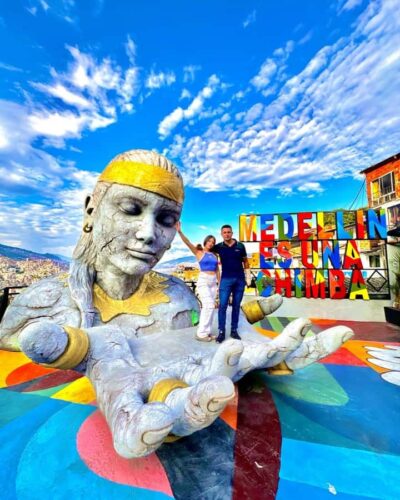


Street Food and Poblado Rooftop Tour with a Local
Read our review →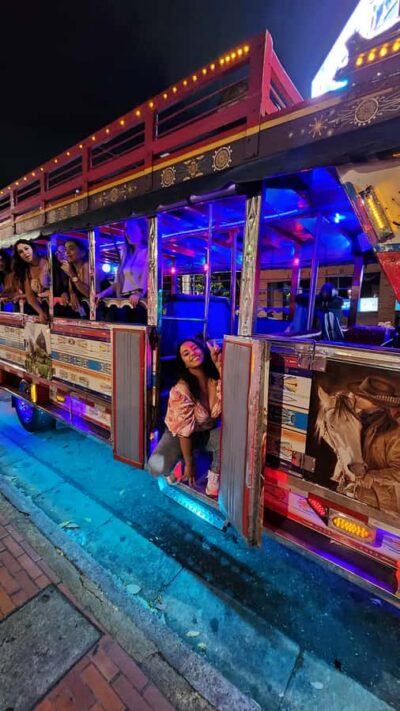

Browse the lists this tour appears in