
Reviewed · SAN BASILIO DE PALENQUE TOURS
Palenque African Roots Day Tour
San Basilio de Palenque is not simply a day trip from Cartagena. It is a living Afro-Colombian community founded by people who escaped slavery, led by Benkos Biohó, and preserved its own language, music, food, and customs for centuries. That gives this tour more weight than a standard sightseeing outing.
I like the chance to learn directly from a native guide, and I like that lunch and private air-conditioned transport are included in the $105 price. The six-hour format also gives you enough time to see the town without turning the visit into a rushed photo stop. The main caution is consistency: past experiences have included missed dance activities, guide scheduling problems, and missing bottled water or umbrellas.
Key things to know before booking
- San Basilio de Palenque was founded by escaped Africans and became the first free Black town in the Americas.
- Benkos Biohó’s monument connects the modern village to the man who led the resistance and founded its free settlement.
- Palenquero, the community’s own dialect, has survived for more than 300 years.
- Music, food, medicine, and dance are central to the visit, though the exact presentation may vary.
- Lunch, bottled water, a tropical raspado, and private transport are included in the advertised price.
- The group is capped at 10 people, making the outing more personal than a large coach tour.
Why Palenque matters beyond a day trip
Cartagena’s old center tells one part of Colombia’s colonial story. San Basilio de Palenque tells another, one shaped by escape, resistance, and cultural survival.
The settlement was founded around 1603 by escaped enslaved Africans. Benkos Biohó, also known as Domingo Biohó, led resistance against Spanish control and became the king of the free town. The village was recognized as independent by the Spanish in 1713.
That date matters. Palenque was not simply a refuge that disappeared into the past. It became a lasting community with its own social structure and cultural identity. The people who settled there came from different parts of West Africa, and over time they created traditions that remain visible in language, cooking, music, medicine, and ceremony.
You will hear the story in a setting where the past is still part of daily life. That is the chief reason I would choose this tour over a general Cartagena excursion. You are not only looking at a monument or reading a museum panel. You are visiting the town connected to the story.
The experience also gives useful context for understanding Afro-Colombian culture. Cartagena was a major port in the transatlantic slave trade, and Palenque’s existence is tied directly to that history. The tour presents that connection through local interpretation rather than treating slavery as a distant textbook subject.
More Palenque trips from Cartagena
- Cartagena: Palenque´s tour, dance show, lunch, pick-Up inclu
★ 4.7 · 182 reviews - Tour a san Basilio de Palenque desde cartagena
★ 5.0 · 123 reviews - Cartagena: Palenque Tour and Road to Emancipation
★ 4.5 · 83 reviews
The road from Cartagena to San Basilio de Palenque
The tour begins at 8:30 a.m. and lasts about six hours and five minutes. Private transportation in an air-conditioned vehicle is included, which matters in the heat of the Caribbean coast and makes the outing easier than arranging separate transport.
The small-group limit is 10 people. That is a useful middle ground. You get the convenience of organized transport and a guide, but the group should remain small enough for questions and conversation.
The vehicle is part of the value here. A $105 price can look high beside a simple bus ride, but the cost includes transport, lunch, drinks, and a guided cultural program. You are also paying for the time and local coordination required to reach a community outside Cartagena.
Allow yourself a flexible attitude about the pace. The advertised duration is approximate, and the experience includes walking through town as well as organized stops. San Basilio de Palenque is a real community, not a purpose-built attraction, so the day may feel less polished than a museum visit.
That is part of the appeal, but it can also create uncertainty. One past outing was affected by an air-conditioning problem, while another account described the guide needing to leave for university and a dance portion being missed. The operator addressed the vehicle issue as a temporary technical problem, but I would still confirm the day’s schedule when you meet your guide.
Walking the streets of Palenque
The main part of the outing takes place in San Basilio de Palenque. The visit introduces you to the town’s culture, gastronomy, musical rhythm, and language.
The most important detail is the Palenquero dialect. It has remained in use for more than 310 years and reflects the community’s African and Caribbean roots. Hearing about the language in the place where it is spoken gives the subject a human scale. You are not just learning that Palenque has a distinct dialect. You are seeing how a community has kept its identity alive.
The walking portion also lets you observe the town as it is today. You will likely see ordinary streets and daily surroundings alongside planned cultural demonstrations. That mix is worth noticing. One account found the presentations informative but somewhat arranged as a sequence of traditional stops, rather than a completely open-ended look at community life.
I consider that a fair criticism, and it helps set expectations. This is a guided cultural introduction, not an independent wander through town. You will receive a prepared explanation of Palenque’s customs, but you may also feel the structure of the tour.
For many people, that structure is useful. A local guide can explain details you would miss on your own, especially the meaning of music, food, and healing practices. If you want a quiet, unplanned visit with no demonstrations, this may feel too organized. If you want context and interpretation, the format works better.
Music, dance, food, and medicine
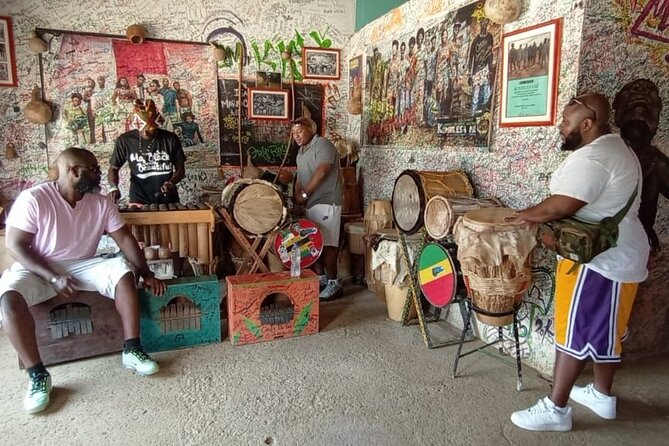
The program centers on four parts of Palenque’s identity: music, food, medicine, and dance.
Music is not treated as a decorative add-on. It is connected to the community’s memory and social life. The same is true of food and traditional medicine, both of which help explain how residents have maintained a distinct culture over generations.
Dance may be included as part of the cultural presentation, but you should clarify the schedule at the start. One past experience did not include the dance portion because of a guide’s university obligation. That is a serious issue when the activity is sold as a full cultural experience, so ask directly which demonstrations are planned that day.
Lunch is one of the strongest practical features. Several accounts singled it out as a highlight, and the meal helps make the price easier to justify. You are not paying only for a short walk and a talk. Food is part of the cultural lesson, and eating it in connection with the community gives the visit more meaning than a standard restaurant stop.
The tour also includes a tropical-flavored raspado, a Colombian shaved-ice drink. It is a small detail, but a welcome one in hot weather. Bottled water and an umbrella are also listed as inclusions. Because these items have not always been supplied consistently, I would bring your own water and sun protection anyway. An umbrella is useful in both strong sun and sudden rain.
A few more trips around Cartagena worth a look
- Cartagena: Historic Center and Getsemaní Shared Walking Tour
★ 4.9 · 2,716 reviews - Cartagena: Rosario Islands Catamaran with Lunch and Snorkel
★ 4.5 · 2,479 reviews - Full-Day Rosario Islands Including Barú, Bocachica & Playa Blanca
★ 4.0 · 1,729 reviews - Cartagena de Indias: 2-Hour Sunset Cruise
★ 4.7 · 1,105 reviews
The Benkos Biohó monument
The second listed stop is the Monumento a Benkos Biohó. The visit lasts about five minutes, so do not expect a long museum-style presentation.
Its value is symbolic. Benkos Biohó is the central figure in Palenque’s founding story. He led a rebellion of enslaved people in the New Kingdom of Granada and became king of the free settlement.
The monument gives you a physical point of reference for that story. After learning about Palenque in the streets and through local culture, you see the man associated with its beginning represented in public space.
Five minutes is enough for a brief explanation and photographs, but the stop will not satisfy anyone looking for a major historical site with extensive exhibits. Think of it as a short, meaningful pause within the larger visit, not the main attraction.
What the $105 price really covers
At $105 per person, this is not the cheapest way to spend six hours around Cartagena. The price makes more sense when you add up what is included: private transportation, an air-conditioned vehicle, lunch, bottled water, a tropical raspado, and a guide-led visit to a place that is not designed for casual mass tourism.
The small maximum of 10 people also adds value. A small group usually makes it easier to ask questions and hear explanations, though the exact group size on your date is not stated.
I would compare this tour with the cost and effort of arranging transport independently. You would still need to reach Palenque, organize a local introduction, find food, and understand what you are seeing. The tour bundles those pieces into one morning and afternoon outing.
The value depends on your priorities. If you want beaches, colonial architecture, or a relaxed day with little structure, spend your money elsewhere. If you want Afro-Colombian history and cultural context, the price is reasonable, especially with lunch and transport included.
Tips are not included. Carry small cash if you plan to tip the guide or anyone who contributes to the experience. The tour details do not specify a required amount, so tipping remains your choice.
Heat, comfort, and practical preparation
Cartagena and the surrounding area can be hot, and much of the experience takes place outdoors. Wear light clothing and comfortable shoes for walking.
An umbrella is listed as included, but bring a hat or your own compact umbrella in case supplies run short. The same applies to water. One account specifically noted that bottled water and an umbrella were not provided, despite being advertised.
The air-conditioned vehicle should make the road portion more comfortable, but an earlier vehicle problem affected one outing. The operator reported that the issue was repaired with on-site technical support and that the scheduled return time was maintained. That suggests a temporary problem rather than a standard feature, but it is another reason to avoid scheduling a tight airport transfer or fixed afternoon commitment after the tour.
Service animals are allowed, and most people can participate. No special fitness requirement is listed. Still, expect some walking and heat, and contact the provider if you have mobility concerns that require more detail than the published information gives.
The tour requires good weather. If poor weather causes cancellation, you can take another date or receive a full refund. Normal cancellation is free up to 24 hours before the 8:30 a.m. start. Changes or cancellations inside that window are not accepted for a refund.
Who should book this experience
I would recommend this tour to anyone who wants to understand an important part of Colombia’s Black history while visiting a living community.
It suits you especially well if you:
- Want more than Cartagena’s historic center
- Care about African diaspora history
- Enjoy guided cultural interpretation
- Like learning through food and music
- Prefer a small group over a large bus
- Value included transport and lunch
- Are comfortable with a structured visit
Families and first-time visitors may appreciate the guide because the history is easier to follow with local explanation. The tour can also be meaningful for anyone researching African heritage in the Americas.
You may want to skip it if you dislike organized demonstrations or expect a completely unplanned look at local life. The visit has a clear program, and some parts may feel staged for a visiting audience. You should also avoid booking it on a day when a missed dance performance or a changed schedule would leave you disappointed.
Final call: should you book the Palenque African Roots Day Tour?
Yes, if your main goal is cultural understanding rather than simple sightseeing. San Basilio de Palenque offers a story that cannot be reduced to a monument or a short paragraph in a guidebook. The language, music, food, and memory of resistance all make the visit worthwhile.
The tour’s strongest points are its local focus, small group size, included lunch, and convenient private transport from Cartagena. Its weaknesses are less impressive: inconsistent delivery of advertised extras and the possibility that a scheduled cultural presentation may change.
Before departure, confirm that the dance presentation is planned, check that water and an umbrella are available, and keep your afternoon flexible. If those conditions suit you, the $105 price is fair for a six-hour introduction to one of the Americas’ most important Afro-descendant communities.
FAQ
How much does the Palenque African Roots Day Tour cost?
The tour costs $105 per person.
How long does the tour last?
The experience lasts approximately 6 hours and 5 minutes.
What time does the tour start?
The listed start time is 8:30 a.m.
What is included in the price?
Private transportation, an air-conditioned vehicle, an umbrella, lunch, bottled water, and a tropical-flavored raspado are included.
Is the tour suitable for most people?
Yes. Most people can participate, and service animals are allowed.
How many people can join the tour?
The maximum group size is 10 people.
What happens if bad weather cancels the tour?
You will be offered a different date or a full refund if poor weather causes cancellation.
What is the cancellation policy?
You can cancel at least 24 hours before the start time for a full refund. Cancellations or changes made less than 24 hours before the start time are not accepted for a refund.
Just added in Cartagena
- Exotic Yacht – Tour through the bay of Cartagena★ 3.7 · 4 reviews
- Volcan del Totumo + Playa + Piscina★ 4.7 · 4 reviews
- White Night Boat Party: Dinner Buffet, Dancing and Open Bar★ 4.6 · 3 reviews
- Enjoy the totumo volcano from cartagena + snack★ 4.0 · 11 reviews
- 5 islands tour to rosario Islands with snorkeling activity!★ 4.5 · 36 reviews
- Totumo volcano tour + snack★ 4.5 · 44 reviews
- Rosario Islands Trip visiting Cholon, Playa Blanca and Snorkel★ 4.5 · 33 reviews
- Romantic Date Night in the Bay of Cartagena★ 5.0 · 47 reviews
San Basilio de Palenque Tours, compared.
Palenque´s tour, dance show, lunch, pick-Up inclu
Read our review →
Tour a san Basilio de Palenque desde cartagena
Read our review →
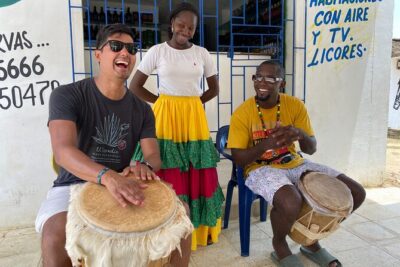
Visit Palenque with natives : history, culture and ancestral legacy
Read our review →
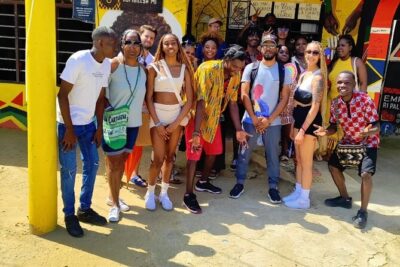
Tour cultural to san Basilio de Palenque from cartagena
Read our review →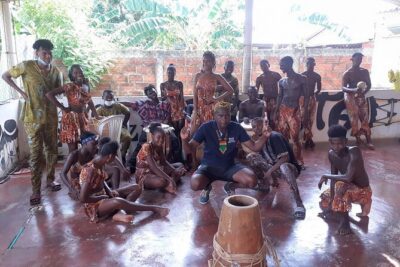
Private Tour with Certified Guide of San Basilio De Palenque
Read our review →Browse the lists this tour appears in